The gap between hobbyist and professional isn't talent. Speaking coaches will tell you that charisma gets you through one talk, not a career. What separates a paid keynote speaker from someone who occasionally addresses a Rotary Club is strategy: a clear message, real business infrastructure, and an understanding of how event planners actually buy speakers.
This guide walks through finding your niche, building experience the right way, treating speaking as a business, and understanding what speakers actually earn. Along the way, we'll look at speakers who cracked the code differently — including Jon Dorenbos, a 14-year NFL long snapper who turned magic and a story of childhood tragedy into a keynote career no competitor can copy.
Key Takeaways
- Sharp, differentiated messaging beats raw talent or a "good story" every time
- Free and low-paying gigs build the credibility that leads to paid stages
- Website, demo reel, and testimonials are business essentials—not optional extras
- Speaker fees range from under $10,000 to over $400,000, depending on notoriety
- Longevity comes from evolving your content, not repeating one great talk forever
Step 1: Define Your Message and Find Your Unique Niche
Leadership, resilience, and motivation are already covered by thousands of speakers. Adding your voice to that pile won't get you booked.
What will? Every restaurant serves food, but only a few define an experience through ambiance, service, and a signature dish. Every speaker delivers a message, but only a few make it unforgettable.
Finding Your Signature Angle
Before you write a single slide, ask:
- What insight or lived experience do I have that audiences genuinely can't get anywhere else?
- What transformation did I go through, and what did it teach me that a textbook can't?
- How do I deliver this differently than the hundred other speakers covering the same topic?
Your answer becomes your niche. Not "leadership speaker." Something closer to "the speaker who teaches leaders to rebuild trust after failure, using the exact framework I built after losing my company."
Learning From Speakers Who Found Their Angle
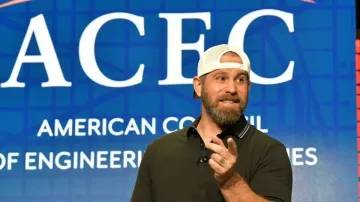
Jon Dorenbos is a clear case study. He spent 14 years in the NFL, including 11 seasons with the Philadelphia Eagles, earning two Pro Bowl selections. That alone makes him an interesting guest speaker.
His real differentiation came from combining that career with stage magic, a finalist run on America's Got Talent, and a personal story that starts with losing his mother at age 12 and spending a year in foster care. No other speaker can replicate that specific blend. It isn't a technique you can copy. It's a life only he lived.
Simon Sinek took a different route. Leadership was already overcrowded when he started speaking, so instead of adding another generic framework, he distilled his message into one idea: leaders should start with "Why."
His 2009 TED talk built around that concept became one of the most-viewed talks in TED's history and turned a crowded topic into a personal brand.
Those niches work because they're built on real material, not a borrowed framework. Start a story bank. Keep an ongoing file of formative experiences, failures, turning points, and lessons learned. Speaking careers run on material, and the best speakers constantly mine their own lives for it instead of writing one keynote and performing it for twenty years.
Step 2: Build Real Speaking Experience From the Ground Up
Once you know your message, the next job is reps. Lots of them. Nobody gets booked for $15,000 keynotes without first speaking for free in front of five people who barely paid attention.
Start Small and Say Yes to Everything
Early in a speaking career, the fee doesn't matter. The stage time does. Say yes to:
- Local association meetings and chamber of commerce lunches
- Company lunch-and-learns and internal team meetings
- Toastmasters clubs and open-mic style speaking nights
- Panels, podcasts, and webinars
- Nonprofit fundraisers looking for a free speaker
Treat a room of five people with the same prep and energy you'd give a room of 500. Those five people talk to other event planners. That's how bigger invitations happen.
Seek Feedback and Refine Constantly
Record every talk. Watch it back. Ask the organizer for honest feedback, even when it stings, and actually apply it next time.
Structured development speeds the feedback loop. The National Speakers Association (NSA) offers courses, sample contracts, and peer communities that cover both craft and the business side of speaking.
Its Certified Speaking Professional (CSP) designation (held by roughly 17% of NSA members worldwide) requires five years of documented paid presentations before you can even apply.
How long does the jump to full-time speaking take? There's no universal formula. Speaking coach and CSP Thom Singer notes that some speakers build momentum in a year, while others take three to five, depending on clarity, consistency, and the market they target. His own path took nearly a decade: part-time in the early 2000s, full-time in 2009.
Step 3: Treat Speaking Like a Business, Not Just a Craft
Here's the uncomfortable truth: once you're serious about this career, marketing yourself becomes the real job. Speaking itself is almost secondary. There's virtually no barrier to entry in this industry: anyone can call themselves a keynote speaker. The people who get booked are the ones who look, sound, and operate like a business.
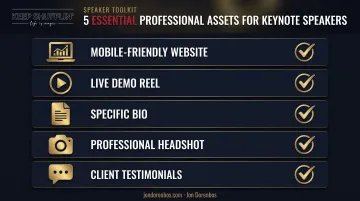
Core professional assets you need:
- A polished, mobile-friendly website with clear topics and booking information
- A demo reel showing you in front of a live audience, not a rehearsed studio clip
- A strong, specific bio (not a vague list of adjectives)
- A professional headshot
- Testimonials from actual event planners who've booked you before
Building these assets costs money: website development, coaching, travel to unpaid gigs, and reel production all add up. Budget for it the way you'd budget for launching any small business, because that's exactly what this is.
What event planners actually look for: theme fit, budget fit, and proof (via video and testimonials) that you can hold a room. Jon Dorenbos's bookings, for instance, span Fortune 500 gatherings, sales kickoffs, leadership offsites, and national association conferences. That range reflects how planners buy speakers by audience type and event format, not topic alone.
Working With Speakers Bureaus
Bureaus like Executive Speakers Bureau and Leading Authorities match speakers with event planners based on budget, theme, and audience fit. They also handle contracts, billing, and logistics—work you'd otherwise do yourself.
Getting listed typically requires:
- A biography and clear topic descriptions
- A 4-5 minute live-audience demo video
- A client list from the past two years
- A fee schedule and travel requirements
Bureaus don't guarantee bookings, and plenty of speakers build full careers through referrals and direct outreach instead. But bureaus do add visibility you can't easily generate alone.
How Much Do Keynote Speakers Get Paid?
Fees vary widely, and knowing where you fit helps you set realistic expectations.
| Career Stage | Typical Fee | What This Reflects |
|---|---|---|
| Rising or regional speaker | Under $10,000 | Niche specialists, strong local reputation |
| Experienced professional | $10,000–$25,000 | Hundreds of delivered keynotes |
| Nationally recognized | $25,000–$50,000 | National recognition or a bestselling book |
| Globally recognized | $50,000–$100,000 | Major career accomplishments |
| Celebrity or global figure | $100,000–$400,000+ | Name recognition, unique performance element |
This ladder comes from Executive Speakers Bureau's 2026 fee guide. It lines up with broader market data from a 2024 AAE Speakers survey of hundreds of organizers and speakers.
That survey found the average organizer budget sits around $22,449, while speakers reported an average fee near $14,000. Fewer than 10% of bookings break $50,000.
Fees aren't just payment for time on stage. They account for:
- Years spent building the craft and reputation
- Preparation and customization time per event
- Travel and scheduling constraints
- The pull of the speaker's personal platform
That last point explains why celebrity and former-athlete speakers sit at the top of the fee ladder. Jon Dorenbos, for example, books at celebrity-tier rates with a minimum investment of $80,000. That figure reflects his NFL career, national television exposure, and a live magic performance element most standard keynotes don't include.
What Separates In-Demand Speakers From the Rest
Polish gets you through the first talk. Authenticity gets you booked again.
Introverts can become powerful speakers when they lead with genuine presence instead of manufactured energy. Audiences can tell the difference between a rehearsed performance and someone actually connecting with them.
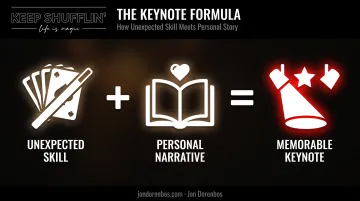
Unexpected skill + personal narrative = memorable. Jon Dorenbos blends live magic with his story of childhood tragedy, an NFL career, emergency heart surgery, and reinvention. The magic isn't a separate entertainment segment. It's a metaphor.
A shuffled deck represents life's unpredictability; the trick's resolution reinforces his point that people are defined by how they respond to what happens to them. That structure is nearly impossible for another speaker to duplicate, because it requires both a technical skill and a lived story to hang it on.
In-demand speakers also keep evolving. They:
- Listen closely to post-event feedback and adjust
- Stay current with the issues their audiences actually face
- Refresh examples and stories year over year instead of running the same deck indefinitely
Dorenbos's own platform illustrates this. Beyond live keynotes, he wrote Life Is Magic, later optioned for a feature film with an Academy Award-nominated screenwriter attached. That's a speaker extending one message across formats instead of freezing it in a single 60-minute talk.
Frequently Asked Questions
How much do keynote speakers get paid?
Fees range from free local talks for beginners to $100,000–$400,000+ for celebrity or globally recognized speakers. Pricing reflects preparation time, travel, and the value of the speaker's platform, not just time on stage.
How long does it take to become a professional keynote speaker?
There's no fixed timeline. Most speakers spend one to five years building experience through smaller engagements before transitioning to full-time paid work, depending on consistency and niche clarity.
Do I need to work with a speakers bureau to get booked?
No. Bureaus expand visibility and handle logistics, but plenty of speakers build careers through referrals, in-house conferences, and direct outreach without ever signing with one.
What topics are most in demand for keynote speakers?
Leadership and motivation, DEI, artificial intelligence, mental health, and the future of work top current planner surveys. Differentiation within a topic matters more than the topic itself.
Can I become a keynote speaker without prior public speaking experience?
Yes, but not overnight. Consistent practice through small, low-stakes opportunities (Toastmasters, panels, internal meetings) is essential before pursuing paid engagements.
What's the difference between a motivational speaker and a keynote speaker?
"Keynote speaker" describes a role at an event: delivering the headline address. "Motivational speaker" describes a content style focused on inspiring change. Many professionals, including Jon Dorenbos, fall into both categories.