Corporate audiences have changed what they expect. A 2024 Freeman survey of over 2,000 in-person B2B attendees found that 38% want to leave an event feeling both informed and inspired — not just entertained, and not just lectured at.
This article breaks down the core habits, mindsets, and techniques that separate the world's most successful motivational speakers from everyone else standing behind a podium.
Key Takeaways
- Great speakers treat every talk as a conversation with the room
- Storytelling and vulnerability consistently beat facts and slides for audience retention
- The best speakers pair authenticity with a memorable "hook," often an unexpected skill
- Obsessive preparation and audience research happen long before the stage lights come up
- Longevity in speaking comes from constant reinvention, not repeating the same talk for decades
They Master the Art of Storytelling
Audiences forget statistics almost immediately. What sticks is how a story made them feel.
A 2021 meta-analysis covering 33,078 participants found narrative content produced a measurable memory advantage over expository, data-driven material. The effect on memory (Hedges' g = .72) was notably stronger than the effect on comprehension.
The Arc That Actually Works
Top speakers build stories with structure: establish a status quo, introduce a struggle, hit a turning point, and land on a takeaway the audience can carry home.
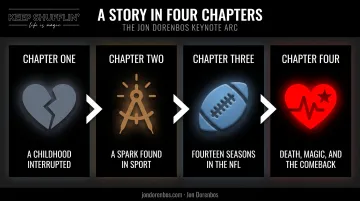
Jon Dorenbos is a textbook case of this arc in motion. His keynote narrative moves through four distinct chapters:
- A seemingly ordinary childhood in Seattle, shattered at age 12 when his father murdered his mother
- A chance meeting with a magician and a junior college football tryout that gave him purpose
- A 14-year NFL career with the Philadelphia Eagles, proof that the story wasn't over
- Emergency open-heart surgery in 2017, followed six weeks later by a magic performance on national television
Each chapter builds on the last. None of it works as a bullet point on a slide. It works because it's lived experience, delivered in sequence.
Why Vulnerability Beats Polish
Opening with an unexpected personal truth does something a rehearsed statistic never can: it earns trust in seconds. Dorenbos's America's Got Talent finale carried the message "don't hate, don't blame, and forgive," a direct callback to the tragedy that opened his story, closing the loop for the audience.
Stories tied to real obstacles, not just polished success, make messages of resilience believable. A speaker who only talks about winning sounds like a highlight reel. One who talks about the surgery, the setback, and the six weeks it took to get back on stage sounds like a person.
They Build Instant, Genuine Connection With Every Audience
Speaking should feel like a conversation, not a performance delivered to a room. That distinction shows up in small, deliberate choices most audiences never consciously notice.
Reading the Room in Real Time
Eye contact, vocal pacing, and strategic pauses do more work than most speakers realize. Moving eye contact around the room builds rapport, while intentional pauses (not filler words) give an audience space to actually absorb what was just said.
Non-verbal cues often outlast the words themselves. Audiences remember the pause before a hard truth, the tone shift into a lighter moment, and the body language that signals "this part matters" long after they've forgotten the exact phrasing.
Research Before Anyone Takes the Stage
Generic keynotes get generic reactions. The Meeting Professionals International association identifies a lack of personalization as the leading criticism in speaker evaluations — meaning audiences notice, and planners remember.
Speakers who do this well:
- Learn the organization's mission, current challenges, and internal language before showing up
- Weave company-specific references into examples rather than relying on generic anecdotes
- Create shared moments (humor, participation, a collective "aha") instead of one-directional lecturing
Dorenbos's team runs a pre-show planning call specifically to gather this context, then builds it into the presentation so it feels custom rather than recycled.
They Combine Raw Authenticity With Unexpected Showmanship
Dropping self-judgment is what makes a speaker relatable instead of merely impressive. Audiences don't bond with perfection. They bond with honesty. The speakers who hold a room longest pair that honesty with a skill the audience never saw coming.
The Edutainment Model in Practice
The strongest keynotes blend a serious message with an unexpected skill or performance element, keeping energy high without diluting the substance. Done well, that element keeps the audience locked in for the full session without turning the keynote into a variety show.
Dorenbos built his entire career on this combination. He weaves sleight-of-hand magic directly into a story about resilience and forgiveness, turning a 45-minute keynote into a multi-sensory experience for audiences at Marriott, Kroger, RE/MAX, and Campbell Soup Company.
One documented example: he built a magic illusion around a client's own conference slogan, "Get on the same page," turning an abstract corporate message into something visual and participatory. Nick Bailey, President and CEO of RE/MAX World Headquarters, called it the first time he'd seen a speaker receive an unsolicited standing ovation halfway through a presentation.
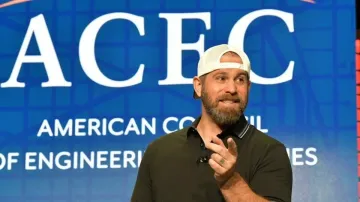
That reaction is the point. Pairing vulnerability with a rare talent increases both memorability and perceived credibility. Audiences respond with standing ovations, not polite applause.
They Prepare Obsessively But Perform With Spontaneity
Speakers who look effortless on stage are almost always the ones who over-prepared off it. The National Speakers Association frames this as three must-knows: know your audience, know your content, know yourself.
In practice, that means:
- Studying the client's world before the event: mission, values, current challenges, internal terminology
- Rehearsing to fluency, not just familiarity, so notes and slides become unnecessary
- Building in flexibility for schedule changes, tech hiccups, or an unexpected 15-minute extension
Dorenbos's process includes a mandatory pre-show planning call and a professional speaker's rider covering technical needs. That groundwork is what lets the performance feel spontaneous on stage, even when the schedule shifts last minute.
They Continually Reinvent Themselves
A long speaking career demands evolving content as audience expectations shift. What worked in 2015 doesn't automatically land in 2025.
Many top speakers arrive from an entirely different career in professional sports, business, or entertainment, and that outside perspective is often what makes their message compelling.
Jon Dorenbos spent 14 years as an NFL long snapper before becoming a full-time speaker and magician, then added an America's Got Talent run and regular appearances on The Ellen DeGeneres Show to his resume.
Reinvention isn't a one-time pivot. It's ongoing:
- Adjusting delivery style as audience attention spans and formats change
- Adding new material without abandoning the core story that built trust in the first place
- Staying relevant across decades by continuing to learn, not coasting on past success
Bringing These Secrets to Your Next Event
The ideal speaker for a corporate event brings together every element covered here:
- An authentic personal story
- Genuine audience connection
- A memorable hook
- Preparation rigorous enough to make the performance look effortless
Jon Dorenbos represents this complete package. A former NFL long snapper, America's Got Talent finalist, and regular on The Ellen DeGeneres Show, he's delivered over 1,000 customized keynotes for organizations including Apple, Marriott, and Kroger.
Audiences leave motivated, entertained, and aligned with their mission. Speakers who deliver this level of customization and production typically represent a six-figure investment, reflecting the caliber of stage, client roster, and outcomes involved.
Event planners should look for a speaker who delivers both inspiration and unforgettable entertainment in a single presentation, not two separate acts. If you're evaluating speakers for an upcoming event, reach out directly to discuss how a keynote can be built around your organization's specific goals.
Frequently Asked Questions
What makes a successful speaker?
Authenticity, storytelling ability, genuine audience connection, and a memorable delivery style are the core traits. Rigorous preparation behind the scenes is what makes all of it look natural on stage.
What is the most important trait of a great motivational speaker?
Authenticity paired with the ability to make an audience feel something consistently outranks technical polish. Audiences remember emotion long after they forget exact wording.
How do successful speakers connect emotionally with an audience?
Through personal storytelling, content tailored to the specific organization, and non-verbal cues like eye contact and deliberate vocal pacing. These elements work together, not in isolation.
Can public speaking skills be learned, or are great speakers born that way?
Some traits come naturally, but most successful speakers developed their skills through practice, coaching, and repeated stage experience. Rehearsal and feedback matter more than raw talent.
What separates a good speaker from an unforgettable one?
Unforgettable speakers add a unique signature element — a story, a talent, a perspective — that audiences genuinely can't get anywhere else. That signature is what gets remembered months later.
How do companies choose the right motivational speaker for their event?
They look for alignment with company goals, fit with the specific audience, and a speaker's demonstrated ability to customize their message for the occasion. Generic keynotes rarely make the shortlist twice.