Introduction
History's greatest speeches did more than stir a room for an afternoon. Churchill's wartime addresses steeled a nation. King's words at the Lincoln Memorial helped drive civil rights into law. A single speech can end a war, launch a movement, or rewrite what people believe is possible.
That is why public speaking remains one of the most consequential skills a leader can master.
A persistent myth says legendary orators were simply born that way—golden voices, effortless charisma. The truth is more useful. Most started with real disadvantages and built their skill through years of deliberate, often painful practice.
This article profiles history's most influential public speakers, the techniques that made them unforgettable, and the impact their words still hold for anyone who leads, sells, or moves a room today.
TL;DR
- Churchill, Lincoln, MLK, and Demosthenes top most lists when impact is the measure—not a single "greatest"
- Stammers, no formal training, and crushing stage fright often came before the breakthrough speeches
- Their words shaped laws, movements, and national morale long after the applause faded
- The roster runs from ancient Greece to the 20th century, tracing how oratory technique evolved
- Modern keynote booking still rewards the same traits these historic speakers relied on
Overview of What Makes a Public Speaker Legendary
Eloquence alone does not make a speaker legendary. What sets great orators apart is the tangible influence they had on audiences, policy, and culture.
Historians and communication scholars typically evaluate orators across four dimensions:
- Command of language: structure, rhythm, and word choice
- Authenticity: what Aristotle called ethos, or credibility of character
- Delivery technique: pacing, pauses, and vocal control
- Historical weight: the significance of the moment itself
The individuals below are the ones most consistently cited across historical and communication scholarship as among the greatest public speakers in recorded history.
The Greatest Public Speakers in History
This list weighs historical significance, mastery of a specific technique, and measurable influence on events or movements, not just fame or quotability.
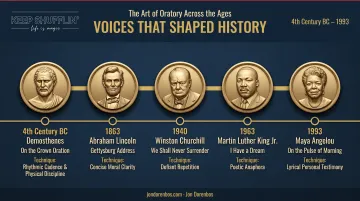
Demosthenes
The ancient Greek orator overcame a weak, stammering voice to become the model of classical rhetoric. According to Plutarch, he trained by reciting with pebbles in his mouth, running while speaking, and rehearsing in front of a mirror.
He also reportedly copied Thucydides' history eight times to sharpen his language, per Britannica's biography of Demosthenes.
His method mattered as much as his message: it proved oratory could be trained, not just inherited.
| Aspect | Detail |
|---|---|
| Signature Moment | His orations against Philip of Macedon, which established him as Greece's foremost orator |
| Defining Technique | Relentless, structured self-practice to correct specific speech weaknesses |
| Lasting Impact | Became the historical benchmark for "orator" in Western rhetorical tradition |
Abraham Lincoln
The U.S. president delivered the Gettysburg Address on November 19, 1863, at the dedication of a Civil War cemetery, just minutes after featured orator Edward Everett had spoken for nearly two hours.
Lincoln spoke for roughly two minutes. He proved that concise, plain language could outlast hours of elaborate rhetoric.
| Aspect | Detail |
|---|---|
| Signature Moment | The two-minute Gettysburg Address, following a two-hour speech by another orator |
| Defining Technique | Extreme economy of language: cutting anything that didn't serve the message |
| Lasting Impact | Redefined American civic identity; remains a model of persuasive brevity |
Winston Churchill
As British Prime Minister during World War II, Churchill delivered speeches that steadied a nation facing existential threat. He managed a lifelong lisp (not a stutter) through obsessive preparation.
He scripted lines in staggered "psalm style," marking pauses and emphasis like musical notation.
| Aspect | Detail |
|---|---|
| Signature Moment | His "we shall fight on the beaches" address to the House of Commons, June 4, 1940 |
| Defining Technique | Meticulous rehearsal and rhythmic, rule-of-three phrasing |
| Lasting Impact | Helped strengthen British resolve during the darkest period of WWII |
Martin Luther King Jr.
The leading voice of the American civil rights movement drew on the Black preaching tradition, building a trained ear for cadence and call-and-response. On August 28, 1963, that skill let him improvise his most famous passage live and turn a scripted address into a cultural touchstone.
| Aspect | Detail |
|---|---|
| Signature Moment | The improvised "I have a dream" section of his March on Washington address |
| Defining Technique | Rhythmic, sermon-style delivery combined with the courage to depart from prepared notes |
| Lasting Impact | The March helped rouse public support that carried the Civil Rights Act toward passage |
Maya Angelou
A poet, performer, and the first Black woman to deliver a poem at a U.S. presidential inauguration, Angelou treated her voice like a trained instrument. Her background as an actor and singer gave her rare control over pitch, pace, and silence.
| Aspect | Detail |
|---|---|
| Signature Moment | "On the Pulse of Morning," recited at President Clinton's 1993 inauguration |
| Defining Technique | Deliberate vocal control: pacing, tone, and calculated silence |
| Lasting Impact | Elevated spoken-word poetry into a nationally recognized art form, earning a Grammy for the recording |
The Lasting Impact of History's Greatest Orators
These speeches didn't stay confined to the moment they were delivered. Their ripple effects reached laws, morale, and everyday language.
Political and legislative outcomes. In a nationally broadcast address on June 11, 1963, President Kennedy announced plans to pursue comprehensive civil rights legislation: a direct policy commitment tied to a specific speech. Months later, King's address at the March on Washington helped turn the tide of public support for what became the Civil Rights Act of 1964.
Wartime morale. Churchill's wartime speeches reached Britain, occupied Europe, and beyond, projecting confidence to an anxious country at its lowest point. Lincoln's Gettysburg Address, meanwhile, reframed the entire purpose of the Civil War around equality and a "new birth of freedom", a civic legacy that outlasted the war itself.
Movements that outlived their speakers. Civil rights-era oratory translated spoken conviction into sustained organizing. One address could fill the Mall; the marches, boycotts, and local campaigns that followed kept pressure on for years.
Language that never left us. Phrases like "government of the people, by the people, for the people" and "I have a dream" are still quoted in classrooms, courtrooms, and campaign speeches generations later.
A blueprint for education. Harvard's rhetoric coursework and Gilder Lehrman's history lessons still use these exact speeches to teach structure, repetition, and argument. Those techniques are now part of the curriculum itself.
Timeless Lessons for Today's Leaders and Speakers
Strip away the historical setting, and the traits behind these speeches look surprisingly familiar:
- Authentic personal story
- Disciplined preparation
- Emotional connection with the room
Those are the same traits that separate a forgettable corporate keynote from one people talk about for years.
Modern audiences respond the same way historical ones did. A compelling personal narrative paired with a clear, well-rehearsed delivery beats raw charisma every time. Nobody remembers the speaker who was "naturally gifted" but had nothing real to say.
That's exactly the blend companies look for when booking a speaker like Jon Dorenbos.
His path follows the same "adversity into authority" arc seen in Demosthenes' pebbles or Churchill's rehearsed pauses: childhood tragedy, a 14-year NFL career with the Philadelphia Eagles, emergency heart surgery days after being drafted by the Saints, and a reinvention as an America's Got Talent finalist.
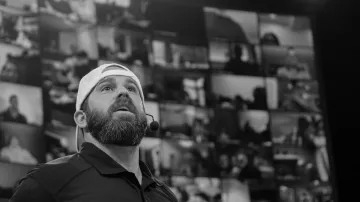
The setting has changed from the House of Commons to Fortune 500 ballrooms, but the mechanics of connection haven't.
How We Chose These Legendary Speakers
This list prioritizes documented historical impact and innovation in technique over subjective popularity. A common mistake is equating fame with oratory greatness.
We weighted these factors most heavily:
- Measurable influence on real events, laws, or movements
- Adoption of their techniques in rhetoric education
- Endurance of their words across generations, cultures, and mediums
Conclusion
Greatness in public speaking comes from craft and authenticity more than innate talent. These historical lessons still apply to any speaker or organization today.
If you're planning an event or conference, look for speakers who pair a genuine personal story with practiced delivery — not just a recognizable name.
Jon Dorenbos brings that mix of personal story and practiced stagecraft to corporate keynotes. Learn more about booking Jon for your next event.
Frequently Asked Questions
Who is considered the greatest public speaker of all time?
There's no single consensus. Winston Churchill, Martin Luther King Jr., Abraham Lincoln, and Demosthenes are the names most consistently cited across historical rankings for their measurable impact.
Who are the top ten public speakers of all time?
Commonly cited names include Demosthenes, Lincoln, Churchill, Martin Luther King Jr., Frederick Douglass, Gandhi, Maya Angelou, Kennedy, Obama, and Barbara Jordan. Rankings vary depending on whether the focus is historical impact or pure delivery style.
Were history's greatest speakers naturally gifted, or did they develop their skills through practice?
Most, including Demosthenes, Churchill, and Gandhi, started with real speaking weaknesses — stammers, lisps, crushing anxiety — and became great through deliberate, sustained practice.
What common techniques did the greatest orators in history use?
They leaned on devices such as the rule of three (tricolon), anaphora, deliberate pacing, strategic pauses, and messages grounded in personal or lived experience.
How did these speakers influence modern-day public speaking and leadership communication?
Their techniques still anchor rhetoric courses, executive communication training, and corporate leadership coaching—especially storytelling, pacing, and structured repetition.
What can businesses and event organizers learn from history's greatest speakers when choosing a keynote speaker today?
Prioritize speakers who combine authentic personal storytelling with disciplined delivery, the same qualities that made historical orators unforgettable, not name recognition alone.