Introduction
A single keynote can change how a room thinks before the coffee gets cold. The right speaker shifts how a workforce sees a challenge, a merger, or a slow quarter.
Event planners and business leaders know the stakes. Booking the wrong voice wastes budget and audience goodwill. Booking the right one can shape company culture for years.
This guide covers the most sought-after inspirational keynote speakers working today, the speeches that set the gold standard for the craft, and a practical framework for choosing a speaker who actually fits your event.
Key Takeaways
- Strong keynotes mix storytelling, emotion, and one clear call to action
- Speakers span athlete-performers like Jon Dorenbos to thinkers like Simon Sinek and Brené Brown
- Lasting speeches (MLK to Greta Thunberg) rest on authenticity, vulnerability, and a memorable message
- Audience fit beats fame when you book a speaker for your event goals
Overview of Inspirational Keynote Speaking
An inspirational keynote speech isn't a standard business presentation with better lighting. A typical presentation delivers information; an inspirational keynote delivers an emotional shift, plus one idea the audience actually carries home.
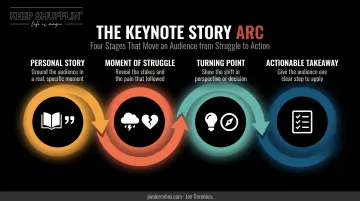
The best ones follow a simple shape:
- A personal story
- A moment of struggle
- A turning point
- A takeaway the audience can apply Monday morning
Strip out any of those four pieces and the speech becomes a lecture.
Demand for this kind of content keeps climbing. In a 2024 industry benchmark survey of 340 event organizers, leadership and motivation ranked as the top speaker topic at 40%, ahead of DEI, AI, and mental health. Organizations want speakers who can reset morale and align teams around a mission—not fill a slot on the agenda.
That demand has fueled a crowded market of names, from celebrity entertainers to research-backed authors. Next: the speakers currently in highest demand, and what makes each one worth the investment.
Top Famous Inspirational Keynote Speakers
Selection comes down to four criteria:
- Media recognition
- Storytelling ability
- Corporate client roster
- Measurable audience impact
Jon Dorenbos
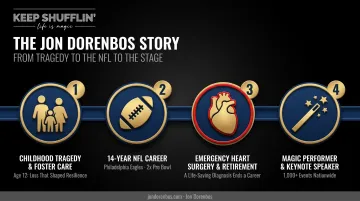
Jon Dorenbos spent 14 years as an NFL long snapper, most of it with the Philadelphia Eagles, where he earned two Pro Bowl selections and set the franchise record for consecutive games played.
His story starts much earlier, though: at age 12, he lost both parents in a single act of violence and spent a year in foster care before a chance meeting with a magician changed the direction of his life.
That arc, from childhood tragedy to NFL stardom to emergency open-heart surgery that ended his playing career, gives Dorenbos a keynote unlike almost anyone else's. He doesn't just tell the story. He performs sleight-of-hand magic while telling it, using each trick as a physical metaphor for the message.
He's since become an America's Got Talent finalist, a regular on The Ellen Show, and a speaker for more than 1,000 events at companies including Apple, Marriott, and Kroger. RE/MAX CEO Nick Bailey called him the best keynote speaker he'd ever seen after the audience gave an unsolicited standing ovation halfway through.
| Attribute | Details |
|---|---|
| Signature Style | Magic-driven storytelling woven into a personal resilience narrative |
| Notable Credentials | 14-year NFL veteran, AGT finalist, published author of Life Is Magic (optioned for film by producer Mike Tollin) |
| Best For | Resilience, self-talk, teamwork, change management, sales and leadership events |
Simon Sinek
Sinek built his reputation on a simple question: why do some organizations inspire loyalty while others don't? His book Start With Why turned that question into a framework now taught in business schools and boardrooms alike.
His 2009 TEDx talk, "How Great Leaders Inspire Action," has racked up more than 70 million plays on TED's platform alone, making it one of the most-watched leadership talks ever recorded. He's since advised branches of the US Armed Forces and Fortune 500 leadership teams.
| Attribute | Details |
|---|---|
| Signature Style | Framework-driven storytelling grounded in research |
| Notable Credentials | Bestselling author, advisor to military and Fortune 500 leaders, founder of The Optimism Company |
| Best For | Leadership development and purpose-alignment events |
Brené Brown
Brown spent decades as a shame and vulnerability researcher before her 2010 TEDx talk turned her into a household name. She's since written six #1 New York Times bestsellers, including Daring Greatly and Dare to Lead.
What sets her apart is the mix: rigorous academic research delivered with the warmth of a friend telling you a hard truth over coffee. She holds an endowed chair at the University of Houston and a professorship at UT Austin's McCombs School, and now serves as Executive Chair of BetterUp's Center for Daring Leadership.
| Attribute | Details |
|---|---|
| Signature Style | Research-backed storytelling centered on vulnerability |
| Notable Credentials | Six #1 NYT bestsellers, professor, Executive Chair at BetterUp |
| Best For | Culture, empathy, and team-building events |
Mel Robbins
A former criminal defense lawyer and CNN legal analyst, Robbins pivoted into speaking after a viral TEDx talk that has now drawn tens of millions of views. Her signature "5 Second Rule" turns a personal struggle with motivation into a technique anyone can use immediately.
Her delivery is fast, candid, and often funny, closer to a coach yelling from the sideline than a polished corporate speaker. Her company now produces development content for Starbucks, JPMorgan Chase, and LinkedIn.
| Attribute | Details |
|---|---|
| Signature Style | High-energy, candid, action-first delivery |
| Notable Credentials | Bestselling author, TEDx sensation, podcast host |
| Best For | Personal development and motivation-focused events |
Tony Robbins
Robbins has spent over four decades coaching everyone from Fortune 500 CEOs to four US presidents, earning Fortune's "CEO Whisperer" nickname along the way. His 2006 TED talk has drawn nearly 30 million views, but his real influence shows up in his seminars, which run for hours and leave audiences physically and emotionally spent.
No one on this list matches his sheer stage intensity. His sessions run more like immersive experiences than standard keynotes, built for audiences ready to leave the room recalibrated.
| Attribute | Details |
|---|---|
| Signature Style | High-intensity motivational coaching |
| Notable Credentials | Bestselling author, advisor to global leaders |
| Best For | Large-scale motivational and performance events |
Iconic Inspirational Speeches Everyone Should Know
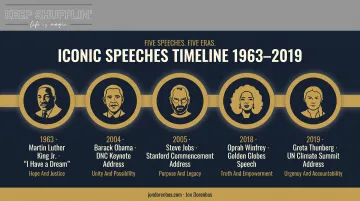
Studying these five speeches shows what separates a forgettable talk from one people quote decades later. Each combines a distinct storytelling technique with real authenticity.
Steve Jobs: Stanford Commencement Address (2005)
Jobs stood before roughly 23,000 people at Stanford Stadium and told three personal stories: dropping out of college, getting fired from Apple, and facing a cancer diagnosis. The closing line, "stay hungry, stay foolish," became shorthand for taking risks. The address remains a clear example of building a speech around vulnerability instead of a highlight reel.
Martin Luther King Jr.: "I Have a Dream" (1963)
Delivered to an estimated 250,000 people at the Lincoln Memorial, King's speech used rhythmic repetition and moral urgency to turn a policy argument into a spiritual call. It's still taught as the gold standard for persuasive, values-driven oratory more than 60 years later.
Barack Obama: 2004 Democratic National Convention Keynote
A little-known Illinois Senate candidate stepped onto a national stage and, through personal storytelling and deliberately inclusive language, launched himself into the political spotlight overnight. The speech's "politics of hope" framing became his brand for the next decade.
Greta Thunberg: UN Climate Action Summit (2019)
At 16, Thunberg addressed dozens of heads of state with raw, unpolished fury rather than polished rhetoric. Her speech proved that authenticity, even when uncomfortable, can land harder than perfect delivery.
Oprah Winfrey: Golden Globes Cecil B. DeMille Award Speech (2018)
Winfrey turned an acceptance speech into a cultural moment, combining personal vulnerability with a broader message about justice and voice. It became one of the most shared awards-show moments in recent memory.
How to Choose the Right Inspirational Keynote Speaker
The most common mistake planners make is booking for fame instead of fit. A celebrity name draws ticket sales, but if the message doesn't match the audience, event ROI suffers, and attendees remember the mismatch, not the moment.
Industry data backs this up. Association research shows 19% of planners said past speakers didn't understand their audience. That gap is two-sided—and avoidable with better briefing on both ends.
Before booking, evaluate:
- Theme alignment: Does the speaker's core message connect to your event's purpose—not just loosely relate to it?
- Customization ability: Will they tailor stories and references to your industry, or deliver the same deck everywhere?
- Engagement track record: Ask for video of full presentations, not just a highlight reel.
- Audience testimonials: Look for specifics (standing ovations, repeat bookings) rather than vague praise.
Planners in a recent industry survey ranked audience engagement as their top booking priority at 67%, well ahead of staying within budget. Fit drives outcomes. Fame alone does not.
Conclusion
The speeches and speakers covered here share one trait: they combine authentic storytelling with a message that keeps working long after the applause fades. Fame alone never explains why a talk sticks; specificity, vulnerability, and a clear call to action do.
Before you book anyone, check their adaptability, read the audience reviews, and confirm the story actually fits your event's goal.
Speakers who blend genuine personal triumph with live entertainment, like Jon Dorenbos, tend to leave rooms standing. That combination of magic, storytelling, and hard-won resilience is difficult to replicate, which is why demand for that mix stays high.
Frequently Asked Questions
Who are some famous keynote speakers?
Well-known names include Jon Dorenbos, Simon Sinek, Brené Brown, Mel Robbins, and Tony Robbins. Styles range from magic-driven storytelling to research-backed frameworks.
What are the top 10 speeches of all time?
There is no single agreed ranking, but frequently cited examples include MLK's "I Have a Dream," Obama's 2004 DNC keynote, and Steve Jobs' Stanford Commencement Address. See the speeches section above for standout examples and what makes each effective.
What makes a keynote speech inspirational rather than just informative?
Inspirational keynotes combine emotional storytelling, personal vulnerability, and a clear call to action. Informative talks deliver facts; inspirational ones deliver a shift in mindset the audience can act on.
How much do celebrity keynote speakers typically charge?
Fees vary widely by fame, demand, and event type, ranging from a few thousand dollars for emerging speakers to $100,000 or more for top celebrity names. Contact speakers directly for accurate, event-specific quotes.
How do I book an inspirational keynote speaker for a corporate event?
Confirm the speaker fits your audience and date, then reach out through their official booking channel with event details, goals, and logistics. Clear briefs help you get accurate availability and pricing faster.
What is the difference between a motivational speaker and a keynote speaker?
A keynote speaker sets the tone for an entire event around a central theme, while a motivational speaker focuses specifically on inspiring action and mindset shifts. Many speakers, including most on this list, do both at once.