This isn't a small risk. Attendees increasingly judge conferences by content substance over star power. In fact, Freeman's 2024 attendee research found that when choosing keynote content, 39% of attendees prioritize innovation and 34% want industry experts, while only 1% said celebrity stories mattered most to them (Freeman Trends Report, 2024).
This guide breaks down the speaker types you'll encounter, why the right pick matters, and the exact factors to weigh before signing a contract.
Key Takeaways
- Speaker selection directly shapes audience engagement, event energy, and measurable ROI on your conference budget
- Match the speaker type (keynote, panel, breakout, or guest) to your event's specific goals and format
- Weigh audience relevance, authenticity, and customization ability over name recognition alone
- Book early, check references, and watch full-length video before finalizing any contract
What Is a Conference Guest Speaker?
A conference guest speaker is an outside presenter invited to inform, inspire, or entertain attendees around a specific theme. That's the simple definition. In practice, "guest speaker" gets used as a catch-all term for several distinct roles, each serving a different purpose on the agenda.
Understanding these roles matters because booking the wrong type for the wrong slot wastes both budget and stage time.
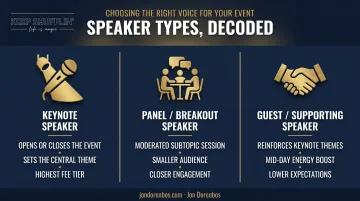
Keynote Speaker
The keynote speaker sets the tone for the entire event. They typically open or close the conference, and their visibility and drawing power usually command the largest fee of any presenter on the roster.
Eventbrite defines the keynote as the event's main speaker—an address that establishes the central theme attendees carry through the rest of the program.
Panel or Breakout Speaker
Panel and breakout speakers go deeper into a specific subtopic, usually alongside other experts in a moderated, shorter-format session. These sessions let audiences split into smaller groups, ask direct questions, and get closer engagement with the material than a keynote format allows.
Guest/Supporting Speaker
A guest or supporting speaker reinforces the keynote's themes at another point in the program. They offer a change of pace, a fresh outside perspective, or a mid-day energy boost. This role doesn't carry the same expectations as a keynote, but it still needs to fit the day's flow and message.
Why the Right Guest Speaker Matters
The right speaker does more than fill a time slot. They shape how attendees experience and remember your entire event.
Getting this decision right delivers:
- Higher audience engagement and satisfaction scores throughout the program
- Stronger brand association between your organization and a memorable experience
- More actionable takeaways attendees bring back to their teams
- Better perceived value against ticket price and sponsorship investment
Programming value drives participation more than most planners assume. Freeman's Fall 2024 organizer survey found that perceived content value influenced participation for 65% of attendees, while relevance to professional goals influenced 78% (Freeman Trends Report, 2024).
A speaker who doesn't connect to what attendees actually need undermines that value, no matter how polished their delivery is.
What to Consider When Choosing the Right Guest Speaker
These factors connect a speaker's specific attributes to measurable event outcomes, rather than relying on gut feeling or a recognizable name.
Audience, Story, and Format Fit
Matching a speaker's message and energy to your audience's demographics and expectations is the single biggest driver of engagement. You'll see the difference in post-event satisfaction scores and social sentiment.
Audience mismatch is a documented, recurring problem. PCMA's 2024 summary of the AAE Speaker Industry Benchmark Report found that 19% of organizers said their speaker didn't understand the audience (PCMA, 2024). Give speakers a detailed brief covering demographics, interests, and organizational context before the event, not after booking.
A genuine, differentiated personal story builds a deeper emotional connection than generic motivational content. Attendees remember those sessions longer, respond with stronger ovations, and talk about them afterward on social channels.
Harvard Business Review notes that effective stories do more than entertain. They communicate information, elicit emotion, and help persuade and motivate an audience when tailored to that audience's specific concerns (HBR, 2020).
Session length, format, and energy level also need to align with the surrounding agenda. Skip this step and you risk an awkward tonal mismatch that throws off program flow.
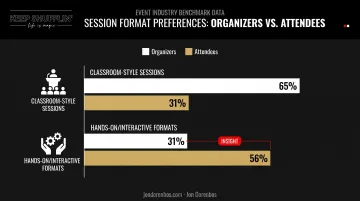
Planners and attendees often disagree here. Freeman found organizers picked classroom-style sessions 65% of the time, while attendees preferred them only 31% of the time, and attendees favored hands-on formats 56% versus organizers' 31%. Test format preference with your audience directly rather than assuming.
Credibility and Budget
Reviewing testimonials, full-length video, and past bookings with recognizable organizations reduces your risk of an underwhelming presentation. Strong credentials raise perceived professionalism and increase the odds a speaker gets invited back.
BizBash's vetting guidance is blunt: skip the polished highlight reel and watch extended, full-length footage instead. That's where you actually see how a speaker develops a topic and holds a room over time, not just in a 90-second montage.
Setting a firm budget range upfront prevents overspending on "glitz" while still leaving room for a genuinely strong presenter. A clear range protects cost-per-attendee and overall event ROI.
PCMA's 2024 survey of 340 organizers found an average keynote budget of $22,449, with 47% of organizers spending between $10,000 and $50,000 (PCMA, 2024). Roughly eight in ten speakers surveyed said travel costs come on top of that fee, so budget for extras separately.
Customization and Logistics
A speaker's willingness to tailor content to your mission, and to handle travel and AV logistics smoothly, affects your entire planning process. It cuts prep time and lowers on-site production risk.
Ask directly:
- Will they customize the message, or deliver the same script everywhere?
- Will their team join a pre-event production call?
The answers tell you how smooth or stressful the lead-up to your event will be.
How Jon Dorenbos Exemplifies the Right Guest Speaker Choice
Jon Dorenbos checks every factor above. He combines 14 years of NFL credibility as a long snapper for the Philadelphia Eagles (2006–2017), stage magic, and a personal story built around real tragedy, resilience, and forgiveness.
His differentiators include:
- Finalist on America's Got Talent (Season 11) and AGT: The Champions
- 25 appearances on The Ellen DeGeneres Show, where Ellen called him her "all-time favorite pro football-playing magician"
- 1,000+ event appearances for organizations including Apple, Marriott, Kroger, RE/MAX, Campbell Soup Company, and Hard Rock
- Author of Life Is Magic, optioned for a feature film with producer Mike Tollin
Rather than recycling one script, Jon's team runs a discovery call and pre-event production call with every client to weave company-specific themes directly into the presentation.
He's used magic on stage to bring a client's own conference slogan to life, turning an abstract theme into something the audience physically watched happen in front of them.
That customization pays off in outcomes clients can point to directly. Nick Bailey, President and CEO of RE/MAX World Headquarters, said Jon earned an unsolicited standing ovation halfway through his presentation—the first time Bailey had witnessed that in his career.
Michael Clarke of Marriott International called him "the most powerful, engaging, dynamic and authentic presenter" he'd hired in 17-plus years of producing events.
Given this celebrity-tier positioning, engagements typically start at $80,000, reflecting the scale of his television reach, corporate track record, and fully customized approach — not a flat rate for a generic talk.

Conclusion
Skip the impulse to book the biggest name on your shortlist. Choose the speaker whose story, style, and credibility match your audience and your event objectives.
Vetting through references, full-length video, and a direct conversation takes extra time. It's worth every minute before you sign anything. Review your speaker selection after every event using real attendee feedback, then use those insights to sharpen your criteria for next time.
Frequently Asked Questions
What is a conference guest speaker called?
Titles vary by role. A keynote speaker is the lead presenter. Panelists and breakout speakers cover subtopics. "Guest speaker" is the general term for any outside presenter on the agenda.
How do I introduce a conference guest speaker?
Keep it short, energizing, and accurate. Cover the speaker's name, key credentials, and their topic, then end with a warm, direct welcome to the stage.
Who are some popular conference guest speakers?
Popular speakers span former athletes, celebrities, industry thought leaders, and authors. Jon Dorenbos, for example, combines 14 years in the NFL with America's Got Talent finals experience and corporate keynote work.
How much does it cost to hire a guest speaker for a conference?
Fees range from a few thousand dollars for emerging speakers to $80,000+ for celebrity-tier talent. A 2024 survey found average keynote budgets around $22,449, with most organizers spending $10,000 to $50,000.
What's the difference between a keynote speaker and a guest speaker?
A keynote speaker leads the event and sets its central theme, typically opening or closing the program. A guest speaker usually fills a supporting role, reinforcing themes at another point in the agenda.
How far in advance should I book a conference speaker?
Most events secure speakers 3 to 6 months ahead, while larger conferences often book 9 to 12 months in advance (Forbes, 2024). Start outreach as soon as your event date is confirmed.