
The problem? Event planners often struggle to find someone who has actually built something real and can hold a ballroom of 2,000 people in the palm of their hand.
This guide ranks the top 10 high-profile entrepreneurship motivational speakers working today, explains how we selected them, and shares practical tips for booking the right fit for your event.
Key Takeaways
- Top entrepreneurship speakers pair firsthand business-building experience with genuine storytelling skill
- A speaker's credibility, media recognition, and stage presence together set the great apart from the forgettable
- Fees for high-profile speakers typically start in the high five figures and climb well into six figures or more
- Reinvention stories, like athlete-turned-speaker Jon Dorenbos, resonate deeply with change-focused audiences
- Matching a speaker's story to your industry matters more than chasing the biggest name
Overview of Entrepreneurship Motivational Speaking for Corporate Events
An entrepreneurship motivational speaker uses their own business journey, whether it's a startup exit or a scrappy bootstrap story, to teach audiences how to innovate, take risks, and bounce back from setbacks.
Demand for this content isn't a passing trend. The U.S. Small Business Administration reports 36.2 million small businesses now operating in the United States, accounting for 99.9% of all U.S. businesses. These companies employ over 62 million people, according to its 2025 Small Business Profile.
That scale explains why entrepreneurship has become a go-to theme for:
- Sales kickoffs looking to fire up quota-chasing teams
- Leadership offsites focused on innovation and culture
- National association conferences serving small business owners
- Fortune 500 gatherings that want a jolt of founder-level hustle
Below, we rank today's most sought-after entrepreneurship speakers based on credibility, stage impact, and real booking demand.
Top 10 High-Profile Entrepreneurship Motivational Speakers
We selected these names using three criteria: a verified entrepreneurial track record, meaningful media or public visibility, and the proven ability to turn personal success into takeaways an audience can actually use.
1. Jon Dorenbos
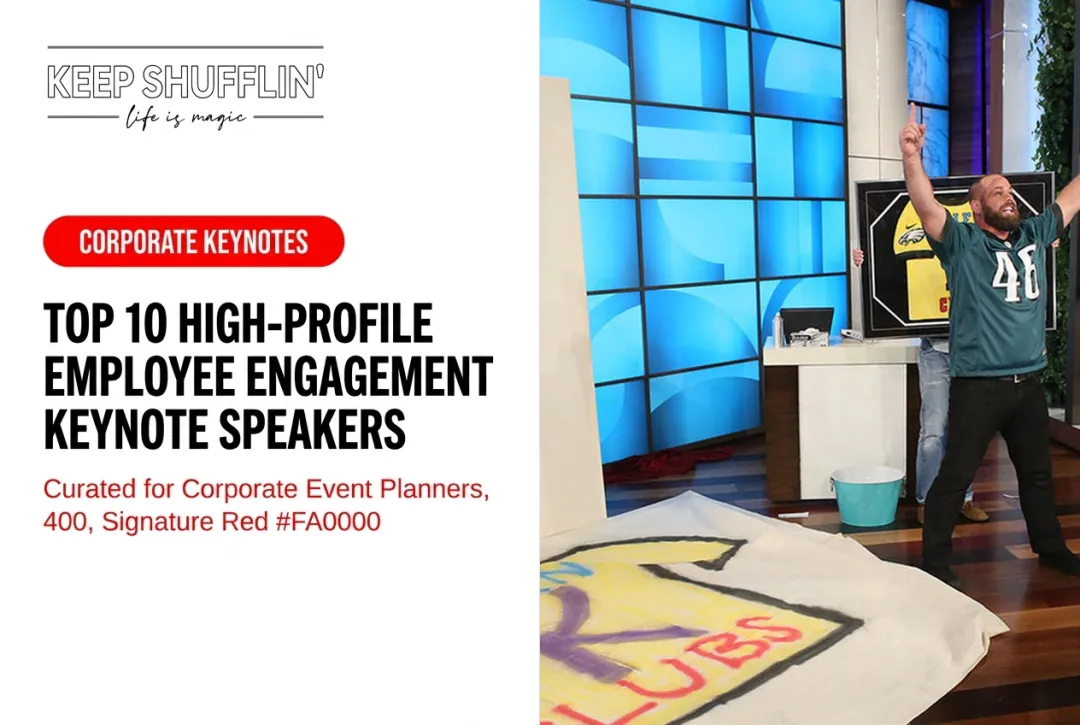
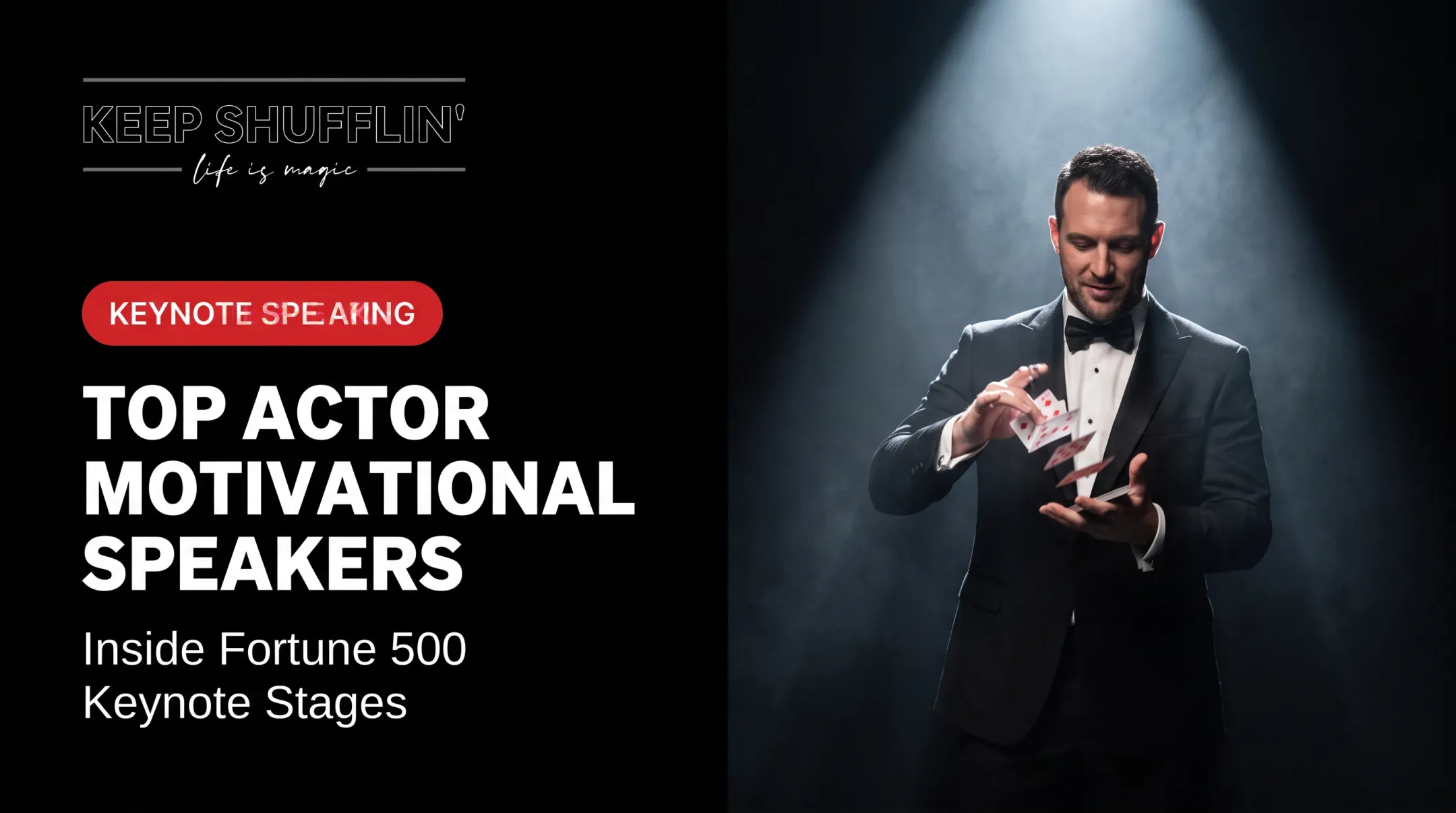
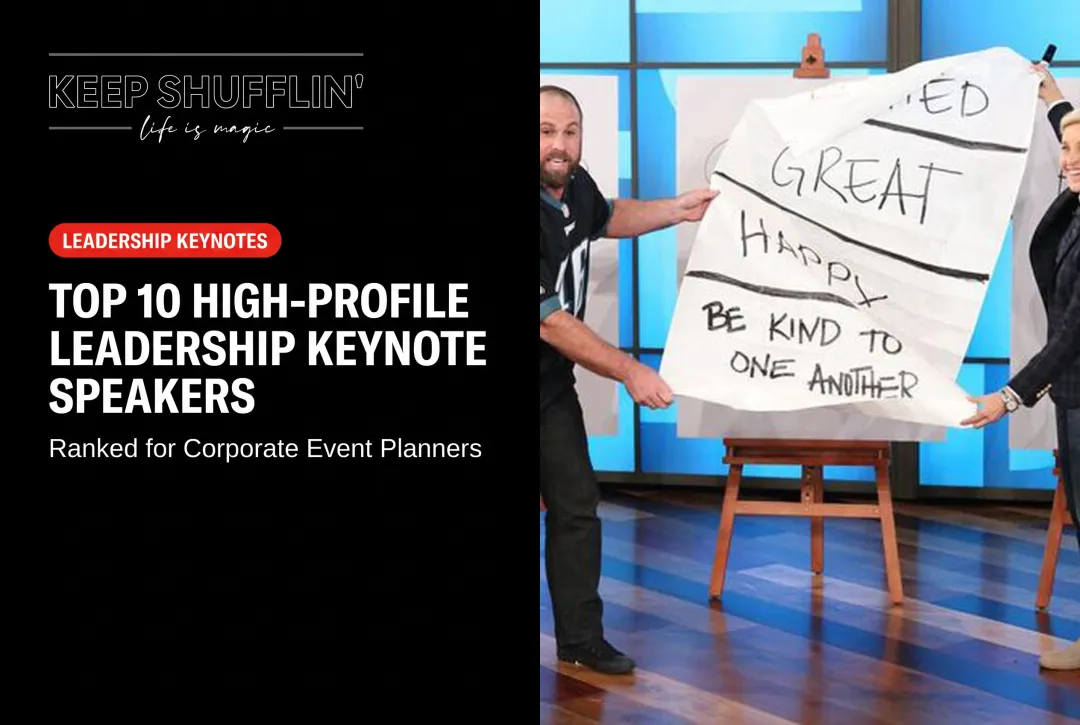
Jon Dorenbos spent 14 years as a professional NFL long snapper before a career-ending health scare pushed him toward magic and the speaking stage. He became a two-time finalist on America's Got Talent, appeared on AGT: The Champions, and turned into a fan favorite on The Ellen DeGeneres Show.
What sets him apart for entrepreneurship audiences goes beyond the card tricks, impressive as they are. The message underneath them does the real work.
Jon's story blends resilience, forgiveness, and purpose, themes that mirror the exact mindset shifts entrepreneurs need when a venture stalls or a plan falls apart. He's delivered keynotes for major brands including Apple, Marriott, Kroger, RE/MAX, and Facebook, with Marriott's own B2B marketing team calling his virtual keynote for 3,400 attendees "a grand slam."
Two things make him a standout booking: full customization, since he weaves each client's specific message and goals directly into his presentation rather than delivering a canned talk, and guaranteed engagement, since his blend of sleight-of-hand magic and personal storytelling consistently earns standing ovations, even from skeptical corporate crowds.

2. Daymond John
Daymond John built FUBU from his mother's basement, starting with roughly $40 worth of fabric, into a global apparel brand generating hundreds of millions in lifetime sales. He's also an original cast member of Shark Tank.
He stands out because his lessons on branding, negotiation, and bootstrapping are painfully practical. There's no fluff. Audiences leave with tactics on stretching a budget and building a brand from nothing, not just inspiration.
3. Mark Cuban
Mark Cuban sold Broadcast.com to Yahoo for $5.7 billion in stock in 1999, one of the largest dot-com exits of its era. He later became a fixture on Shark Tank before departing the show in 2025 and selling his controlling stake in the Dallas Mavericks in 2023.
His talks resonate because they're candid, sometimes brutally so, about scaling a business and timing the market right. He also pushes founders to work smarter, not harder, and he doesn't sugarcoat failure, which audiences tend to appreciate.
4. Barbara Corcoran
Barbara Corcoran turned a $1,000 loan into The Corcoran Group, a real estate powerhouse she eventually sold for $66 million in 2001 after negotiating up from a $22 million initial offer.
Her strength on stage is sales psychology and team-building. She talks openly about self-doubt and the "fraud" feeling many founders experience even after major success, which makes her relatable to leaders at every level.
5. Gary Vaynerchuk
Gary Vaynerchuk transformed his family's wine shop into WineLibrary.com in the late 1990s, then founded VaynerMedia in 2009 with his brother AJ. Today he runs VaynerX, a full digital media empire.
His high-energy, no-filter delivery on personal branding and hustle culture makes him a favorite with younger, digitally native audiences. He's blunt, fast-talking, and unapologetically direct, which is exactly why sales and marketing teams love him.
6. Simon Sinek
Simon Sinek popularized the concept of "Start With Why," a framework that's reshaped how companies talk about purpose and leadership. He's a trained ethnographer and founder of The Optimism Company.
His appeal lies in giving entrepreneurs and teams a clear, repeatable model for finding purpose-driven direction. It's less about his own business exits and more about the thinking tools he hands audiences.
7. Jamie Kern Lima
Jamie Kern Lima founded IT Cosmetics from her living room in 2008 and sold it to L'Oréal in a $1.2 billion cash deal. She became the first female CEO of any L'Oréal brand.
She stands out for a story built on rejection and self-doubt. Investors and retailers turned her down repeatedly before her products found their audience, a narrative that lands hard with anyone facing early failure.
8. Kevin O'Leary
Kevin O'Leary started as an assistant product manager at Nabisco before co-founding SoftKey, which became The Learning Company and sold for a massive sum in the late 1990s. He's a longtime Shark Tank Shark.
His value on stage is his blunt, numbers-first approach. He skips the motivational buildup and goes straight to financial discipline, which audiences focused on operations and finance tend to respect.
9. Ed Mylett
Ed Mylett built his entrepreneurial career in financial services with World Financial Group before becoming a widely followed voice on peak performance and personal growth, backed by 30 years of coaching experience.
His talks lean into mindset and discipline, always aimed at maximizing potential, delivered with a high-octane energy that plays especially well with sales teams chasing aggressive targets.
10. Lewis Howes
Lewis Howes had his athletic career cut short by a wrist injury in Arena Football, a setback that left him recovering on his sister's couch before he built The School of Greatness into a major media brand.
His overcoming-adversity story, paired with practical business-coaching insights, makes him especially popular with younger, digitally engaged entrepreneurial audiences.
How We Chose These Top Speakers
The most common mistake event planners make? Booking a speaker for name recognition alone, without checking whether their story fits the audience's actual challenges.
We evaluated speakers using four criteria:
- Verified entrepreneurial track record – real companies built, sold, or scaled
- Media and public visibility – television, press, or platform reach that adds credibility
- Audience engagement ability – proven skill holding a room's attention
- Story relevance – direct application to business challenges like innovation, resilience, or leadership
What to Consider When Booking an Entrepreneurship Speaker
Fees for high-profile entrepreneurship speakers vary enormously. Industry booking guidance from All American Speakers Bureau puts the overall market range from $5,000 to well over $200,000, depending on fame, media exposure, and how much customization the event requires.
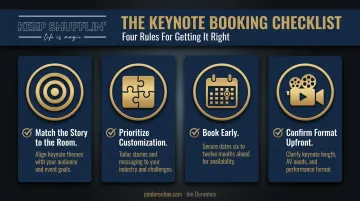
A few practical rules before you sign a contract:
- Match the story to the room. Startup audiences respond to tech founders; teams navigating major change respond to athlete-turned-speakers like Jon Dorenbos
- Prioritize customization. Speakers who tailor content to your industry and weave in your specific goals deliver far more impact than one-size-fits-all talks
- Book early. In-demand names can require lead times stretching to a year or more
- Confirm format upfront. Virtual, hybrid, and in-person availability differ speaker to speaker, so nail this down before you commit dates
Conclusion
Fame doesn't determine which entrepreneurship speaker is right for your event. Look for the one whose message fits what your team needs to hear right now.
Evaluate candidates on engagement style, customization, and the lasting impact of their message, not just how many magazine covers they've landed.
If your event calls for a speaker who blends real reinvention with a guaranteed standing ovation, Jon Dorenbos delivers exactly that. He's brought this combination to Fortune 500 stages for Apple, Marriott, and Kroger, with more than 1,000 event appearances to back it up.
Frequently Asked Questions
Who are the top entrepreneurship speakers?
Some of the most recognized names include Daymond John, Mark Cuban, Barbara Corcoran, and Jon Dorenbos. The right "top" speaker depends on which story fits your audience best.
How much do entrepreneurship speakers get paid?
Fees typically range from low five figures to six figures or more, depending on fame, media exposure, and how much customization the keynote requires.
What topics do entrepreneurship speakers typically cover?
Common themes include resilience, innovation, leadership, risk-taking, and scaling a business. Many also address team-building and navigating change.
How far in advance should I book an entrepreneurship speaker?
Plan for at least 3-6 months of lead time. Highly sought-after names sometimes require a year or more of advance notice.
What's the difference between a motivational speaker and a keynote speaker?
According to National Speakers Bureau, a keynote speaker delivers an event's main address and sets its overall tone, while a motivational speaker focuses on uplifting, adversity-centered content. Many speakers, including Jon Dorenbos, do both.
Can entrepreneurship speakers be booked for virtual events?
Yes. Most high-profile speakers, including Jon Dorenbos, offer virtual keynote formats alongside in-person presentations, having delivered virtual sessions for clients like Marriott.