
Here's the pain point: plenty of keynote speakers have inspiring content. Fewer can keep an audience locked in for a full hour without a lull, a confusing pivot, or a segment that feels bolted on.
This guide breaks down what narrative flow actually means, why it matters for corporate events, and why Jon Dorenbos — former NFL long snapper, America's Got Talent finalist, and Fortune 500 keynote speaker — is a useful case study in getting it right.
Key Takeaways
- Narrative flow is what holds attention from the opening line through the final takeaway
- Best storytelling speakers pair clear structure (setup, conflict, resolution) with tight pacing and tone control
- Jon Dorenbos weaves NFL career highs, personal tragedy, and live magic into one continuous arc
- Evaluate speakers on story structure and emotional payoff—not stage charisma alone
What Is Story Flow?
Story flow is the fluid movement from one idea, emotional beat, or scene to the next, without jarring transitions that leave an audience lost.
Flow isn't the same as structure. Structure is the skeleton (beginning, middle, end). Flow is how smoothly the audience moves through that skeleton. A speaker can have perfect structure on paper and still lose the room if the transitions feel abrupt or the pacing drags.
This matters more on stage than on the page. A reader who gets confused can flip back a paragraph. A live audience can't. If a keynote speaker loses the thread for even 30 seconds, that attention doesn't always come back.
Why Duration and Pacing Matter
TED's own speaker guidance caps talks at 18 minutes, reasoning that it's long enough to say something meaningful but short enough to hold full attention. Corporate keynotes typically run 45 to 60 minutes, so the burden on flow is even heavier. Every transition has to earn its place, or the room drifts.
The Main Stages of Storytelling
Most well-structured keynotes move through the same core stages, whether the speaker is a CEO or a former athlete. Harvard Business Review frames this as setting up a status quo, then introducing conflict that demands resolution. Here's how it plays out on a corporate stage:
- The hook — Earn attention in the first 30 seconds with a vivid moment or unexpected statement, and plant a question the audience wants answered.
- Conflict or struggle — This is where vulnerability creates investment. Stakes matter here: a childhood tragedy, a career-ending injury, a high-pressure moment nobody saw coming.
- The turning point — The pivot where transformation becomes visible: a decision, recovery, or insight that reframes everything that came before.
- Resolution and takeaway — The personal story connects back to something the audience can actually use: resilience, adaptability, teamwork.

Skilled speakers layer entertainment inside these stages rather than pausing for it. A joke, a prop, or a live bit keeps flow intact when it advances the story instead of breaking from it.
What Makes a Storytelling Speaker Excel at Narrative Flow
Great narrative flow comes from a handful of deliberate techniques, not luck.
Vertical and Horizontal Flow
Each story beat should deliver one clear takeaway (vertical flow), and every beat should connect logically to the next across the full presentation (horizontal flow). Skip either one, and the story either feels shallow in the moment or disjointed as a whole.
Vocal and Physical Pacing
Pauses, tone shifts, and deliberate movement signal transitions between story stages. Toastmasters identifies volume, pitch, pace, and pause as the core tools speakers use for emphasis and tension. A speaker who rushes the emotional beats loses the room just as fast as one who drags.
Emotional Calibration
Alternating tension and relief keeps an audience from hitting fatigue. A tragic memory followed by a lighter, humorous beat gives the audience space to breathe before the next gut-punch.
Customization Preserves Flow
Recycled material loses the room even when delivery is strong. Weaving in industry-specific references or a company's mission ties the narrative to the audience and keeps the flow relevant instead of interchangeable.
Multi-Sensory Elements as Proof Points
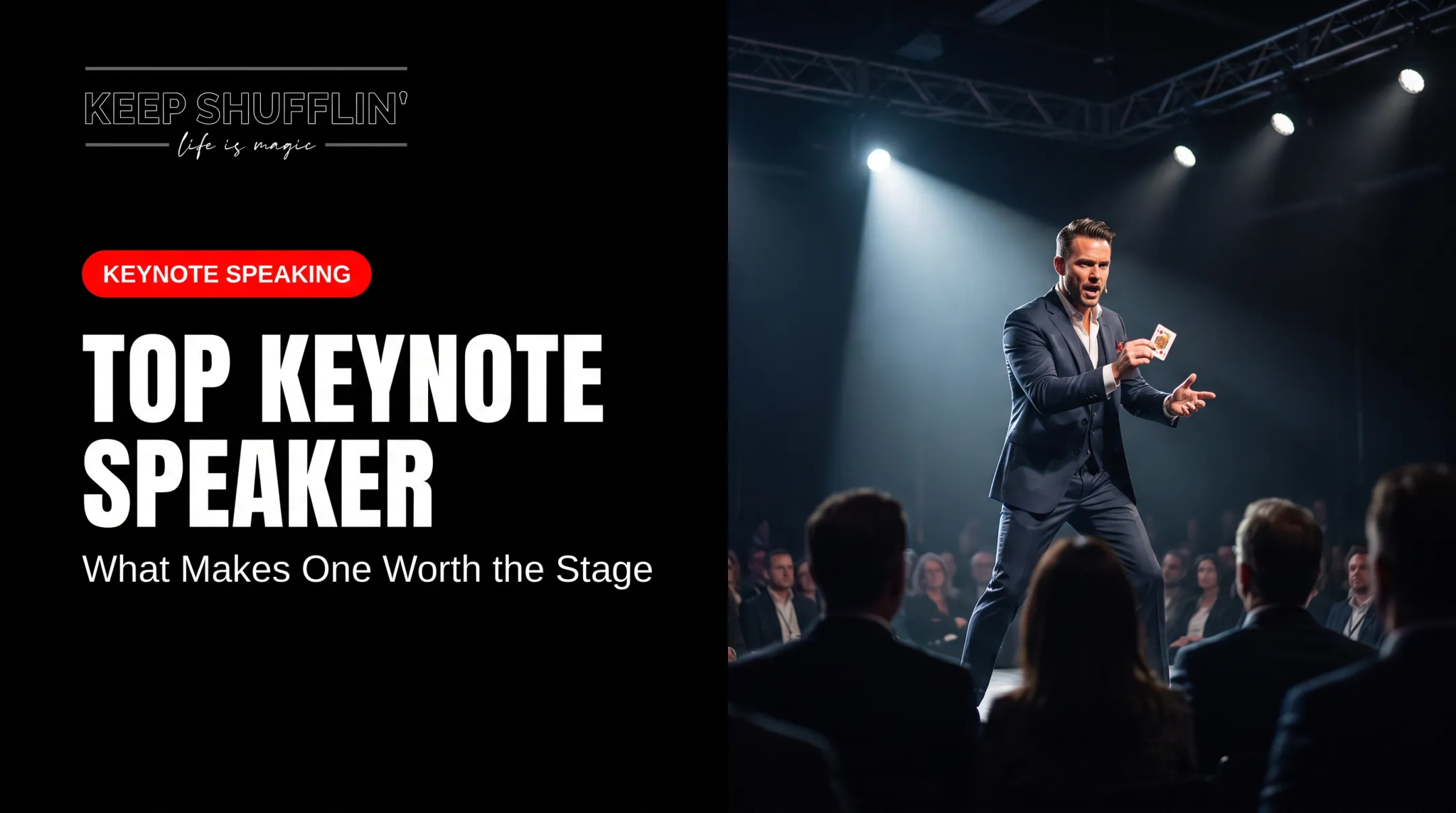
Live demonstrations (magic, in Jon's case) work best as evidence inside the arc, not as a separate performance segment. When a trick reinforces the message instead of interrupting it, the story keeps moving.

Why Jon Dorenbos Is a Standout Example of Narrative Flow Mastery
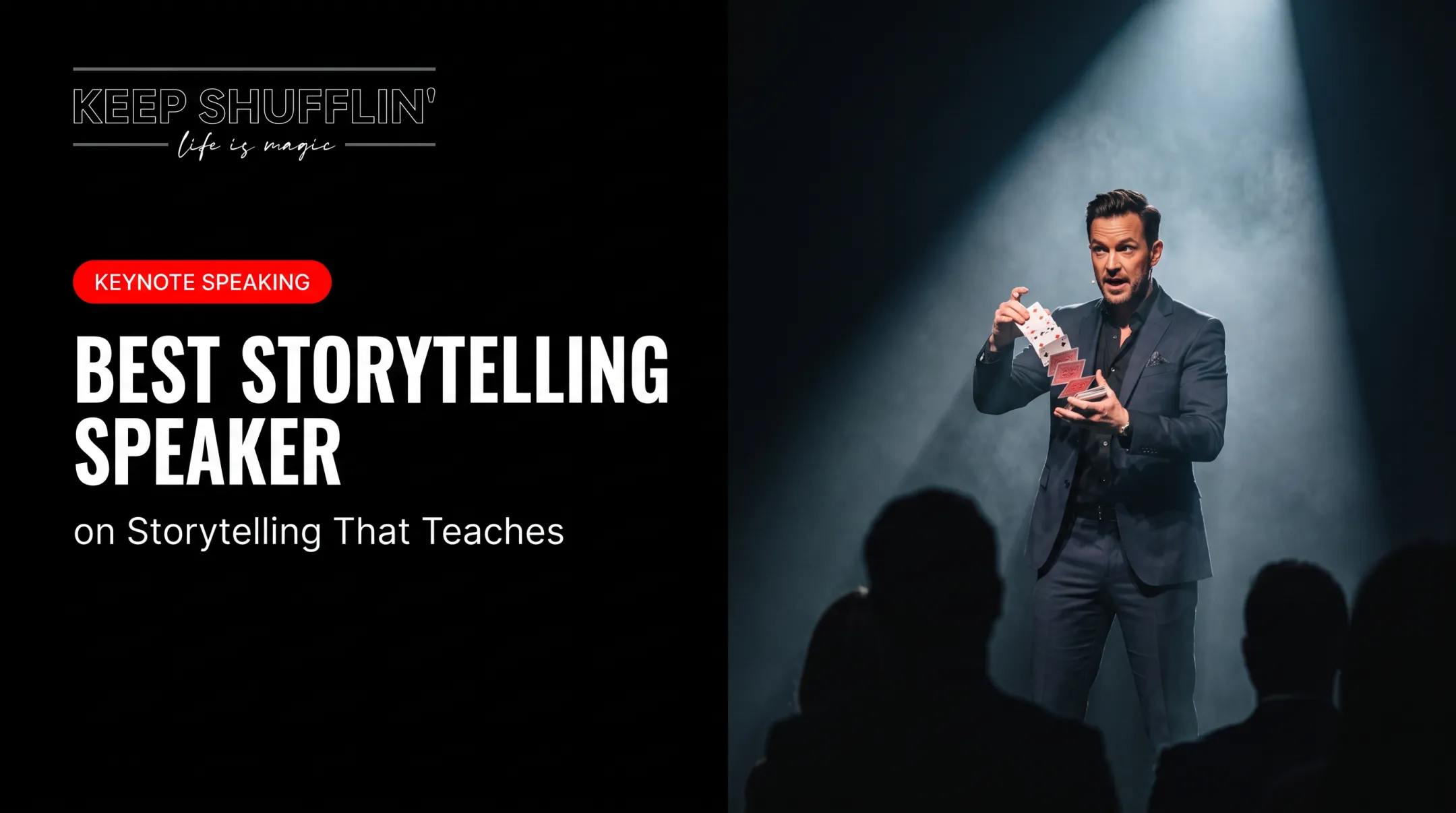
Jon's keynote doesn't treat his NFL career and his personal history as two separate stories stitched together. It moves as one continuous arc.
He opens with hard credentials—14 years in the NFL, two Pro Bowl selections, a Super Bowl win—then turns a deck of cards into a life metaphor and drops into the events that shaped him:
- Lost his mother at age 12, after his father murdered her
- Spent a year in foster care, then moved to Southern California to live with an aunt
- Discovered magic through a chance encounter with magician Bill Malone
- Learned of a heart condition four days after the Saints drafted him—emergency open-heart surgery ended his football career
Magic stays inside the emotional arc—not a side segment. Each illusion ties back to survival, forgiveness, and choice. Closing card tricks land the takeaway: "Life happens. Good, bad, and ugly. What separates people is how they handle it."
That same arc has held across 1,000+ events for brands such as:
- Apple, Marriott, and Kroger
- RE/MAX, Campbell Soup Company, and Five Below
- Lincoln Financial Group and other hospitality, retail, financial, and association audiences
Television stress-tested the structure further: 25 appearances on The Ellen DeGeneres Show (one only six weeks after his heart surgery) and a Season 11 America's Got Talent run built on the same compact themes of forgiveness and resilience. He can shorten the story without breaking its shape—and still leave the room with one clear choice to make.
How to Evaluate a Storytelling Speaker's Narrative Flow Before Booking
Charisma is easy to spot in a two-minute highlight reel. Flow isn't. Here's what to actually check before signing a contract.
- Watch the full demo reel, not just clips. Highlight clips hide pacing problems. A full-length reel shows whether transitions between story beats actually land.
- Read testimonials for specific emotional detail. Look for reactions like Marriott audiences who "laugh, cry, and leave inspired," or Lincoln Financial calling the talk "profound and thought-provoking"—not generic praise.
- Confirm real customization. MPI research names lack of personalization as the top complaint in speaker evaluations. A speaker who tailors the story to your mission keeps the flow feeling built for the room, not recycled from the last one.
- Ask about the pre-event process. A genuine customization call, not just a form to fill out, is a good sign the story will fit your audience.

A speaker like Jon Dorenbos, with a documented customization process and a decade-plus track record across Fortune 500 audiences, gives planners something concrete to evaluate rather than just a gut feeling.
Frequently Asked Questions
What is a story flow?
Story flow is the smooth, logical, and emotional progression from one narrative beat to the next that keeps an audience engaged without confusion or lag.
What are the main stages of storytelling?
The core stages are the hook, rising conflict, the turning point, and resolution with a takeaway. Skilled speakers layer entertainment into each stage rather than pausing for it.
How long should a keynote speaker's story arc be?
Most corporate keynotes run 45-60 minutes. A PCMA survey found nearly half of planners prefer that window for in-person events, so story beats need to map to that runtime.
Can humor or performance elements disrupt narrative flow?
Not when they're intentionally integrated. Jon's magic acts as a storytelling device tied to his message, reinforcing the arc instead of pausing it.
What makes Jon Dorenbos different from other motivational speakers?
Few speakers combine a 14-year NFL career, a resilience story spanning childhood tragedy and emergency heart surgery, and magic used as a narrative device on the same stage.
How do I know if a speaker will resonate with my corporate audience?
Review past client industries, read testimonials for specific emotional detail, and ask for a customized story preview before booking.