
Companies spend real budget on this. According to the AAE Speaking Industry Benchmark Report, the average keynote speaker fee runs $22,449, with 47% of bookings landing between $10,000 and $50,000. That's real money riding on whether a speaker's message actually lands with a room full of executives, salespeople, or association members.
A great storytelling speaker doesn't just entertain. They improve message retention, boost engagement during the event, and drive action after everyone goes home. This article breaks down what makes storytelling speakers effective, walks through real examples, and gives event planners a framework for choosing the right one.
TL;DR
- Messages stick when speakers blend personal narrative, emotion, and clear business relevance
- Strong examples pair authenticity with a clear struggle-to-triumph arc and real audience interaction
- Prioritize audience relevance and customization ability over fame alone
- Jon Dorenbos stands out for blending NFL resilience, magic, and personal storytelling for Fortune 500 audiences
What Makes Business Storytelling Powerful in Corporate Events
Business storytelling speakers use narrative structure—character, conflict, and resolution—to deliver corporate messages in a way that plain data or slides can't match.
The science backs this up, with caveats. A 2024 study published in the Quarterly Journal of Economics found that beliefs shaped by stories faded 33% over one day, compared to 73% for beliefs shaped by statistics alone. Stories aren't magic, but they anchor information in a way raw numbers rarely do.
A separate 2024 study in Royal Society Open Science tested this directly. Researchers gave 1,309 participants identical information, formatted either as bullet points or as a narrative. The narrative version scored higher on engagement and recall. The margin was modest, but it was measurable.
What this means for corporate audiences:
- Data still matters, but it needs context to stick
- A well-told story doesn't replace facts; it makes facts memorable
- Relevance beats celebrity: Freeman's 2024 attendee survey found only 1% of attendees preferred "celebrity stories," while 39% preferred content tied to innovation and 34% wanted industry expertise

That last point matters more than most event planners realize. A famous name can fill the room; a relevant, well-crafted story is what keeps people listening. Speakers like Jon Dorenbos pair personal narrative with client-specific messaging so the story serves the company's goals—not just the stage.
Examples of Business Storytelling Speakers That Work
Each speaker below earned a place on this list through documented audience impact, corporate booking history, and a clear link from personal narrative to business lessons—resilience, adaptability, and purpose.
Jon Dorenbos
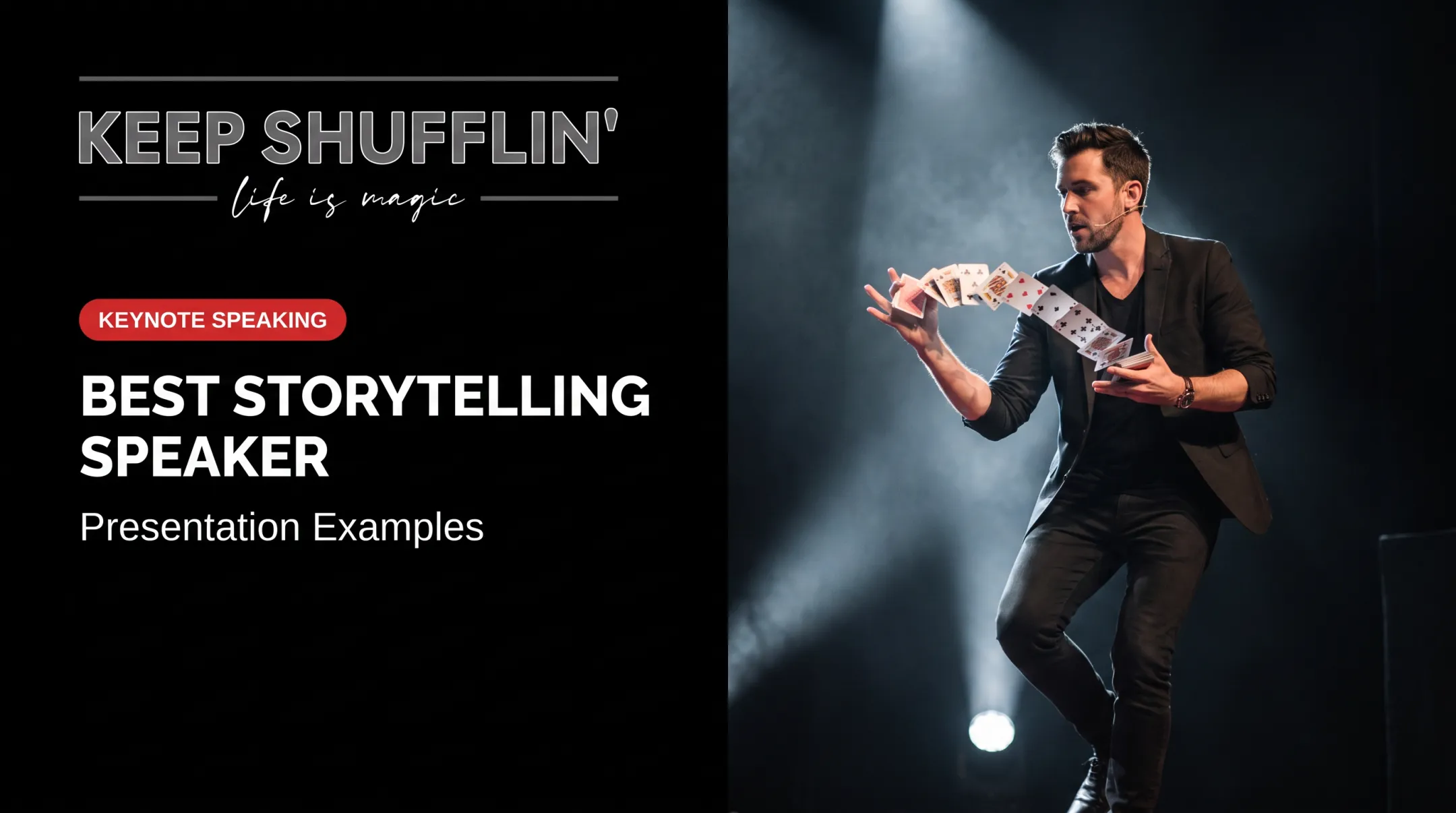
Jon Dorenbos spent 14 years as an NFL long snapper for the Philadelphia Eagles before becoming a finalist on America's Got Talent and a regular guest on The Ellen DeGeneres Show. On stage, he blends dazzling magic with a deeply personal story: his mother's murder when he was 12, foster care, an NFL career, and emergency heart surgery after being drafted.
What sets him apart is scale and proof. Dorenbos has delivered over 1,000 event appearances for companies including Apple, Marriott, Kroger, RE/MAX, Campbell Soup Company, and Five Below. He uses magic as a storytelling device, turning abstract lessons like adaptability and mindset into something the audience can actually watch happen in front of them.

Event producers back that up in plain language:
- RE/MAX CEO Nick Bailey reported an unsolicited standing ovation mid-keynote at the R4 Conference and called him "the BEST KEYNOTE SPEAKER" he'd ever seen
- Marriott's Michael Clarke, with 17+ years in event production, called him the most "powerful, engaging, dynamic and authentic presenter" he had hired
| Aspect | Details |
|---|---|
| Signature Theme | Resilience, forgiveness, and turning adversity into purpose |
| Format | Live keynote blending magic performance with personal narrative |
| Best Fit For | Sales kickoffs, leadership summits, company milestone events |
Brené Brown
Brown is a researcher and author known for two decades of work studying courage, vulnerability, and shame. She holds the Huffington Foundation Endowed Chair at the University of Houston and teaches at UT Austin's McCombs School of Business.
She builds stories on research first, then makes the findings personal. At the 2019 SHRM Annual Conference, she spoke to more than 18,000 HR professionals about brave leadership and humanizing work.
| Aspect | Details |
|---|---|
| Signature Theme | Vulnerability and courageous leadership |
| Format | Research-driven keynote with personal anecdotes |
| Best Fit For | Leadership and HR conferences |
Simon Sinek
Sinek is best known as the author of Start With Why and for popularizing the idea that great leaders inspire action by explaining purpose before process. His talks rely on origin stories, historical examples, and business case studies rather than personal vulnerability.
The "Golden Circle" gives audiences a mental model they can take straight back to the office. That repeatable frame is why his talks transfer so cleanly into strategy sessions.
| Aspect | Details |
|---|---|
| Signature Theme | Purpose and organizational "why" |
| Format | Concept-driven storytelling with business case examples |
| Best Fit For | Strategy offsites, leadership training |
Kevin Hart (Corporate Appearances)
Hart, chairman and CEO of Hartbeat, has moved beyond stand-up into corporate keynote territory. He's been announced as a headline speaker for enterprise marketing conferences and business association dinners, using humor-driven personal storytelling to talk about failure and perseverance.
Tone does the work: hard lessons land without feeling preachy because comedy lowers the room's guard first. Still, treat celebrity wattage as a supplement to relevance, not a substitute. Only 1% of attendees in Freeman's survey cited celebrity as a preferred keynote quality.
| Aspect | Details |
|---|---|
| Signature Theme | Perseverance through humor |
| Format | Comedic personal narrative |
| Best Fit For | Sales conferences, morale-boosting events |
Techniques That Make These Storytelling Examples Work
The best business storytelling speakers rely on a handful of repeatable techniques, not luck or charisma alone.
The struggle-before-triumph arc. Dorenbos's story doesn't open with NFL success. It opens with childhood tragedy. The audience sits in the tension before the resolution arrives. Nike-style ad campaigns use the same structure to build emotional investment before the payoff.
Authenticity over polish. A 2023 study on authentic storytelling found that audiences respond to how credible a story feels, not just how emotional it is. Generic, overly rehearsed anecdotes fall flat next to specific personal detail.
Dorenbos naming his mother, his age, and the exact medical crisis after the NFL draft shows how specificity builds credibility.
Interactive elements. Magic, audience participation, and live demonstration increase engagement by forcing the audience to pay attention in real time. A story alone can be memorable. A story you watch unfold live is harder to forget.

How to Choose the Right Business Storytelling Speaker
The most common booking mistake is choosing based on fame instead of message-audience fit. A comedian who kills at a sales conference might fall flat at a pharmaceutical compliance summit.
Factors that actually predict a good fit:
- Message translates to your team's daily industry challenges
- Talk is tailored to your company's goals, not a one-size-fits-all script
- Format matches the room—intimate sessions vs. a 3,000-person ballroom
- Fortune 500 track record and client testimonials outweigh follower counts
Dorenbos's process shows what strong customization looks like. Organizers share audience details and objectives, then his team maps his personal story to themes like accountability, change management, or teamwork. That beats a speaker who arrives with one fixed speech and hopes it lands.

Conclusion
The right business storytelling speaker aligns personal narrative with your audience's actual business goals, not just celebrity appeal. A famous name fills seats, but relevance and customization keep people listening and acting on what they heard.
Before booking, pressure-test three things:
- Customization depth for your industry and event goals
- Audience fit backed by past corporate results
- References from similar leadership or Fortune 500 events
Ask how the speaker will tailor the story—and the takeaways—to your team.
Speakers like Jon Dorenbos, who build the keynote around a company's specific objectives rather than a generic script, deliver a standing-ovation experience Fortune 500 audiences still talk about months later.
Frequently Asked Questions
What is storytelling in simple words?
Storytelling means sharing a message through a structured narrative, with characters, conflict, and resolution, to create an emotional connection. It's the difference between stating a fact and making someone feel it.
What are the five main types of storytelling?
Common types include origin stories, hero's-journey narratives, overcoming-the-odds stories, mission-driven stories, and product or experience journeys. Business speakers often blend several types within one keynote.
Can you give me some examples of stories?
Jon Dorenbos's story of childhood tragedy, NFL resilience, and emergency heart surgery is one example. Simon Sinek's "Why" narratives, which trace how purpose drives leadership decisions, are another.
What is an example of a 5-sentence story?
"Sarah's team missed their quarterly target for the third time. She almost quit. Instead, she rebuilt the sales process from scratch. Six months later, the team hit 120% of quota. Her story became the training template for three other regions."
What makes a business storytelling keynote speaker effective?
Effectiveness comes from authenticity, relevance to the specific audience, and the ability to customize the narrative to company goals. Fame helps fill seats, but it doesn't guarantee the message sticks.
How much does it cost to book a business storytelling speaker?
Fees vary by speaker profile, format, and event size. Many keynotes fall between $10,000 and $50,000; celebrity-tier speakers often start at $80,000 or higher. Request a custom quote matched to your event.