
Change keynote speakers help leadership teams close that gap. The right speaker builds alignment, models resilience under pressure, and gives audiences a language for adaptability they can actually use back at work. But there's a real difference between a speaker who tells authentic stories of resilience and one who just recycles generic motivational talking points.
This guide breaks down what to look for and profiles the top change keynote speakers leaders are booking right now.
TL;DR
- Change keynote speakers turn change-management theory into stories leaders can model.
- Companies hire them to build alignment, resilience, and adaptability before, during, or after a transformation.
- Choose speakers based on authenticity, corporate relevance, and audience engagement—not fame alone.
- Jon Dorenbos tops the list: 14-year NFL long snapper, magician, America's Got Talent finalist, and Fortune 500-tested on resilience.
- Charlene Li, Brian Solis, George Westerman, and David Rogers add research-backed, strategy-first perspectives.
Understanding Change Leadership and Why It Needs a Keynote Speaker
Change leadership and change management aren't the same thing. Prosci draws a clear line between them:
- Change management is the structured process for leading the people side of change
- Change leadership is about setting direction and inspiring people to actually embrace that change
Managers own the process. Leaders own the vision.
That's exactly why so many corporate events now bring in outside speakers. A CEO can announce a merger in a memo. A keynote speaker makes the case for why people should believe in it, using story instead of slides.
The best change speakers don't lecture on frameworks. They demonstrate resilience and adaptability through their own lived experience, which is far more memorable than a bullet-pointed slide on "embracing uncertainty." That lived-experience standard is what separates a forgettable talk from a keynote that moves people—and it's the bar for the speakers below.
Top Change Keynote Speakers for Leaders Driving Change
When you shortlist a change keynote speaker, weigh four criteria:
- Authenticity of the personal story
- Relevance to change and resilience themes
- Real corporate stage experience
- Measurable audience engagement
Jon Dorenbos
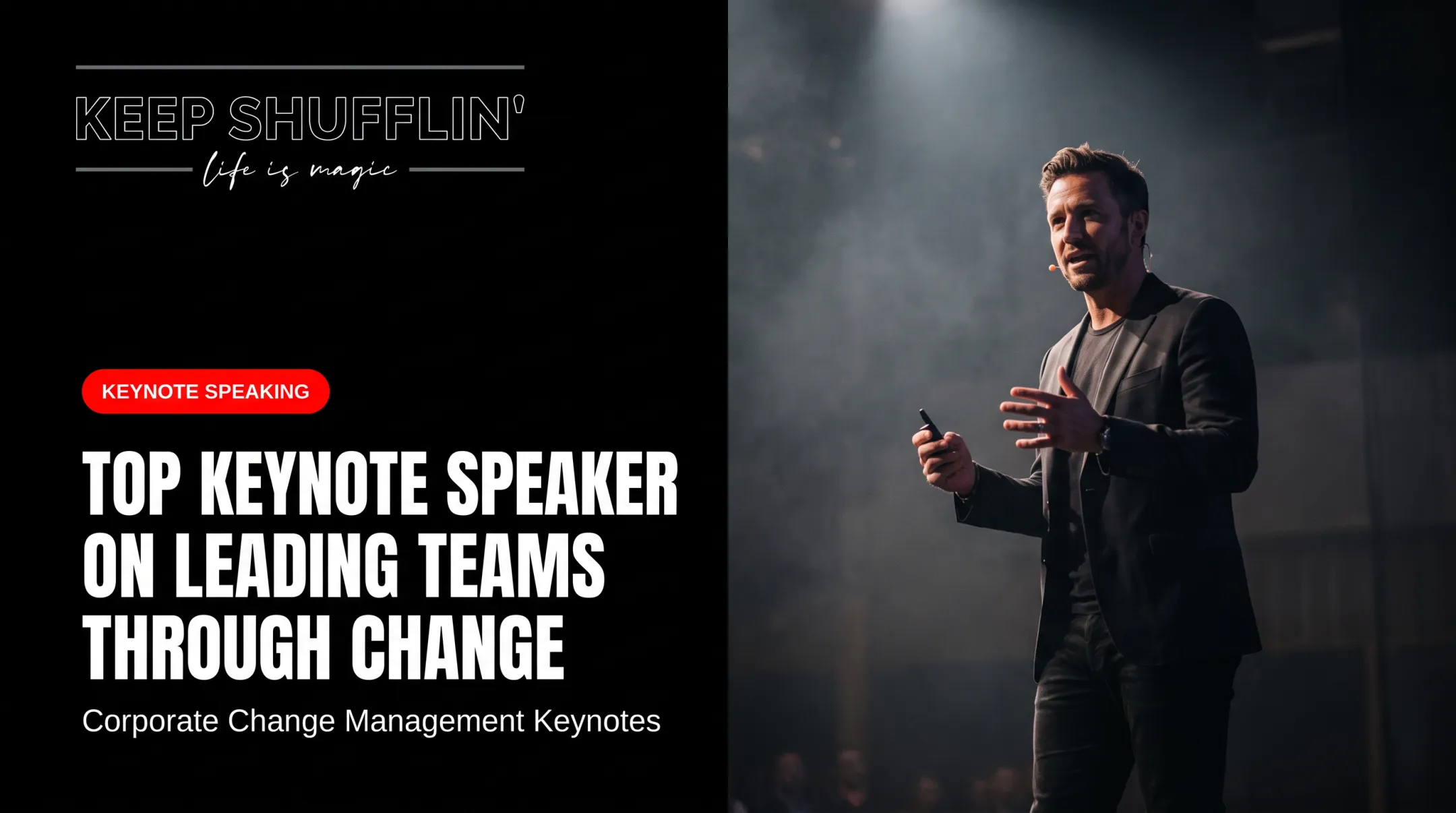
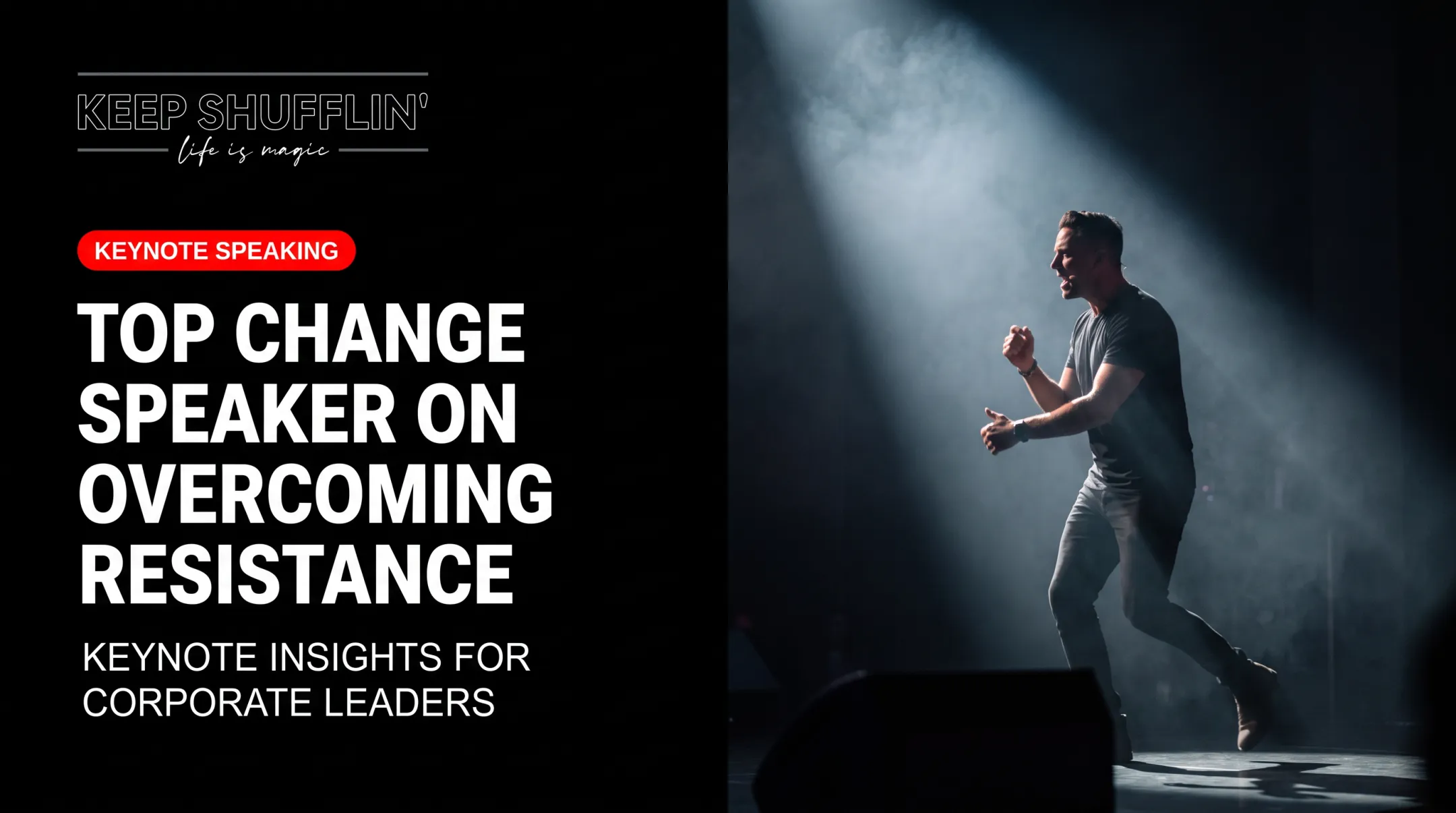
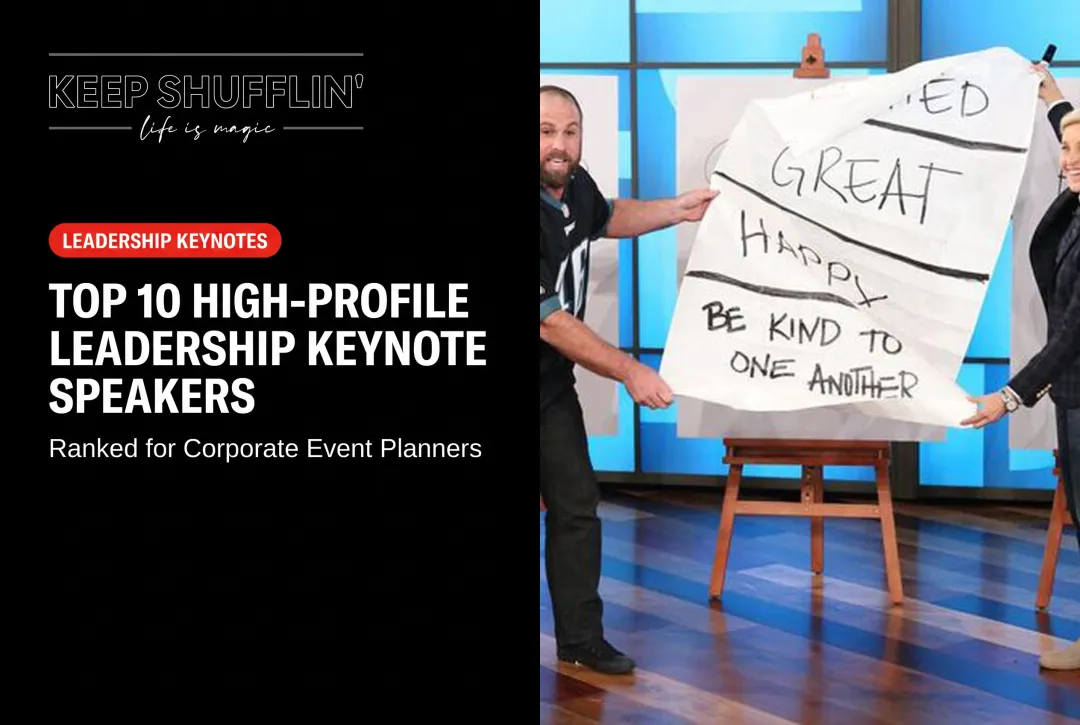
Jon Dorenbos spent 14 years as an NFL long snapper before reinventing himself as a professional magician, a finalist on America's Got Talent and America's Got Talent: The Champions, and a regular guest on The Ellen DeGeneres Show. He now speaks on Fortune 500 stages nationwide.
Dorenbos pairs the message with the proof. He doesn't only talk about resilience—he shows what it looks like under pressure through surviving childhood tragedy, rebuilding his life, and forgiving the people who hurt him.
His signature theme, "Embracing Change," treats change as fuel for growth rather than a threat. That framing helps leaders push teams toward adaptability during transformation.
| Detail | Description |
|---|---|
| Signature Theme | Resilience, forgiveness, and embracing change as fuel for growth |
| Notable Clients | Apple, Marriott, Kroger, Facebook, RE/MAX, Campbell Soup Company, and other Fortune 500 companies |
| Experience | 1,000+ event appearances across corporate conferences, sales kickoffs, and leadership summits |

RE/MAX CEO Nick Bailey has called him the best keynote speaker he's ever seen, noting an unsolicited standing ovation halfway through the presentation, a rare reaction mid-speech.
Charlene Li
Charlene Li has spent more than three decades studying disruption, and it shows in how she frames change for corporate audiences. A Harvard-trained analyst and Marshall Goldsmith 100 Coach, she moves fluidly between 10,000-person keynotes and small executive workshops.
Research depth is the draw. Li has studied disruption across industries for decades, so her talks carry credibility with data-driven leadership teams.
| Detail | Description |
|---|---|
| Signature Theme | Disruptive leadership, business transformation strategy, and generative AI's impact on the future of work |
| Notable Clients | Adobe, Southwest Airlines |
| Experience | Decades studying disruption; speaks across corporate sectors and executive formats |
Brian Solis
Brian Solis serves as Head of Global Innovation at ServiceNow, after a similar role at Salesforce, and has authored nine bestselling books. His "Leadership Mindshift" framework gives audiences a six-stage cycle for navigating disruption.
He works inside the technology driving the change. Solis builds innovation strategy for a living, so his talks on AI, digital transformation, and leading through disruption come from practice—not the sidelines.
| Detail | Description |
|---|---|
| Signature Theme | Leadership Mindshift, AI, innovation, and digital transformation |
| Notable Clients | Financial services, healthcare, automotive, retail, and travel sector organizations |
| Experience | Senior innovation executive at ServiceNow and Salesforce; frequent keynote speaker across industries |
George Westerman
George Westerman is a senior lecturer and principal research scientist at MIT Sloan, and cochair of the MIT Sloan CIO Leadership Awards. His talks lean heavily on research rather than personal narrative.
Academic rigor anchors the talk. Westerman's material on digital-ready culture and workforce transformation is grounded in MIT research, which suits leadership teams that want data behind the message.
| Detail | Description |
|---|---|
| Signature Theme | Digital transformation, generative AI, and building a digital-ready culture |
| Notable Clients | Smart Communications, Quest Diagnostics |
| Experience | MIT Sloan senior lecturer; speaks to boards, top management, and middle management worldwide |
David Rogers
David Rogers teaches at Columbia Business School, where he serves as Academic Director in Executive Education, and runs his own advisory firm. His keynotes prioritize strategy and mindset over technology alone.
Rogers leads with strategy, not software. He treats transformation as a leadership and thinking problem, a useful reset for executives who have heard "digital transformation" reduced to tool rollouts.
| Detail | Description |
|---|---|
| Signature Theme | Strategy-led transformation and new ways of leadership thinking |
| Notable Clients | Google, Microsoft, Citibank, Mastercard, Toyota, Procter & Gamble |
| Experience | Columbia Business School faculty; keynote appearances on every continent |

Roles and Traits of Great Change Leaders
A change keynote speaker's job is to make abstract leadership traits feel real. According to Kotter's widely cited change model, great change leaders build a guiding coalition, communicate a compelling vision, and generate momentum through visible short-term wins.
That translates into three core roles leaders must model:
- Communicating vision — explaining not just what's changing, but why it matters
- Collaborating across boundaries — breaking down silos so change doesn't stall in one department
- Staying committed under pressure — sustaining momentum when initial enthusiasm fades
Great change speakers model these traits on stage instead of only naming them. Hearing that resilience matters in a slide deck is one thing; watching someone who survived childhood tragedy and rebuilt an NFL career explain how he did it makes the lesson stick. Jon Dorenbos's story works because it makes resilience and adaptability tangible rather than theoretical.

How We Chose the Best Change Keynote Speakers
The most common mistake companies make is booking a speaker for name recognition alone, without checking whether the message fits their change initiative. A famous name with the wrong theme wastes the budget and the moment.
We weighed four factors instead:
- Authenticity of personal story — does the speaker's experience genuinely connect to resilience and change?
- Corporate stage experience — has the speaker delivered at scale for Fortune 500 audiences?
- Audience engagement — do standing ovations, repeat bookings, and testimonials confirm the reputation?
- Customization — can the speaker tailor the message to a specific merger, restructuring, or growth initiative?
Conclusion
The right change keynote speaker aligns with your organization's specific change goals, not just a recognizable name on a bureau website. Before booking, evaluate a speaker's track record, their willingness to customize the message, and evidence of real audience impact.
If your leadership team is heading into a merger, a digital overhaul, or any major transition, Jon Dorenbos's blend of NFL resilience, personal storytelling, and live magic is a strong fit for your next leadership or change-focused event.
Frequently Asked Questions
What is a change leader?
A change leader sets vision and direction, then inspires people to adopt that change. Unlike a change manager, who runs the structured process, a change leader focuses on mobilizing belief and momentum.
What are the roles of change leaders in change management?
Change leaders communicate the reason for change, collaborate across teams and departments, and stay committed even when resistance or fatigue sets in. These roles keep transformation efforts from stalling out.
What are some examples of change leadership?
One example is a CEO championing a merger by personally communicating the vision to staff. Another is a department manager driving adoption of a new digital system by modeling the behavior first.
What are the five pillars of change management?
There's no single universal standard. Prosci lists five tenets, including the reason for change and individual adoption. APMG outlines five syllabus areas covering context, people, leadership, stakeholders, and process.
What are the seven C's of change?
One commonly referenced framework, from a 2014 INSEAD working paper, lists Complexity, Clarity, Confidence, Creativity, Commitment, Consolidation, and Change. It's a reflection tool, not an official corporate standard.