
Presentations "land" when they move people emotionally and push them toward action — not when they simply inform. A meta-analysis of 33,078 participants found narrative texts significantly outperform expository ones on comprehension and recall, with a moderate-to-large effect size (Hedges' g = 0.55). The research is clear: stories work better than facts.
This article breaks down the storytelling frameworks that make presentations unforgettable, and explains why booking a professional storytelling speaker like Jon Dorenbos changes the outcome entirely.
Key Takeaways
- Narrative-driven content beats fact-only content for audience recall and comprehension
- Frameworks like the 5 C's and 5-5-5 rule help—skilled speakers adapt them, not follow them rigidly
- Trained delivery plus an authentic personal story drives lasting audience engagement
- Jon Dorenbos blends NFL discipline, stage magic, and a resilience story—standing ovations at 1,000+ events
What Makes a Presentation "Land" With an Audience
A presentation lands when it creates emotional connection, not when it dumps information. Humans are wired for narrative structure. Our brains process stories differently than they process spreadsheets.
That's not just intuition. The comprehension and recall advantage for narrative over expository content holds up across dozens of studies, spanning 37 articles and 78 samples. Story-driven content simply sticks better.
Neuroscience research explains why. In one experiment, a dramatic narrative increased participants' oxytocin levels, which correlated directly with empathy. In a related study, participants given oxytocin donated 56% more to charity after watching short narrative videos than those given a placebo.
Landing a presentation requires two things working together:
- Content — a story with real stakes, not a data dump
- Delivery — pacing, tone, and authenticity that a script alone can't fake
You can hand two people the identical slide deck. One will put the room to sleep. The other will get a standing ovation. The difference isn't the facts. It's the story wrapped around them, and the skill delivering it.

Storytelling Techniques and Examples That Make Presentations Unforgettable
Great speakers don't wing it. They rely on specific, repeatable techniques.
Make the Audience the Hero
Presentation expert Nancy Duarte argues that the audience should be the hero, not the presenter. The speaker plays the mentor. Instead of "here's what I did," the framing becomes "here's what you can do." This single shift builds buy-in because listeners see themselves in the outcome, not just the speaker's résumé.
Open in the Middle of the Action
In medias res means starting your story mid-scene instead of with background setup. You plunge into a crucial moment, then fill in context through flashback. Instead of "Let me tell you about my childhood," a speaker might open with: "I was 12 years old when the police showed up at our door." The hook lands first. Context follows.
Alternate "What Is" With "What Could Be"
Duarte calls this the Sparkline: a deliberate rhythm of contrast between the current reality and a better future. MLK's "I Have a Dream" speech follows this exact pattern, cycling between the injustice of "what is" and the vision of "what could be" until the final image of equality lands with full force.
Design One Unforgettable Moment
Duarte's S.T.A.R. Moment (Something They'll Always Remember) is a single planned, rehearsed peak that outlives the rest of the talk. Think Steve Jobs pulling the first iPhone from his pocket, or Al Gore's cherry-picker CO2 visualization. One moment, not twenty, becomes the story people retell.
Break Expectations
A well-placed twist resets attention: an unexpected reveal, or a false start that flips the room's assumptions. Predictability is the enemy of engagement. The brain tunes out what it expects and snaps awake at what it doesn't. A speaker might describe a "career-ending" injury, then reveal it became the catalyst for a second act. The room leans in because the story refused the ending it predicted.
Real-World Presentation Storytelling Examples
Duarte's structural analysis of MLK's speech and Steve Jobs' iPhone launch shows the payoff when these techniques stack. Audience-as-hero framing, mid-action opens, what-is/what-could-be contrast, one S.T.A.R. moment, and a controlled twist work as a single architecture—not isolated tips. Corporate audiences leave with a specific image and a next step they can repeat, which is why the talk gets retold in hallways and Slack threads the same day.

The 5 C's of Storytelling and the 5-5-5 Rule Explained
These frameworks give structure to a story, though neither is a rigid rule. Treat them as practical checklists.
The 5 C's Framework
A persuasive story arc typically breaks into:
- Character — who the story is about
- Conflict — the obstacle they face
- Cause — why the conflict matters
- Cost — what's at stake if nothing changes
- Change — the transformation or conclusion
Each element builds tension until the resolution feels earned rather than announced.
The 5-5-5 Rule for Slides
This slide-design guideline keeps decks lean:
- Five words per line — keeps text scannable at a glance
- Five lines per slide — prevents visual overload
- Five text-heavy slides in a row, maximum — forces variety and breathing room
The goal is to keep visuals from competing with the speaker. A slide should support the story, never narrate it for you.

Neither framework is gospel. Professional speakers use these as starting points, then adapt based on the room, the industry, and the moment. Rigid adherence can flatten a story that needs to breathe.
Why a Professional Storytelling Speaker Outperforms a DIY Approach
Most executives know their content cold. What they lack is trained delivery: pacing, vocal variation, stage presence, the instinct to pause at the right second.
Here's what separates a professional from an internal presenter:
- Customization over templates: the narrative is tailored to the audience, industry, and event goal instead of a recycled framework.
- Multi-sensory impact: pairing storytelling with a skill like magic, humor, or performance makes the message harder to forget than words alone.
- Lower risk for planners: a speaker proven across hundreds of audiences has already stress-tested the material; a first-time internal presenter has not.
According to the 2024 Speaking Industry Benchmark Report, audience engagement is the top booking priority for 67% of event organizers, and the average keynote budget sits at $22,449.
Fewer than 8% of organizations make the booking decision alone. Most involve two to five stakeholders, so this is rarely an impulse purchase.
Fortune 500 companies including Apple, Marriott, and Kroger regularly invest in professional storytelling speakers for major conferences and sales meetings. They book them because alignment and motivation across a large workforce take more than a slide deck.

Jon Dorenbos: The Storytelling Speaker Who Makes Presentations Land
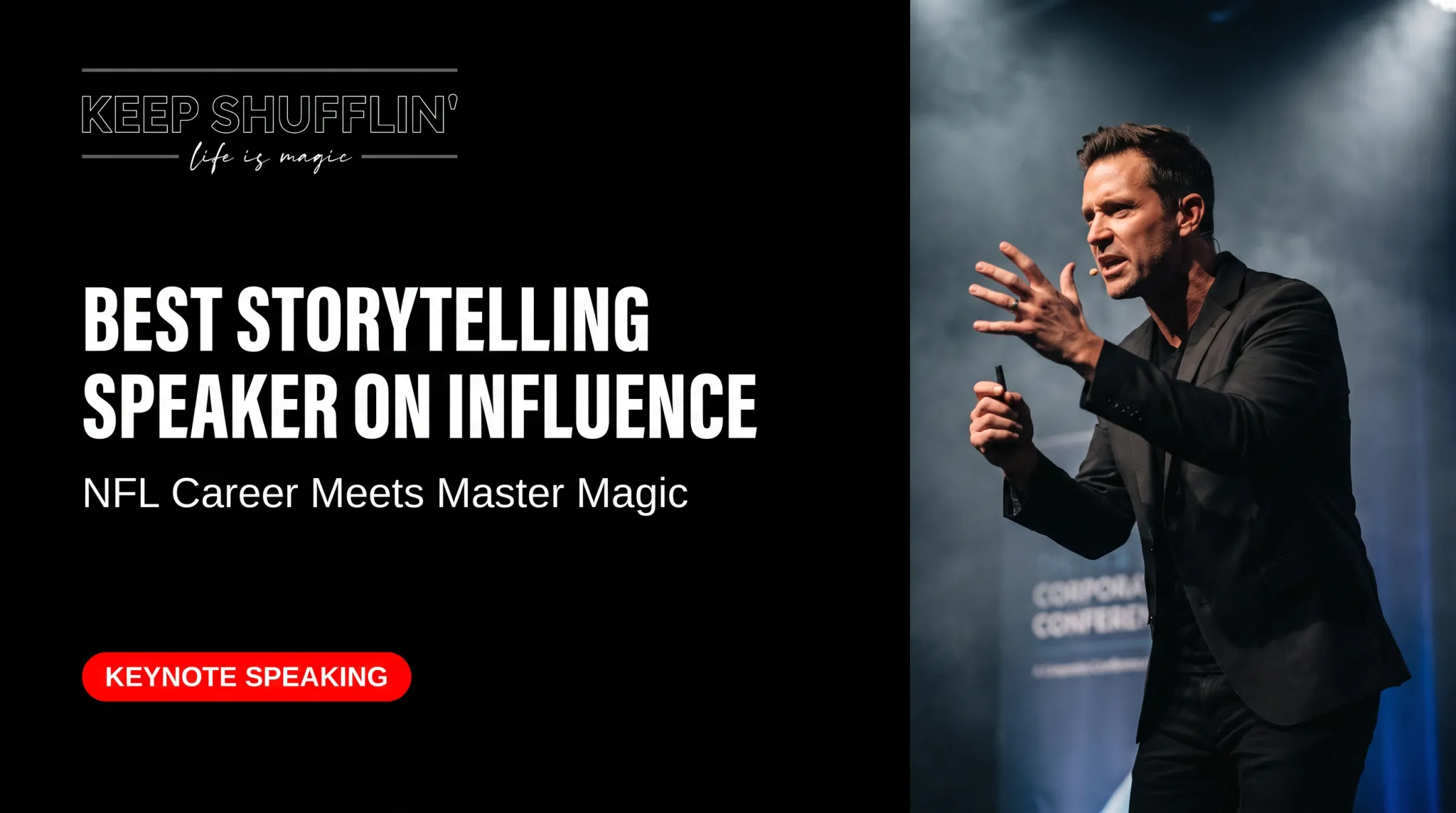
Jon Dorenbos spent 14 years as an NFL long snapper with the Philadelphia Eagles before a routine physical, taken just days after being drafted by the New Orleans Saints, revealed a dangerous heart condition requiring emergency open-heart surgery. That surgery saved his life and ended his football career. It also launched his second act. Jon became a finalist on America's Got Talent and America's Got Talent: The Champions, a regular guest on The Ellen Show, and a keynote speaker whose message has reached hundreds of millions of viewers.
A Story Built on Real Stakes
Jon's narrative isn't manufactured for the stage. At age 12, his father murdered his mother. Jon and his sister spent a year in foster care before moving to Southern California to live with their aunt. That early tragedy, paired with the heart surgery that ended his NFL career, gives corporate audiences a story with real stakes—and room to see their own pressure, setbacks, and comebacks reflected on stage. On stage, Jon combines:
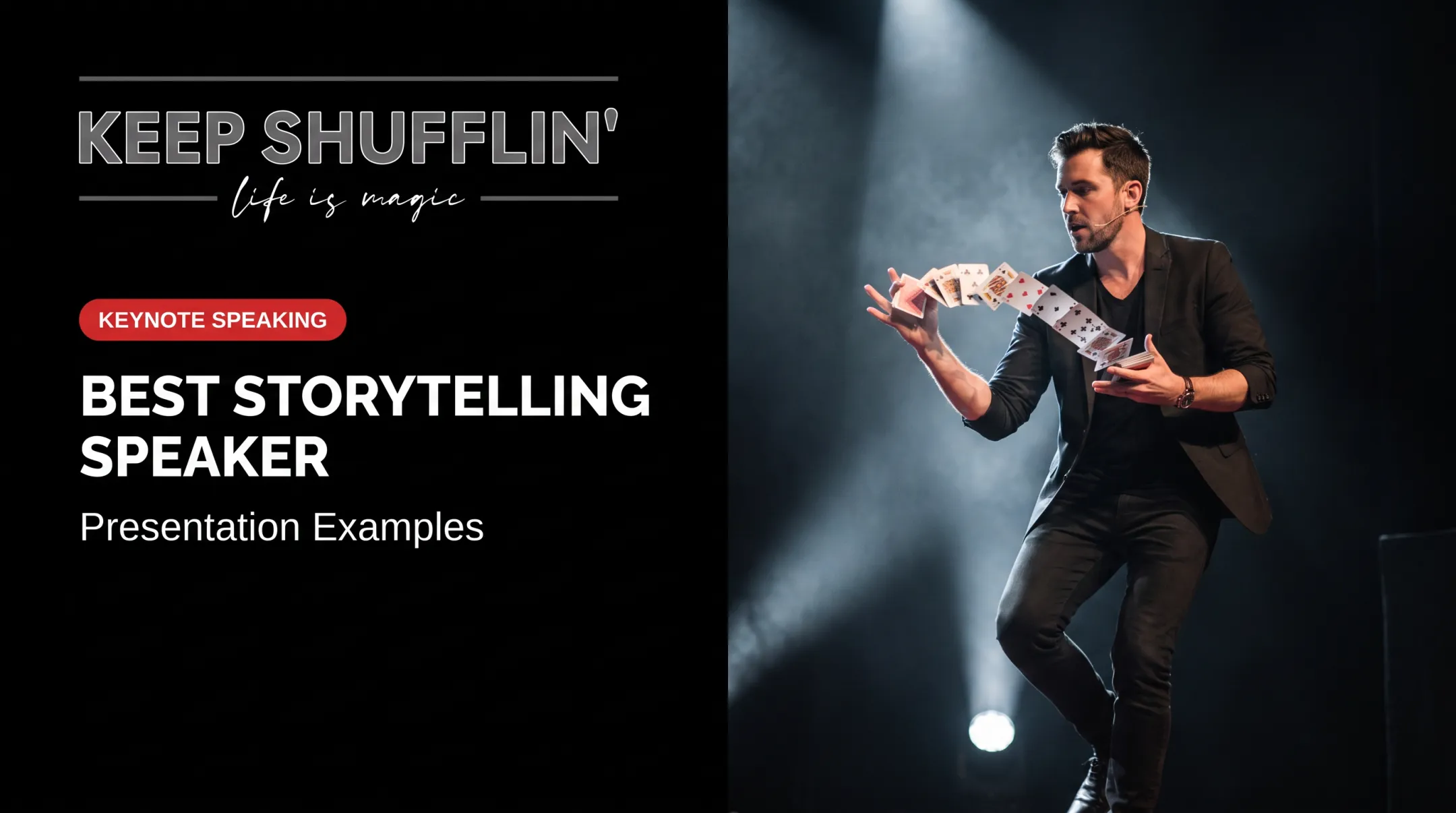
- Magic performance used as a tool for connection, not just spectacle
- His personal story of childhood tragedy, resilience, and forgiveness
- Rehearsed S.T.A.R. moments that anchor the message in one unforgettable image
1,000+ Appearances, Built Around Your Message
Jon has delivered more than 1,000 event appearances for organizations including Marriott, Kroger, RE/MAX, Campbell Soup Company, and Lincoln Financial Group. Those rooms span hospitality, retail, pharmaceuticals, and financial services. Every keynote is customized before he takes the stage:
- His team gathers the organization's goals, audience makeup, and desired outcomes
- The message is built around that specific event, not a stock speech
- Story, delivery, and the client's priorities are woven into one experience The result is a presentation built to earn a standing ovation through substance, not gimmicks.

Frequently Asked Questions
What are some examples of storytelling in presentations?
Popular techniques include:
- Hero's journey (audience as the protagonist)
- Mid-action openings that hook attention before backstory
- Sparkline contrasts between "what is" and "what could be"
MLK's "I Have a Dream" speech combines several of these.
What are the 5 C's of storytelling?
The 5 C's are Character, Conflict, Cause, Cost, and Change. Together, they build a persuasive arc that moves an audience from a relatable problem toward a satisfying resolution.
What is the 5-5-5 rule in presentations?
It's a slide design guideline: five words per line, five lines per slide, and no more than five text-heavy slides in a row. It keeps visuals from overshadowing the speaker and the story.
Can you provide a PowerPoint presentation about storytelling?
Templates exist online, but a slide deck alone won't make a presentation land. What lands is a skilled storyteller who can bring any deck to life. For high-stakes events, a professional speaker matters more than the template.
How do I know if a keynote speaker's storytelling style fits my event?
Review past client testimonials and video demo reels to see how the speaker handles pacing, audience interaction, and message integration. Then discuss customization directly with their team to confirm the fit for your specific event goals.
What makes a keynote speaker "guarantee" a standing ovation?
A consistent, proven track record across hundreds or thousands of events, combined with a well-honed personal story, makes results repeatable. Jon Dorenbos's 1,000+ appearances show that consistency in action.