
The right choice affects more than just who's on stage. It shapes audience engagement, budget allocation, and whether your event's core message actually lands. In fact, 67% of event planners cite audience engagement as their top booking priority, according to PCMA's 2024 Speaking Industry Benchmark Report.
This guide breaks down the definitions, roles, costs, and use cases for both — plus how to decide which one your event actually needs.
Key Takeaways
- Keynote speakers anchor an event's central message; guest speakers add focused, niche expertise
- Average keynote fees hit $22,449 per PCMA/AAE data, with longer speaking slots than guest spots
- Match the role to your goal: broad inspiration and unity, or targeted, tactical insight
- Hybrid presenters like Jon Dorenbos deliver keynote-level impact through story-driven, magic-infused presentations
Guest Speaker vs Keynote Speaker: Quick Comparison
| Factor | Guest Speaker | Keynote Speaker |
|---|---|---|
| Cost | Often lower fee, honorarium, or no fee | Higher fee reflecting reputation and demand |
| Role | Supports agenda, adds specific insight | Sets tone, theme, and emotional arc of the event |
| Speaking Time | Typically 15-45 minutes | Typically 45-60 minutes, top-billed segment |
| Audience Impact | Educates on a niche topic | Inspires and motivates the whole room |
| Booking | Easier scheduling, fits panels/breakouts | Needs lead time, rehearsal, prominent agenda placement |

On speaking time, nearly half of planners in a PCMA survey selected 45-60 minutes for keynote-length presentations, while about 31% chose 30-45 minutes. Guest speaker slots tend to run shorter because they fit inside a broader agenda rather than carry it.
What Is a Guest Speaker?
A guest speaker is an outside expert invited to share insight, experience, or a fresh perspective on a specific topic. Usually, they occupy one segment of a larger event rather than the whole program.
Guest speakers aren't "fillers." They bring specialized knowledge a generalist keynote speaker often can't cover in depth. A cybersecurity panelist at a tech conference, for example, delivers technical value a motivational keynote speaker simply isn't built to provide.
Core benefits of a guest speaker:
- Adds variety and credibility to a multi-session agenda
- Delivers niche expertise without needing to carry the full event narrative
- Fits easily into panels, workshops, and breakout formats
Where Guest Speakers Show Up Most
Guest speakers are common in corporate training sessions, association meetings, webinars, trade shows, and technical breakout rooms.
Attendees clearly value this kind of practical content: 87% consider real-world examples important, and 84% want implementable takeaways, according to Freeman's Learning Trends research reported by Trade Show Executive.
The catch? Only 75% of speakers are seen as effective at delivering real-world examples, and just 64% succeed at making takeaways actionable. That gap is exactly why picking the right guest speaker for a niche session matters as much as picking the right keynote.

What Is a Keynote Speaker?
A keynote speaker is the headline presenter. Their job is to set the tone, theme, and emotional throughline for the entire event, often opening or closing the program. The Events Industry Council defines a keynote, plainly, as the presentation that establishes the event's overall theme.
That's a different job from delivering information. A keynote has to unify a room full of different departments, roles, and mindsets around one message.
Keynote variations include:
- Motivational keynotes that energize and re-engage a tired or skeptical audience
- Vision-casting keynotes that align teams around a future goal
- Closing keynotes that send attendees off with a memorable, actionable takeaway
How Jon Dorenbos Anchors a Keynote
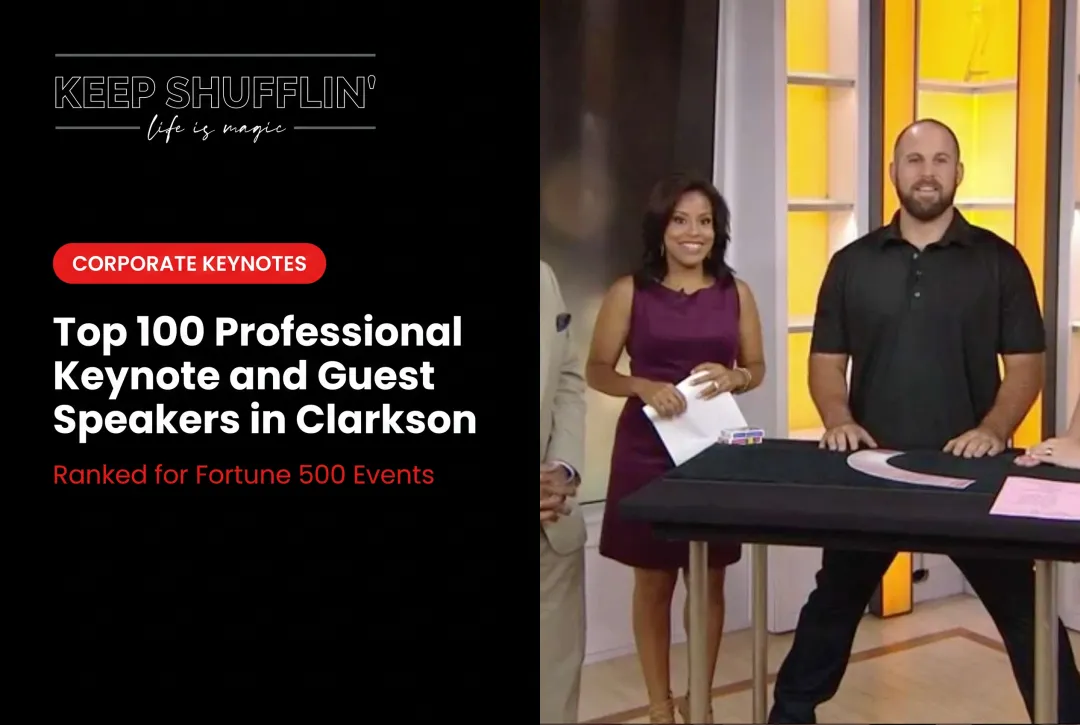
Jon Dorenbos is a former NFL long snapper and America's Got Talent finalist who now delivers keynote presentations for companies including Apple, Marriott, and Kroger.
His format blends sleight-of-hand magic with a deeply personal story of resilience. That story includes becoming an orphan at 12, building a 14-year NFL career, and losing that career suddenly to a heart condition.
He doesn't perform a magic show with a message tacked on. The magic carries the message. In one routine, he uses a deck of cards to reinforce a client's internal slogan, "get on the same page." In another, a trick built around "don't hate, don't blame, and forgive" drives home the theme of resilience.

His available keynote themes include:
- Self-talk and the inner dialogue that drives performance
- Living in vision and goal alignment
- Resilience through adversity
- Embracing change and adaptability
- Teamwork and shared accountability
That customization matters. Every theme can be built around your company's message. That's why keynotes like his fit sales kickoffs, leadership retreats, and Fortune 500 gatherings where one unifying moment carries more weight than a dozen scattered sessions.
Research on narrative content backs up why this format works. A meta-analysis of 37 studies and 33,078 participants found that narrative texts outperformed expository content on combined memory and comprehension by a meaningful margin (Mar et al., published in Psychonomic Bulletin & Review). That memory edge is exactly what a keynote needs when one message has to land with an entire room.
Guest Speaker vs Keynote Speaker: Which Should You Book?
Start with your event's actual goal, not the speaker's résumé.
Choose a guest speaker when:
- You need tactical, niche expertise for a breakout or panel
- The session serves a specific department or skill set
- Budget is tight and the audience is smaller
Choose a keynote speaker when:
- You need one unifying message for a large, mixed audience
- The goal is inspiration, cultural alignment, or emotional impact
- You want a moment people will still talk about next quarter
Many organizations use both. A keynote opens the event and sets the emotional tone; guest speakers then go deeper on specific themes throughout the day. That dual approach matches what planners prioritize most. Audience engagement and education topped PCMA's survey, ahead of budget concerns.
Speaker selection is rarely a solo decision. Nearly 70% of planners involve 2-5 people in the booking process, per the same PCMA data. Get your stakeholders aligned before you start reaching out.

Real World Example: When a Keynote Elevates an Event
RE/MAX World Headquarters booked Jon Dorenbos for a company event, and the reaction speaks for itself. Nick Bailey, President and CEO of RE/MAX, called him "the BEST KEYNOTE SPEAKER" he'd seen, and noted that the audience gave an unsolicited standing ovation halfway through the presentation. That's not a scripted applause line. That's a room reacting in real time to a story landing exactly where it needed to. Jon has delivered similar keynote moments for organizations including:
- Campbell Soup Company
- Five Below
- Manhattan Associates
- NECA These appearances span sales meetings, leadership conferences, and national association gatherings. Across more than 1,000 event appearances, the pattern holds: companies choose the keynote format when they need one memorable, unifying moment for the entire audience, not scattered takeaways from multiple smaller sessions. If your next conference or sales kickoff needs that shared centerpiece, a keynote built on personal story and audience-specific customization—like Jon Dorenbos's presentations—is the format built for it.
Conclusion
Neither role is "better." Guest speakers and keynote speakers solve different problems. One brings depth on a niche topic; the other brings a unifying, inspiring centerpiece the whole room remembers.
Get the choice right, and you'll see it in stronger engagement, a more memorable event, and a speaker budget that actually pays off.
When your agenda needs that centerpiece moment—resilience, leadership, teamwork, or change—book a keynote built for corporate stages, not a filler slot.
Frequently Asked Questions
How much does it cost for a guest speaker?
Guest speaker fees vary widely, from no fee or exposure-only arrangements to several thousand dollars, depending on their expertise and the event type. There's no standardized industry benchmark for guest-speaker pricing specifically.
What are the responsibilities of a guest speaker?
Guest speakers deliver focused insight on a specific topic, participate in Q&A, and support the broader event agenda. They typically don't need to carry the emotional or thematic weight of the entire program.
What does "guest speaker" mean?
A guest speaker is an outside expert invited to contribute a specific perspective, skill set, or topic to an event, usually within one segment of a larger agenda.
What is another term for guest speaker?
Depending on the context, guest speakers are also called panelists, session speakers, or breakout presenters.
How is a keynote speaker different from an opening speaker?
An opening speaker simply introduces the event and gets things started. A keynote speaker delivers the event's core message and emotional framework, often carrying far more weight in the agenda.
How much does a keynote speaker typically cost?
Fees range from a few thousand dollars to six figures, depending on the speaker's reputation and demand. PCMA/AAE's 2024 report found an average keynote budget of $22,449, with 47% of planners in the $10,000-$50,000 range.