Many people assume charisma is something you're born with, a trait reserved for a lucky few extroverts who light up every room. That assumption is wrong, and it's costing speakers opportunities every day. Charisma is a set of learnable behaviors: authenticity, presence, storytelling, and emotional connection.
Even the most magnetic performers on Fortune 500 stages or America's Got Talent had to build and refine those skills over years of practice. This guide breaks down exactly how.
Key Takeaways
- Charisma comes from authenticity, presence, storytelling, and emotional connection—not a fixed personality type
- Introverts build strong stage presence through listening and depth, not volume
- Deliberate practice sharpens eye contact, vocal variety, and personal storytelling
- Memorable keynotes pair a personal narrative with a distinct hook: humor, vulnerability, or magic
What Is Charisma—and Can It Really Be Learned?
For keynote speaking, charisma means one thing: making an audience feel personally understood, moved, and motivated to act. A speaker can be funny and forgettable—or quiet and unforgettable.
There's also a meaningful split between two types of charisma:
- Positive charisma is built on authenticity and trust. The speaker's goal is the audience's benefit.
- Manipulative charisma is built on ego and control. The speaker's goal is admiration.
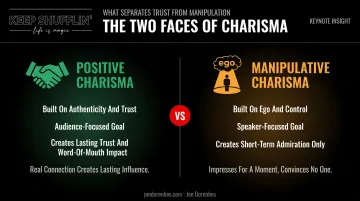
Audiences may respond to both in the moment, but only the first type creates lasting trust and word-of-mouth impact.
Is Charisma Innate or a Skill?
Sociologist Max Weber described charismatic authority as something followers grant, not something a leader simply possesses. Decades later, researcher Robert House framed charisma as observable behavior: image-building, articulating goals with moral meaning, and expressing confidence in an audience's ability to act.
The research backs this up with numbers. A study by Antonakis, Fenley, and Liechti trained managers and MBA speakers in specific verbal and nonverbal tactics—metaphors, stories, rhetorical questions, and animated vocal delivery.
The sample-weighted training effect reached d = .62, a substantial improvement for a trait many assume can't be taught.
Do You Need to Be an Extrovert?
No. A 2019 Harvard Business Review piece by Sarah Gershman made the case using an introverted CEO: the speaker's job is to make listeners feel understood. Attending to audience needs matters more than personal charm.
Supporting research analyzing dozens of recorded speeches found no meaningful link between overall extroversion and audience-perceived vocal charisma. Different personality types produced charismatic delivery in different ways.
Picture two speakers on the same conference agenda. One is high-energy, quick with a joke, comfortable working a crowd before she even reaches the podium. The other is measured, speaks slowly, and pauses often.
Both can leave the room in stunned silence followed by applause. The reserved speaker often wins trust through deep listening and quiet conviction; the outgoing one wins through infectious energy. Neither approach is superior.
The Essential Traits of a Charismatic Keynote Speaker
Charismatic speakers share a set of traits—and most can be built with intentional practice.
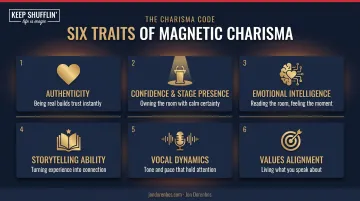
- Authenticity: Genuine belief in the message. Audiences sense forced enthusiasm almost instantly, and it erodes credibility fast.
- Confidence and stage presence: Purposeful movement, grounded posture, and comfort with silence instead of nervous filler words.
- Emotional intelligence: Reading audience energy in real time and adjusting tone, pacing, or content on the fly.
- Storytelling ability: Structured personal narrative that moves through conflict to resolution and leaves room for real vulnerability.
- Vocal dynamics: Deliberate shifts in pitch, pace, and volume, plus strategic pauses that let key lines land.
- Values alignment: A core message that matches what the audience cares about—not a generic script recycled from event to event.
Jon Dorenbos, a former 14-year NFL long snapper and America's Got Talent finalist, is a working example of several of these traits at once. His keynotes open with the story of his mother's murder when he was 12, his year in foster care, and the heart surgery that ended his football career overnight. Authenticity is built into the structure of the talk from the opening minutes.
Proven Techniques to Develop Stage Charisma
Traits are the foundation. Techniques are how you put them into practice on stage.
- Master intentional eye contact. Hold your gaze on one section of the room for a full sentence or thought before moving on. Flicking your eyes across the crowd signals nerves, not connection.
- Build a signature story arc. Structure one or two personal anecdotes with a clear beginning, turning point, and takeaway tied directly to what your audience wants.
- Practice vocal exercises. Record yourself. Most speakers are shocked at how flat they sound. Rehearse deliberate pitch shifts and pauses before key lines.
- Align body language with words. Rehearse in front of a mirror or camera to catch closed-off posture, filler movements, or gestures that contradict what you're saying.
- Use audience-first framing. Swap "I" and "my talk" for "you" and "we." Keep the listener at the center of every sentence.
- Seek structured feedback. Join a speaking group, hire a coach, or get recorded critiques. Improvement accelerates with outside eyes on your delivery.
All six reward deliberate reps. Work them until the habits feel automatic on stage.
Charisma in Action: Lessons from Legendary and Modern Speakers
History's most magnetic speakers used identifiable techniques, not mystery.
Martin Luther King Jr.'s "I Have a Dream" speech opened eight consecutive sentences with the same phrase, a rhetorical device called anaphora. That repetition built momentum and made the message impossible to forget.
Steve Jobs took the opposite approach at Apple's 2007 iPhone keynote: just 19 words across the first three minutes, spread over roughly a dozen slides. Weeks of rehearsal produced what looked like effortless simplicity.
Jon Dorenbos represents a modern hybrid of the two. He blends sleight-of-hand card magic with a personal story of childhood tragedy, a 14-year NFL career, and the emergency heart surgery that forced his retirement.
That mix has powered more than 1,000 events for companies including Apple, Marriott, Kroger, RE/MAX, and Campbell Soup Company. RE/MAX CEO Nick Bailey called him the best keynote speaker he'd ever seen, noting the audience gave an unsolicited standing ovation halfway through the talk.
Three techniques show up again and again:
- Purposeful repetition that builds momentum (anaphora, callbacks)
- Disciplined restraint: fewer words, heavier rehearsal
- Story paired with live performance so the message sticks
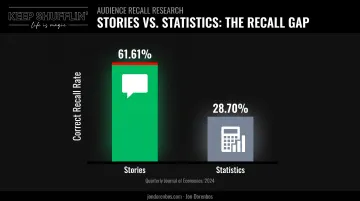
Why does story-plus-performance land so hard? A 2024 study in the Quarterly Journal of Economics compared audience recall of stories versus statistics. Correct recall reached 61.61% for stories, compared to just 28.70% for statistics. Data can move beliefs at first, but stories are what people still remember a day later.
Common Charisma Killers to Avoid
Charisma is fragile. A few habits can undo an otherwise strong keynote fast.
- Overacting or forcing enthusiasm: Audiences spot performance versus genuine connection almost immediately. It reads as insincere.
- Ignoring audience cues: Sticking to a script while energy drops in the room signals you're not paying attention to the people in front of you.
- Relying solely on slides and data: Numbers without a human story inform, then fade within a day.
Counter all three the same way: stay present with the room, speak honestly, and give the human story equal weight with the content.
Frequently Asked Questions
Can anyone become a charismatic speaker, or is it a natural talent?
Yes. Charisma is a learnable mix of authenticity, storytelling, and stage presence—not a fixed trait you either have or don't.
What is the difference between confidence and charisma in public speaking?
Confidence is belief in yourself. Charisma is the ability to make an audience feel that belief with you. You can have one without the other.
Are introverts able to become charismatic speakers?
Yes. Introverts often excel through authenticity and deep listening rather than high-energy delivery, connecting with audiences on a quieter, more personal level.
How long does it take to develop charisma as a keynote speaker?
Timelines vary, but consistent practice, feedback, and real stage time usually produce visible improvement within 3–6 months of deliberate effort.
What are some examples of charismatic keynote speakers?
Martin Luther King Jr. used rhythmic repetition to unforgettable effect. Modern speakers like Jon Dorenbos combine NFL experience, magic, and personal storytelling to create the same kind of lasting impact.
How do I book a charismatic keynote speaker for my corporate event?
Prioritize storytelling skill, live audience engagement, and true message customization. Jon Dorenbos, with 1,000+ Fortune 500 appearances, tailors each keynote to your goals, with celebrity-tier bookings typically starting around $80,000.