Get this wrong, and you'll end up with a mismatch: an expert-driven keynote when your sales team needed an emotional jolt, or a high-energy pep talk when your leadership summit needed a strategic framework. That mismatch shows up in your budget, your post-event surveys, and whether attendees actually walk away with what leadership intended.
This guide breaks down what separates these two speaker types, where each one fits on your agenda, and why the best speakers today often blend both roles into a single booking.
Key Takeaways
- Keynote speakers anchor an event's theme through expertise and structured frameworks.
- Motivational speakers drive emotional connection and short-term action through personal storytelling.
- Many top-tier speakers now combine both, delivering credibility and inspiration in a single session.
- The right choice depends on your event's goal, not which title sounds more prestigious.
- Speaker fees track demand and profile, not category labels.
Keynote Speaker vs Motivational Speaker: Quick Comparison
Here's a side-by-side snapshot of how the two roles typically differ.
| Dimension | Keynote Speaker | Motivational Speaker |
|---|---|---|
| Primary focus | Subject-matter expertise; sets the thematic framework for the event | Emotional engagement, personal storytelling, mindset shift |
| Content style | Research, data, structured frameworks, actionable takeaways | Personal narrative, audience interaction, high-energy delivery |
| Event placement | Usually opens or closes the program to set or summarize the tone | Flexible; slots in wherever energy needs a lift, including mid-event |
| Fee considerations | Driven by expertise, reputation, and demand | Driven by profile and audience draw, not the label alone |
Notice the overlap. A keynote address, by definition, can also motivate a room. The lines blur more often than the titles suggest, so the definitions below matter when you're deciding whom to book.
What is a Keynote Speaker?
A keynote speaker is the person whose presentation establishes an event's central theme or tone. The Events Industry Council formally defines a keynote session as one designed to bring the entire audience together around a unifying message, delivered by a high-profile speaker or panel who frames what the rest of the program builds toward.
That framing role is what makes keynotes operationally valuable. They give teams:
- A shared language for the day's agenda, so every breakout session ties back to one central idea
- Alignment with company mission, especially at all-hands meetings or sales kickoffs
- A memorable anchor point attendees reference long after the event ends
Keynote speakers generally fall into a few subtypes:
- Industry-expert keynotes built on research and data
- Thought-leader keynotes centered on frameworks and predictions
- Celebrity or experience-driven keynotes that pair a personal journey with executive-level credibility
Use Cases of Keynote Speakers
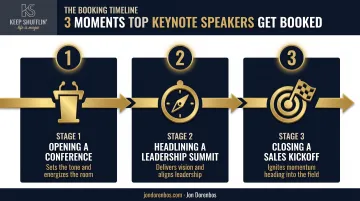
Keynotes typically show up at three moments:
- Opening a conference - setting the tone before breakouts begin
- Headlining a leadership summit - establishing the strategic theme for the day
- Closing a sales kickoff - tying the event's message together with a call to action
Celebrity keynote speakers with elite professional backgrounds get booked by Fortune 500 companies because they combine credibility with story. Jon Dorenbos, a 14-year NFL veteran and America's Got Talent finalist, has delivered keynotes for Apple, Marriott, and Kroger, among others.
Marriott's Director of B2B Marketing & Events called him "the most powerful, engaging, dynamic and authentic presenter" she'd worked with in 17 years of event production. That reaction is why organizations book experience-driven keynotes over purely academic talks.
What is a Motivational Speaker?
A motivational speaker's job is different: to spark energy, hope, and short-term momentum around a specific action or change. Toastmasters International distinguishes this, noting that motivation is "external and action-oriented," pushing a listener toward immediate steps and a defined goal rather than a broader emotional shift.
For corporate audiences, that action-oriented purpose translates into real business use:
- Rebuilding morale after a rough quarter or organizational setback
- Energizing sales teams before launching into a new quota period
- Creating emotional buy-in for a new initiative leadership needs the team to embrace
Common subtypes include survivor-story speakers, athlete-turned-speakers, and entrepreneur speakers who build their talk around overcoming personal adversity. The common thread: personal stakes that make the audience feel something, then channel that feeling into action.
Use Cases of Motivational Speakers
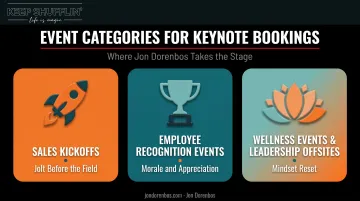
Motivational speaking dominates a specific set of event types:
- Sales kickoffs and high-stakes sales meetings, where reps need a jolt before hitting the field
- Employee recognition events, where morale and appreciation take center stage
- Wellness events and leadership offsites, where the goal is mindset reset, not new information
Sales conferences are the clearest example. Reps who just closed a tough quarter, or who face an aggressive new target, respond to story and emotion faster than they respond to another slide deck. The aim is to get the room fired up and pointed at a specific outcome, not just entertained for an hour.
Keynote Speaker vs Motivational Speaker: Which One Should You Book?
Start with four questions before booking anyone:
- What does leadership want attendees to walk away with? Knowledge and alignment, or energy and emotional buy-in?
- Who's in the room? Executives expecting strategic frameworks, or frontline teams needing a morale lift?
- Where does this speaker sit in the program? Opening/closing slots favor thematic anchors; mid-event slots favor energy injections.
- What's the actual business trigger? A product launch needs alignment; a tough sales quarter needs momentum.
Choose a keynote speaker if you need a thematic, expertise-led anchor that frames the entire event. Choose a motivational speaker if the priority is energy, morale, and getting people to act now.
Attendee research backs up that these are separate demand signals, not marketing labels. Freeman's 2024 survey of over 2,000 B2B event attendees found 39% prioritize innovation content, 34% want industry leaders or experts, while only 14% cite inspirational content and 11% want unique stories as their top keynote draw.
Those splits are why the booking choice matters—and why some planners stop treating it as either/or.
Real-World Example: When One Speaker Delivers Both
Here's the wrinkle: many organizations no longer want to choose. They want a single speaker who delivers expertise-level credibility and emotional resonance, because budget and schedule rarely allow for two separate bookings.
Jon Dorenbos is a working example of that blend. His story stacks four distinct chapters into one presentation:
- Childhood tragedy - at age 12, his father murdered his mother, and he spent a year in foster care
- NFL career - 14+ years as a long snapper, including a record-setting run in Philadelphia and two Pro Bowl selections
- Emergency heart surgery - a routine physical four days after a 2018 trade revealed a life-threatening condition, ending his football career overnight
- America's Got Talent - a finalist run built around the closing message "don't hate, don't blame, and forgive"
He weaves all four through live magic, using a deck of cards as a running metaphor for unpredictability. The message that ties it together: "Life happens. Good, bad, and ugly. What separates people is how they handle it."
That combination is exactly why companies like Apple, Marriott, and Kroger book him. They need a polished, executive-caliber presence for the keynote slot, but they also want the emotional payoff of a story that lands.
The result shows up in the room: RE/MAX's CEO described witnessing his first-ever unsolicited standing ovation halfway through a presentation, not at the end. Across 1,000+ event appearances, that mid-talk reaction is common.

If your event only has budget or schedule room for one speaker slot, a hybrid speaker like this covers both needs. Explore booking Jon Dorenbos for your next conference, sales kickoff, or leadership event.
Conclusion
There's no universally "better" choice between a keynote speaker and a motivational speaker. The right pick depends on what your event needs.
- A keynote anchors the day with a thematic, expertise-driven frame
- A motivational speaker delivers an emotional lift that pushes people toward action
Match the speaker to the outcome leadership wants—not to whichever title sounds more impressive on the program.
Judge the hire by audience engagement, post-event morale, and whether attendees still remember the message six months later. The speakers who get rebooked year after year usually bring both: clear expertise and real energy, not a rigid lane.
Frequently Asked Questions
What is a motivational speaker called today?
They're often called inspirational speakers, personal development speakers, or resilience speakers. The label changes; the job of sparking action stays the same.
When should a keynote speaker speak?
Keynote speakers are typically scheduled at the start of an event to set the tone, or at the close to tie the day's themes together. Either placement reinforces their role as the program's thematic anchor.
Can one speaker be both a keynote speaker and a motivational speaker?
Yes. Many speakers blend both styles—expertise-driven content delivered through personal storytelling. Jon Dorenbos is a clear example, pairing NFL-level credibility with a resilience narrative in one keynote.
Do keynote speakers cost more than motivational speakers?
Not necessarily. Fees depend on the speaker's profile, experience, and market demand—not which category they fall under. A high-demand motivational speaker can cost more than a lesser-known keynote expert.
What's the main difference between a keynote speaker and a motivational speaker?
Keynote speakers anchor an event's theme through expertise and structured content. Motivational speakers focus on emotional storytelling designed to inspire immediate action. Many speakers do both at once.
How far in advance should I book a keynote or motivational speaker for my event?
Book 6–12 months out when you can, especially for in-demand or celebrity speakers. Early booking leaves room for availability checks, audience research, and a customized message instead of a rushed, generic talk.