Burnout among healthcare workers hit 39.8% in 2022 and 35.4% in 2023, according to a 2025 analysis of Veterans Health Administration survey data covering 169,448 respondents. That's the backdrop every event planner is working against.
Many planners face a real dilemma: book a clinical expert who can speak to medical trends, or a speaker who can energize a room and reconnect staff to their purpose? This guide breaks down the main types of healthcare keynote speakers, highlights leading voices in each category, and shows how to match the right speaker to your event.
Key Takeaways
- Match speaker type to event purpose: clinical expertise and motivational messaging serve different goals
- Choose a distinct strategy for clinical conferences, leadership retreats, and appreciation nights
- Prioritize storytelling and resilience keynotes as burnout reshapes healthcare culture
- Weigh budget, lead time, and audience composition before you book
Why Keynote Speakers Matter for Healthcare Events
Healthcare professionals carry a weight that few other industries match: life-or-death decisions, understaffed units, and constant regulatory and technological shifts. The cost of that pressure shows up in the numbers.
RN turnover cost hospitals an average of $56,300 per departure in 2023, with the typical vacancy taking 86 days to fill, according to the 2024 NSI National Health Care Retention & RN Staffing Report. That's a direct financial case for investments that rebuild morale and retention—including a keynote that reconnects staff to why their work matters.
A strong keynote sets the emotional register for the entire event:
- Clinical conferences need credibility and evidence-based insight
- Leadership retreats need strategic clarity and vision
- Staff appreciation nights call for validation and renewed energy
- Fundraising galas depend on inspiration that motivates giving
Each format demands a different speaker strategy. Match the voice to the room, and the keynote becomes the moment people still cite months later—not another block on the agenda.
Types of Healthcare Keynote Speakers to Consider
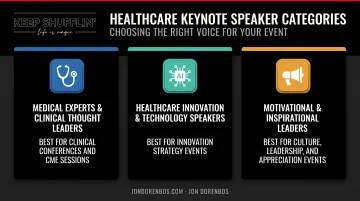
Healthcare organizations typically book from three broad speaker categories, and each serves a distinct event goal.
Medical Experts & Clinical Thought Leaders
These are physicians, researchers, and former public health officials who bring deep subject-matter authority. They're the right fit when a conference needs to cover disease trends, health policy, or emerging clinical research.
CME-accredited sessions raise the bar further. The ACCME requires that patient-care content rest on current evidence and balanced clinical reasoning, and speakers with financial ties to industry must disclose those relationships. Planners can't skip that compliance step when booking CME sessions.
Healthcare Innovation & Technology Speakers
This group focuses on health-tech, AI in medicine, and digital transformation. A 2024 HIMSS-Medscape survey of more than 800 healthcare professionals found 86% of respondents' organizations were already using AI, with 72% flagging data privacy as a top concern.
Book them for innovation-strategy conferences or sessions on the future of care delivery.
Motivational & Inspirational Leaders
This category has grown quickly as burnout and constant change wear on healthcare teams. Non-clinical speakers who teach resilience, leadership, and teamwork help staff reconnect with purpose under pressure. They're the right fit for culture-focused events, leadership offsites, and employee appreciation nights: settings where the goal is re-energizing people, not delivering clinical content.
Notable Healthcare Thought Leaders & Medical Experts
For events centered on scientific or policy content, a handful of names consistently come up:
- Dr. Anthony Fauci — Former NIAID director (1984–2022) and Georgetown Distinguished University Professor. Decades leading HIV/AIDS, Ebola, and COVID-19 research suit infectious disease and public health conferences.
- Dr. Donald Berwick — President Emeritus of the Institute for Healthcare Improvement and former CMS Administrator. A go-to voice for healthcare quality improvement and policy audiences.
- Dr. Walter Willett — Harvard epidemiologist behind the Nurses' Health Studies and 2,000+ papers. A frequent pick for wellness and preventive-care conferences.
- Dr. Christopher Gardner — Stanford researcher who led the 609-person DIETFITS diet trial. A strong choice for nutrition science and clinical education events.
Names like these command premium fees and often require significant lead time to secure. Start your search early, or work with a speakers bureau that has existing relationships in place.
One caveat: this category fits scientific, policy-driven, or clinical education conferences. If your goal is boosting morale or reconnecting staff to purpose, a purely clinical speaker often falls flat. That's where the next category takes over.
The Power of Motivational & Inspirational Speakers for Healthcare Audiences
The burnout numbers cited earlier aren't a temporary blip. Even after easing slightly from 2022 to 2023, VHA burnout rates remained well above 2018 levels. That kind of sustained strain is exactly why storytelling-driven, resilience-focused keynotes have become so valuable at healthcare events. They reach staff in a way purely clinical content simply can't.
Jon Dorenbos: Story, Resilience, and Live Performance
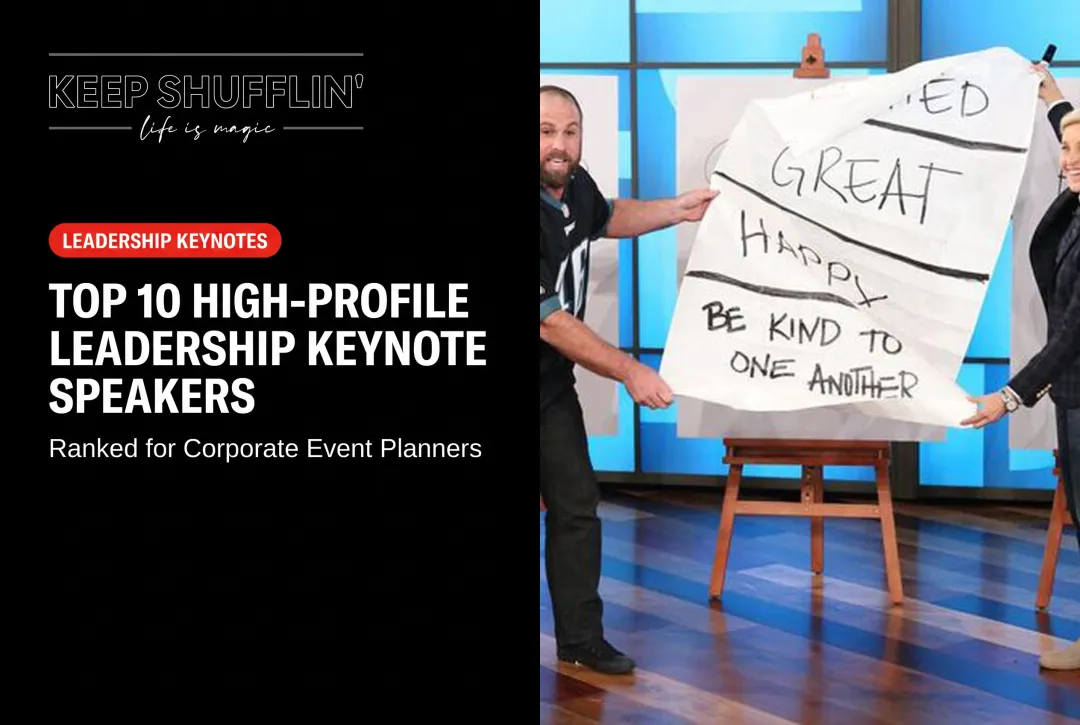
Jon Dorenbos shows what this category looks like on stage. A 14-year NFL veteran, professional magician, and America's Got Talent finalist, he blends magic performance with a personal story of resilience, forgiveness, and purpose.
His story carries specific weight for healthcare audiences:
- Emergency open-heart surgery discovered during 2017 training camp, then a return to national television six weeks later—a recovery arc clinical staff recognize immediately
- Childhood tragedy and foster care, grounding messages on trauma, empowerment, and self-talk for behavioral health and pediatric teams
- 14 NFL seasons as a framework for teamwork under pressure, with clear carryover to surgical teams and nursing units
- A national AGT run that shows how authentic vulnerability builds real connection with a room
Jon's themes—welcoming change, using adaptability to grow, and watching how self-talk shapes reality—line up with what healthcare teams already face: new technology rollouts, policy shifts, and care models that keep evolving.
He's delivered more than 1,000 keynote presentations for Fortune 500 organizations, and his healthcare work is already on record. His "Magic of the MIND" program has been presented at the University of Maryland Medical Center, an accredited U.S. hospital. Pharmaceutical company Dermavant Sciences is also on his client roster, with CEO Todd Zavodnick providing a video testimonial on the experience.
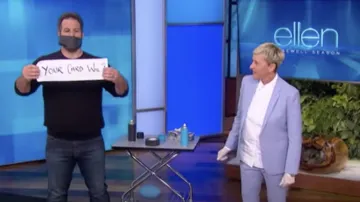
Pairing magic and entertainment with substantive messaging tends to drive engagement that a straight lecture format struggles to match. RE/MAX CEO Nick Bailey put it this way after Jon's keynote: "This was the first time I witnessed a speaker get an unsolicited standing ovation halfway through their presentation." For a workforce already stretched thin, that kind of engagement is exactly what re-energizes a room.
How to Choose the Right Healthcare Keynote Speaker for Your Event
Picking the right speaker starts with a clear look at what your event actually needs.
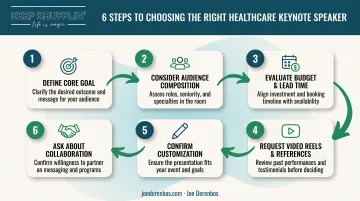
- Define your core goal first. Are you educating on clinical trends, inspiring a tired team, or celebrating a year's achievements? The speaker type should follow directly from this answer.
- Consider your audience composition. Clinicians, administrative staff, and mixed leadership groups all respond differently. Tailor tone and expertise accordingly.
- Evaluate budget and lead time. Top subject-matter experts and celebrity-tier speakers need early booking and premium fees. Check references and confirm presentation quality well before your date locks in.
- Request video reels and references. Jon Dorenbos's team, for example, provides demo reels and a testimonial library—including Dermavant Sciences and University of Maryland Medical Center—so planners can judge fit before booking.
- Confirm customization. A speaker should be able to shape their message around your organization's specific challenges: workforce morale, a patient care initiative, or a technology rollout.
- Ask about collaboration. Look for speakers who offer pre-event planning calls and, ideally, resources that reinforce key takeaways after the event ends.
Popular speakers book up quickly. If you've got a date locked in, reach out early rather than waiting until a few weeks out.
Frequently Asked Questions
What makes a good healthcare keynote speaker?
A good healthcare keynote speaker aligns their message with the event's purpose: clinical education, innovation strategy, or team morale and resilience. The right fit depends on what you need the audience to walk away with.
How much do healthcare keynote speakers typically cost?
Fees vary widely based on the speaker's profile, expertise, and demand. Request a custom quote tied to your event goals, audience size, and budget rather than assuming a flat rate.
Should healthcare organizations hire a motivational speaker or a medical expert?
Match the speaker to the outcome. Medical experts fit clinical or scientific conferences; motivational speakers fit culture, leadership, and morale-focused gatherings.
How far in advance should you book a healthcare conference speaker?
Book 6–12 months ahead for in-demand or celebrity-tier speakers. Early inquiries lock in availability and leave room to customize the message.
Can a non-medical speaker be relevant for a healthcare event?
Yes. Non-medical speakers with resilience or leadership stories are highly relevant for burnout, teamwork, and culture: topics pure clinical content rarely covers.
What topics do healthcare keynote speakers typically cover?
Common topics include medical innovation, health policy, patient experience, and personal resilience or leadership development. The mix depends on the speaker's background and your event goals.