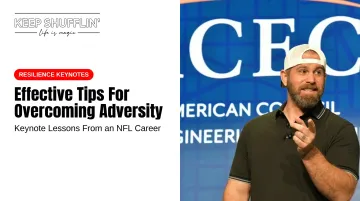
Few people understand that better than Jon Dorenbos. A 14-year NFL veteran and America's Got Talent finalist, Dorenbos survived his father murdering his mother when he was just 12 years old, spent a year in foster care, built a Pro Bowl career as a long snapper, then had that career ended by emergency open-heart surgery days after being traded to a new team. He's built a second career on turning that story into something useful for other people.
This guide breaks down what adversity actually is, how people tend to respond to it, and the practical, tested strategies for getting through it — no fluff, no toxic positivity.
Key Takeaways
- Personal, professional, or physical setbacks all test the same thing: your emotional footing
- Resilience isn't something you're born with; it's a skill you build through repetition
- Reframing setbacks, focusing on what you control, and leaning on others are proven recovery tools
- Long-term resilience depends on daily habits: sleep, reflection, and self-compassion
- Asking for help from a therapist or trusted advisor is a deliberate strength move
What Does Adversity Mean?
Adversity is a difficult situation or circumstance that forces you to adapt.
The American Psychological Association frames resilience as "the process and outcome of successfully adapting to difficult or challenging life experiences." Adversity is the challenge. Resilience is what you do about it. They're not the same thing.
Here's the part people miss: adversity is subjective. A minor setback for one person might feel like the floor dropping out for someone else, depending on their history, support system, and current stress load.
That's why comparing hardships is a dead end. Telling someone "it could be worse" doesn't make their situation feel smaller. It just makes them feel unheard. What matters isn't ranking pain. It's building the capacity to move through it, whatever "it" looks like for you.
What Are Some Examples of Adversity in Life?
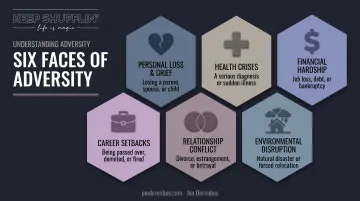
Adversity doesn't fit into one neat box. According to Mayo Clinic, common triggers include:
- Personal loss and grief: the death of a loved one, a breakup, or estrangement
- Health crises: a serious diagnosis, injury, or medical emergency
- Financial hardship: job loss, debt, or sudden loss of income
- Career setbacks: being passed over, laid off, or forced into a new direction
- Relationship conflict: divorce, family rifts, or workplace tension
- Environmental disruption: a natural disaster, a forced relocation, a move that upends routine
There's also a category people rarely name out loud: self-created adversity. Poor financial decisions, unhealthy habits, or avoidable conflict still count as hardship. They come with a different reckoning: part of recovery is owning your role in it.
Adversity can hit suddenly (an accident, a diagnosis) or build slowly (chronic illness, years of financial strain). Sudden adversity often demands immediate crisis response. Prolonged adversity requires something harder: sustained coping over months or years, without a clear finish line.
Effective Tips for Overcoming Adversity
This is the practical core of the guide. These strategies borrow from elite-athletics mental-toughness training and everyday psychology research, and every one of them is something you can start using today.
Reframe the Setback as a Setup
The question "why is this happening to me" keeps you stuck. The question "what can this teach me" moves you forward. That single language shift changes how your brain processes the event : from a threat to a problem you can actually work on.
This isn't just motivational language. A national study published in Nature tracked 12,490 ninth graders across 65 U.S. schools who received a short growth-mindset intervention. Among lower-achieving students, GPA rose and the share of students failing dropped from 46% to 41%.
The effects were modest and depended heavily on context . Mindset alone isn't a cure-all. But the direction is clear: how you frame a setback changes what you do next.
Focus Only on What You Can Control
Adversity often triggers a flood of "what ifs" about things you can't touch — other people's decisions, timing, outcomes already set in motion. Sorting that noise into two piles helps:
- Controllable: your effort, your attitude, your daily habits, how you respond
- Uncontrollable: other people's actions, past events, unpredictable circumstances
Research on perceived control backs this up. A study of 606 anxiety-disorder patients found that a stronger sense of control was consistently linked to lower symptom severity. Shrinking your focus to what's actually yours to influence takes real weight off.
Lean on Your Support System
Isolation makes adversity heavier. Connection makes it lighter, and the research on this is consistent.
A meta-analysis of 75 studies covering more than 32,000 people found that social support predicted lower trauma symptoms over time. The relationship worked both ways: people with more support recovered faster, and people who withdrew tended to lose support along the way.
Identify one person you trust (a friend, family member, mentor, or therapist) and actually talk to them when things get hard. Don't wait for a crisis point to reach out.
Build Momentum Through Small, Consistent Actions
Big problems freeze people. The fix is a smaller first step, not a bigger plan. Behavioral research shows that scheduling small, achievable actions and tracking the results builds real momentum. One analysis of nearly 500 participants found this approach improved well-being.
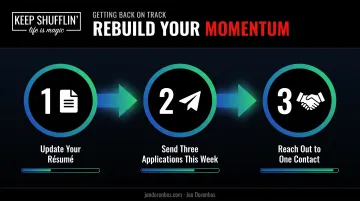
Say you've lost your job. Instead of "find a new career," try:
- Update your résumé today
- Send three applications this week
- Reach out to one contact for a conversation, not a favor
Each completed step builds proof that you're capable of moving forward — and that proof is what breaks the freeze.
Use Your Story as Fuel, Not a Life Sentence
Jon Dorenbos didn't choose his story, but he chose what to do with it. At 12, his father murdered his mother. He and his sister spent about a year in foster care before moving to Southern California to live with an aunt.
In that house, he found a deck of cards in a drawer and taught himself magic, a habit that gave a grieving kid, in his words, "a small piece of hope."
Football became the second lifeline. He walked onto a junior college team, eventually landed with the Philadelphia Eagles as an undrafted free agent, and spent 14 years as one of the league's most respected long snappers, earning two Pro Bowl selections along the way.
Then, four days after being traded to the New Orleans Saints in 2017, a routine physical revealed a life-threatening aortic aneurysm. Emergency open-heart surgery saved his life and ended his career on the same day.
He didn't disappear. Six weeks after surgery, he was performing magic on The Ellen DeGeneres Show. A year later, he was a finalist on America's Got Talent. His story became the foundation of everything he does now — including the line he closes on: "Life happens. Good, bad, and ugly. What separates people is how they handle it."
Your story doesn't have to match his scale to matter. The principle transfers: what happened to you is not the whole story. What you build afterward is.
Building Resilience for the Long Haul
Resilience isn't a switch you flip once. The American Psychological Association (APA) describes it as an ongoing "process and outcome": something practiced, not achieved. A few habits make the biggest difference over time.
Physical wellness comes first. A meta-analysis of sleep-improvement trials found medium-sized reductions in depression, anxiety, and rumination when sleep quality improved. Regular movement and basic nutrition support the same recovery capacity, giving your mind more room to handle stress.
Reflective journaling surfaces patterns. Writing about how you reacted to a setback (what triggered the reaction, what helped, what made it worse) turns a vague feeling into usable data for next time.
Explanatory style shapes how fast you recover. Psychologist Martin Seligman's research found that people who explain setbacks as temporary and specific ("this project failed") recover faster than those who treat them as permanent and personal ("I always fail"). In one study of insurance agents, the more optimistic half outsold their pessimistic peers by 37% over two years.
Self-compassion beats self-criticism. A review of 36 randomized trials found self-compassion practices produced meaningful drops in depression, anxiety, and stress. Beating yourself up over a setback doesn't speed recovery. It just adds a second layer of pain on top of the first.
Turning Adversity Into Purpose: When to Seek Guidance
Some adversity you can work through solo. Some you can't, and knowing the difference matters. The National Institute of Mental Health points to specific warning signs that it's time to bring in a professional:
- Persistent anxiety or low mood lasting two weeks or more
- Withdrawing from people or responsibilities you'd normally handle
- Physical symptoms : disrupted sleep, appetite changes, unexplained aches
- Trouble functioning day-to-day at work or home
That's individual adversity. Organizations face their own version of it : layoffs, restructuring, a rough quarter that's rattled morale. In those moments, an internal pep talk often isn't enough. Teams need to hear from someone who's actually lived through collapse and rebuilt something on the other side.
That's the gap Jon Dorenbos fills. Companies including Marriott, Kroger, RE/MAX, and Campbell Soup have booked him because his story isn't theoretical. It's lived experience, delivered with the specificity that makes skeptical executives lean in.

Marriott's Michael Clarke, Director of B2B Marketing & Events, put it directly: audiences "laugh," "cry," and "leave inspired to make a difference."
If your organization is navigating collective adversity and needs a reset moment (not another internal memo, but a real jolt of perspective), bringing in an outside voice through jondorenbos.com is worth exploring. Sometimes the fastest way to shift a room's mindset is to let someone who's been through worse show them how it's done.
Frequently Asked Questions
What does "adversity" mean?
Adversity is any difficult situation or experience that challenges your emotional, physical, or mental stability. It's the hardship itself, not how you respond to it — that's where resilience comes in.
What are some examples of adversity in life?
Common examples include grief, health crises, financial hardship, career setbacks, and relationship conflict. Natural disasters, forced relocation, and self-created struggles like poor habits also count.
How do people deal with adversity?
Most people cope through a mix of emotional processing, mindset shifts, and leaning on social support. When those tools aren't enough, professional help fills the gap.
What is the difference between resilience and adversity?
Adversity is the challenge you're facing. Resilience is your capacity to adapt to and recover from that challenge. One is the obstacle; the other is your ability to move through it.
Can facing adversity actually make you stronger?
Often, yes. Many people report gains in problem-solving skills, emotional strength, and perspective after hardship. That growth isn't automatic, though; it depends heavily on how the experience is processed.
When should I seek professional help for dealing with adversity?
If anxiety, sleep disruption, or an inability to function day-to-day lasts two weeks or longer, it's time to talk to a therapist or counselor. Don't wait for a full breaking point to reach out.