
Now picture the opposite: a presenter clicking through bullet points, reading stats off a slide, watching the room check phones by minute ten.
Many speakers share information. Few move a room. The difference isn't charisma or luck. It's technique. This guide breaks down the storytelling structures top speakers rely on, and uses Jon Dorenbos as a working example of how those techniques play out live on stage.
Key Takeaways
- Structure (a clear turning point) and vulnerability matter more than polish or credentials
- Techniques like the hero's journey, in medias res, and contrast build tension audiences feel, not just hear
- Present-tense delivery and personal honesty create the sense that a story is unfolding in real time
- Jon Dorenbos combines magic, humor, and a tragedy-to-triumph arc to consistently earn standing ovations
What Makes a Storytelling Speaker "The Best" in a Room
A forgettable presenter delivers data and sits down. The best storytelling speakers change how the room feels before they leave the stage. Narrative craft—not more slides—creates that shift.
The Turning Point Is the Backbone
Every moving keynote hinges on a before-and-after moment. Toastmasters describes this as the anatomy of a story: a beginning that sets the world, a middle where something breaks, and an end where the speaker (or audience) is different than they started. Without that turning point, a talk is just a timeline.
Vulnerability Beats Polish
Audiences don't trust perfection. Toastmasters research notes that success-only stories fail to build trust, while admitting challenges makes a storyteller relatable. A short story opening boosts audience interest and comprehension, which is why the best speakers open with a scene, not a résumé.
Delivery Amplifies Everything
- Present-tense narration pulls listeners into the action as if it's happening now, not being recapped
- Pacing (pausing before a reveal, speeding up during tension) controls how the room breathes
- Physicality and voice modulation do work that text on a page simply can't A story that reads flat on paper can still land hard live if the delivery carries it.
Core Storytelling Techniques That Move a Room
Great speakers don't improvise structure. They borrow from a small set of proven frameworks and adapt them to their own material.
Hero's Journey (Monomyth)
Departure, trial, triumphant return. TED speaker Gilad Goren built an entire talk around this exact arc, mapping a traveler's journey onto the classic monomyth structure. Corporate speakers use the same shape: ordinary world, disruption, struggle, transformation, return with a lesson. Duarte's presentation research adds a crucial twist for keynotes specifically: the audience is the hero, not the speaker. The presenter is just the guide.
In Media Res
Open in the heat of the action. Skip the warm-up, drop the audience straight into the crisis, then circle back to explain how you got there. It's the fastest way to hook a room in the first thirty seconds.
The Mountain (Rising Tension)
Stack smaller setbacks before the climactic resolution. Each obstacle raises the stakes until the peak moment lands with real weight. This structure works especially well for stories built on multiple failures before a breakthrough.
False Start
Set up an expected outcome, then disrupt it with a twist. The surprise resets audience attention exactly when focus might start to drift, pulling the room back in.
Contrast: "What Is" vs. "What Could Be"
Duarte frames contrast as an intentional rhythm: alternate between the current reality and a better possible future. That back-and-forth drives emotional investment and often sets up a clear call to action.
Rule of Three
Grouping ideas, moments, or characters in threes isn't a gimmick. Yale University Press calls it one of the oldest devices in eloquence. The pattern creates rhythm the brain remembers.

How Jon Dorenbos Brings These Techniques to Life on Stage
Jon Dorenbos's keynote is a case study in applying these frameworks without making them feel like a formula.
A Real Hero's Journey Arc
His story maps cleanly onto the monomyth. At 12, his father murdered his mother. He and his sister spent a year in foster care before moving to Southern California. From there came a chance meeting with magician Bill Malone, more than a decade in the NFL, and a heart condition discovered as he joined the New Orleans Saints. Emergency open-heart surgery ended his playing career. That's departure, trial, and return, built from real events rather than borrowed structure. He doesn't soften any of it. Specificity about the murder, foster care, and career-ending surgery is what makes the story land, not vague inspiration language.

Magic as a Storytelling Device
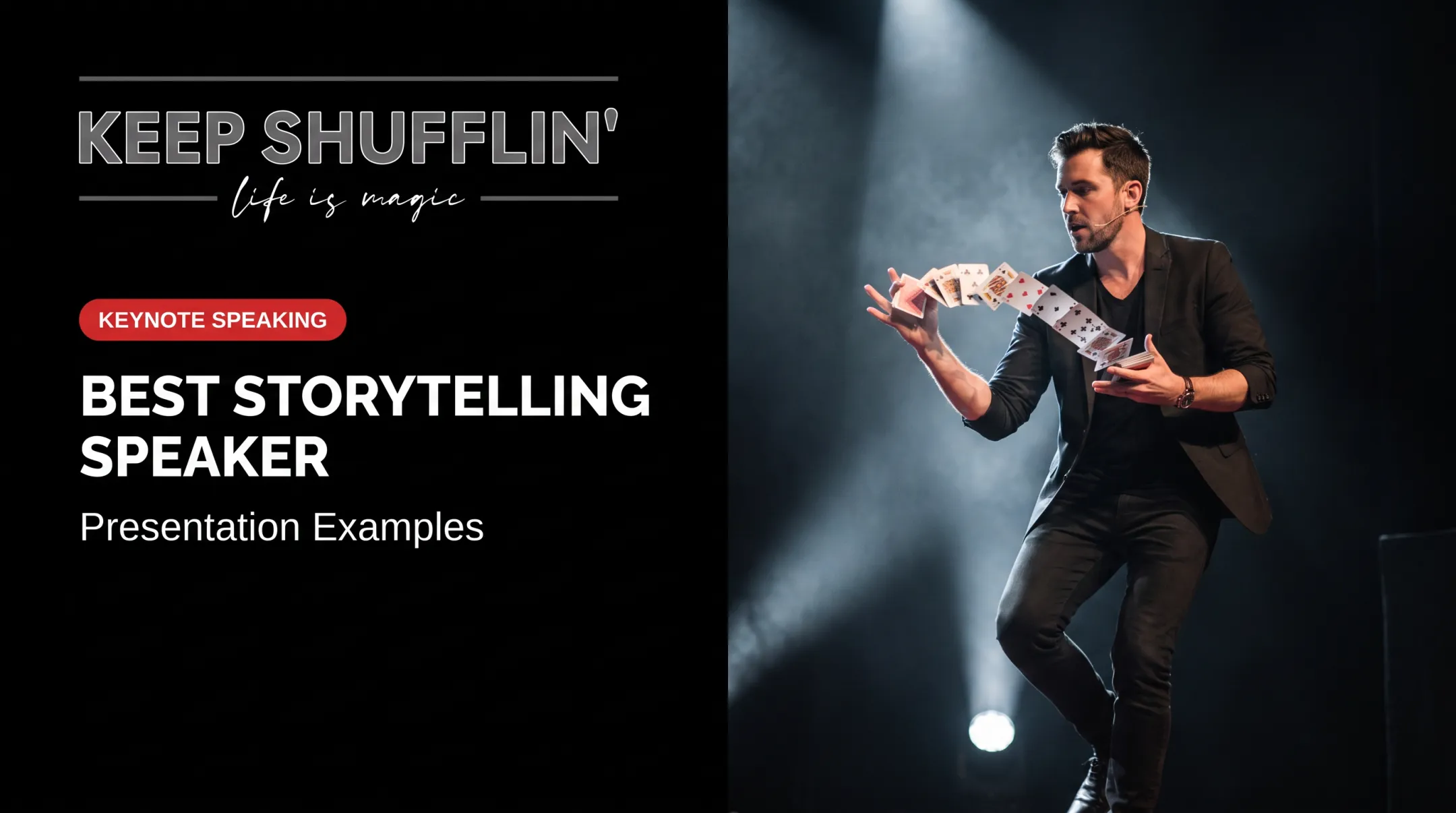
Jon doesn't perform tricks as a separate act. In his ACEC General Session keynote, he closed with a couple of head-scratching card tricks, tying the surprise of sleight-of-hand directly to his message: life changes in an instant, and control comes from how you respond, not from preventing the change. The magic supplies levity and surprise. The personal story supplies weight. Together, they keep a single presentation from running flat in either direction: funny enough to stay light, honest enough to stay real.
Track Record
Jon has delivered more than 1,000 keynotes, working with organizations including Marriott, Kroger, RE/MAX, Campbell Soup Company, Hard Rock, and Five Below. Marriott's Director of B2B Marketing & Events described a virtual audience of more than 3,400 attendees reacting with what she called "a grand slam."

5 Qualities Every Great Storytelling Speaker Shares
Speakers who consistently move a room share a small set of habits—not stage tricks. Use these five as a quick filter when you evaluate a storytelling keynote.
- Authenticity — shares real struggles instead of a curated highlight reel
- Emotional range — shifts between humor, tension, and reflection in one talk
- Audience awareness — reads the room and adjusts pacing or emphasis live
- Clear takeaway — ties every story back to one actionable message
- Specificity — replaces vague inspiration with concrete, memorable detail
Choosing the Right Storytelling Speaker for Your Event
Booking decisions shouldn't start with a celebrity name. They should start with the outcome you need.
What to Look For
- Proven track record — unedited keynote footage, not just a highlight reel
- Customization ability — connects their story to your company's mission, not a generic script
- Specific testimonials — cover preparation, engagement, and post-event impact, not just "great energy"
Why Customization Matters
Even a polished keynote falls flat when the message could belong to any company. Jon's process involves working with organizers ahead of time to understand the company's culture and goals, then shaping his story and magic around that theme. In one case, he used a card trick to reinforce a conference's literal theme: "Get on the same page."
Mainstream Credibility Lowers Risk
Booking someone with an established public track record reduces the guesswork. Jon's résumé includes:
- America's Got Talent finalist (Season 11) and a return for AGT: The Champions
- 25 appearances on The Ellen DeGeneres Show
- National TV presence — Today Show and Access Live
That level of visibility means event planners aren't gambling on an unknown. Many audiences have already seen the speaker succeed on camera.

Frequently Asked Questions
What are storytelling techniques?
Storytelling techniques are structural and delivery methods, like the hero's journey, contrast, or in medias res, that speakers use to build tension and create an emotional connection with the room.
What are the 8 types of storytelling techniques?
Common ones include the monomyth, the mountain, in medias res, false start, contrast, rule of three, vulnerability, and present-tense delivery. Not every speaker needs to use all eight in one talk.
What are some examples of storytelling techniques?
Opening mid-action instead of chronologically, contrasting current reality against a better future, and ending with a personal revelation rather than a summary are all common examples.
What are the 5 C's of a story?
One common framework uses Character, Context, Catalyst, Conflict, and Conclusion, covering who's involved, the backstory, the triggering event, the obstacle, and the resulting takeaway.
What are 5 qualities of a good storyteller?
Authenticity, emotional range, audience awareness, a clear takeaway, and specificity. Speakers who hit all five tend to be the ones audiences remember months later.