
The right topic, matched to the right audience, drives real outcomes: sharper engagement, better morale, and action that outlasts the applause. Get the topic wrong, and even a polished speaker falls flat. This guide covers the keynote topics resonating most with corporate audiences right now, and how to pick a speaker who can actually deliver on them.
TL;DR
- Resilience, leadership, AI/future of work, mental health, and DEI dominate corporate keynote requests today
- Story-driven content creates longer-lasting recall than statistics alone, but pairing both works best
- Fit matters more than fame — audience relevance beats a big name every time
- 67% of event planners prioritize engagement over attendance when booking speakers (PCMA, 2024)
- Best keynotes pair a strong topic with a speaker who customizes delivery to your goals
Overview of Keynote Speaker Topics for Corporate Audiences
A "keynote topic" is the central theme a speaker builds an entire presentation around, whether that's resilience, leadership, or workplace wellbeing. Choosing the right topic matters just as much as choosing the right speaker. A brilliant presenter delivering the wrong message to the wrong room still misses the mark.
Corporate speaker budgets reflect how seriously planners take that fit. Planners report an average keynote budget of $22,449, with 47% spending between $10,000 and $50,000 (PCMA, 2024). That's a serious investment, and it explains why topic-audience fit has become the deciding factor in most booking decisions.
Below are the five topics that resonate most with corporate audiences, along with what makes each one work.
Top Keynote Speaker Topics for Corporate Audiences
Each topic below was selected using four criteria: audience relevance, engagement potential, real-world applicability, and speaker credibility.
Resilience & Overcoming Adversity
Resilience remains one of the most requested corporate topics, especially following pandemic-era disruption and ongoing organizational change. Audiences connect emotionally with real stories of hardship and comeback in ways that pure theory can't replicate.
Research backs this up: a Harvard Business School-reported study found that story-based recall fades by roughly one-third over a day, compared to a 73% drop-off for statistics alone (HBS Working Knowledge, 2023). Stories stick. Numbers alone don't.
| Category | Details |
|---|---|
| Best For | Sales kickoffs, all-hands meetings, leadership offsites |
| Signature Style | Personal storytelling paired with practical frameworks |
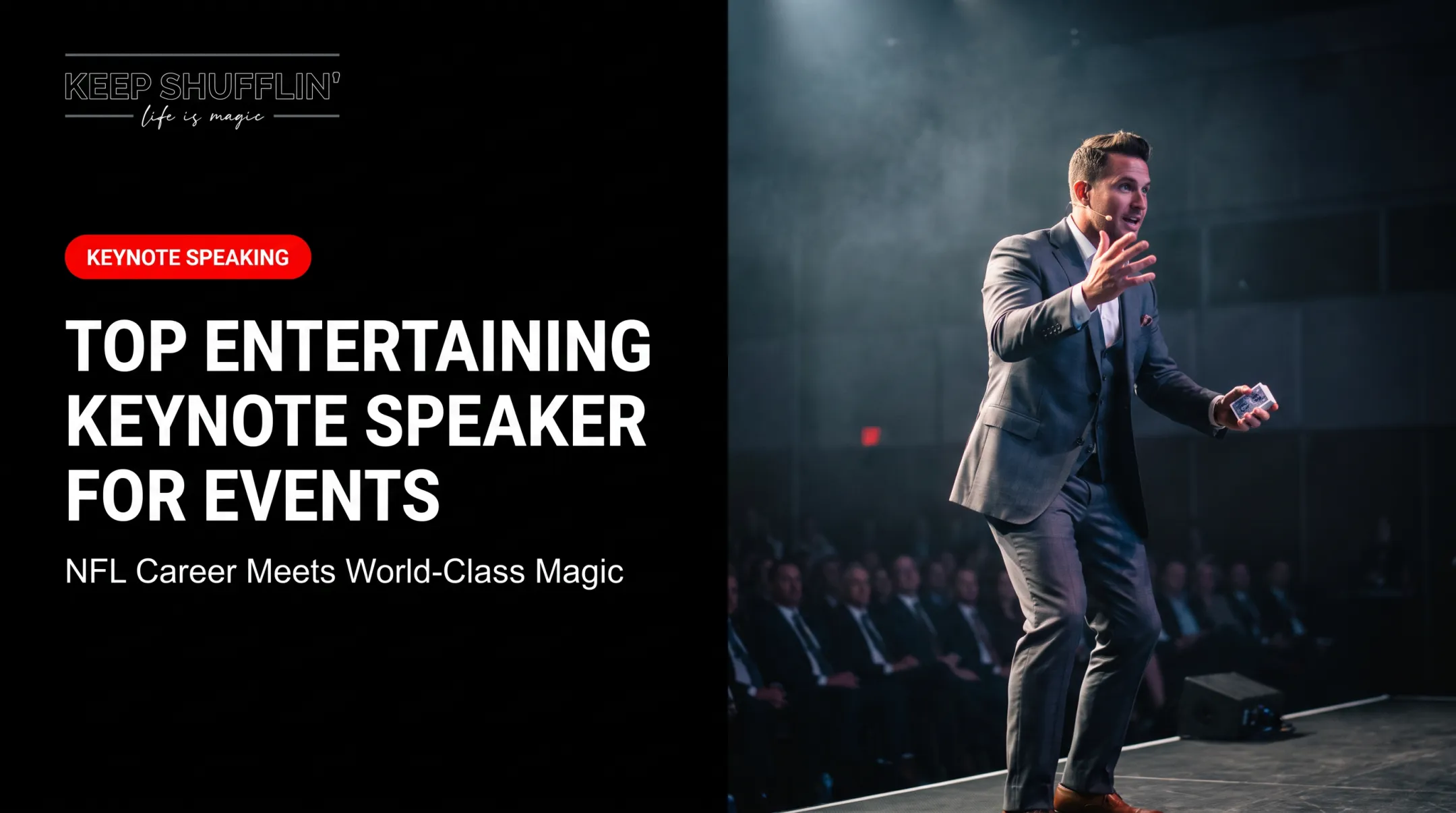
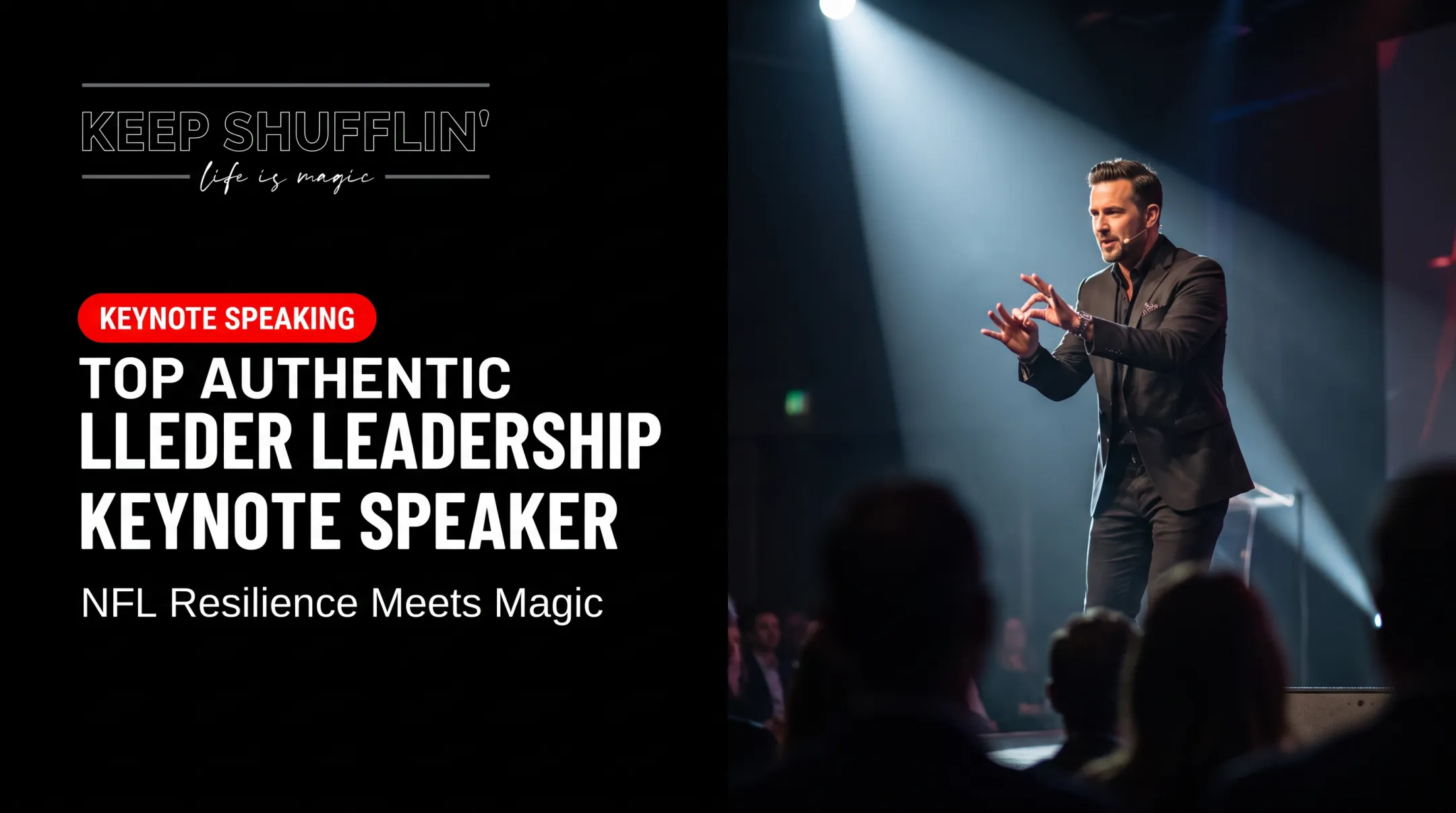
| Example Speaker | Jon Dorenbos — former 14-year NFL long snapper and America's Got Talent finalist; pairs magic with a personal resilience story for Fortune 500 audiences (Apple, Marriott, Kroger) |
Dorenbos's story illustrates why this topic works. At age 12, he lost his mother and spent roughly a year in foster care before football and magic became anchors for his recovery.
He went on to play 14 seasons in the NFL, earning two Pro Bowl selections, before a life-threatening heart condition ended his career in 2017. His signature line — "Life happens. Good, bad, and ugly. What separates people is how they handle it" — is the kind of takeaway that survives long after the event ends.

Leadership Development
Leadership stays evergreen because it's directly tied to organizational performance and succession planning. Good leadership content helps executives and managers translate frameworks into everyday decisions, not just inspiration for a day.
The stakes are real. McKinsey found that only 10% of CEOs said their leadership-development initiatives had a clear business impact (McKinsey, 2017). Meanwhile, 27% to 46% of executive transitions are viewed as failures or disappointments within two years (McKinsey, 2024).
| Category | Details |
|---|---|
| Best For | Executive retreats, management training, conferences |
| Signature Style | Case studies, frameworks, Q&A |
| Key Focus Areas | Decision-making under pressure, accountability, team trust |
This is why leadership speakers who lean on behavior-based content, not just motivation, tend to land better. McKinsey's research shows successful programs are eight times more likely to focus on business-critical behaviors rather than generic inspiration.

Artificial Intelligence & Future of Work
AI and workplace transformation now dominate corporate agendas. This topic helps organizations prepare practically for automation, hybrid work models, and ongoing tech disruption, rather than just talking about it in the abstract.
The anxiety is measurable. A 2025 Pew survey of over 5,000 employed US adults found 52% worried about AI's future impact on their jobs, while only 6% expected AI to create more opportunities for them long-term (Pew Research Center, 2025).
| Category | Details |
|---|---|
| Best For | Tech conferences, strategy meetings, town halls |
| Signature Style | Data-driven trend forecasting with actionable takeaways |
| Key Focus Areas | Ethical AI use, workforce reskilling, adaptability |

Speakers who address job-quality concerns directly, rather than offering vague optimism about "the future," build far more trust with skeptical audiences.
Mental Health & Burnout Prevention
Wellbeing-focused keynotes are surging as organizations confront burnout and retention challenges head-on. This topic works because it combines science-backed strategies with relatable, often humorous delivery.
Consider the urgency:
- 77% of employees reported work-related stress in the prior month (APA, 2023)
- 57% reported burnout-related stress impacts, including emotional exhaustion and lower productivity
- 57% of workers dissatisfied with employer mental-health support planned to job search within a year
| Category | Details |
|---|---|
| Best For | HR-led events, wellness weeks, employee town halls |
| Signature Style | Interactive, high-energy sessions |
| Key Focus Areas | Stress management, energy renewal, work-life balance |
Only 21% of employees strongly agree their organization actually cares about their wellbeing (Gallup, 2024). A keynote alone won't close that gap, but the right one can start the conversation managers need to have.
Diversity, Equity & Inclusion
DEI remains critical for culture, talent retention, and innovation. The strongest DEI keynotes reframe inclusion as a competitive business advantage rather than a compliance checkbox.
McKinsey's research found companies in the top quartile for gender and ethnic diversity on executive teams were 9% more likely to outperform their peers, while bottom-quartile companies were 66% less likely to outperform (McKinsey, 2023). This is a correlation, not a guarantee, but it's a strong business case.
| Category | Details |
|---|---|
| Best For | Culture-focused conferences, leadership summits |
| Signature Style | Storytelling combined with actionable culture-building strategies |
| Key Focus Areas | Belonging, inclusive leadership, community building |
The most effective DEI speakers connect inclusion to specific practices, like fair advancement and decision quality, rather than leaving audiences with feel-good sentiment and no follow-through.
How We Choose the Right Keynote Topic and Speaker
The most common booking mistake? Choosing a "big name" over topic-audience fit. A celebrity speaker delivering the wrong message still wastes the budget.
Instead, weigh these factors, each tied to a measurable outcome:
- Audience demographics — Match the speaker's message to who's actually in the room, not who's popular
- Event goals — Define one or two desired behaviors before you sign the contract
- Speaker customization ability — Confirm they can weave your company's specific challenges into the message, not a generic script
- Past client feedback — Prioritize testimonials that speak to real impact, not just entertainment value
Jon Dorenbos builds customization into the booking process: rather than delivering a standard speech, he works directly with event organizers on audience makeup, culture, and objectives before shaping the outline. That collaboration is what separates a forgettable filler act from a keynote people reference for years.
Those same criteria only work when everyone scores the speaker the same way. Nearly 7 in 10 booking decisions involve two to five stakeholders (PCMA, 2024), so give HR, event planners, and business sponsors a shared scorecard before finalizing your choice.
Conclusion
The most successful corporate events pair a compelling topic with a speaker who can authentically deliver it. Popularity alone won't move the needle. Customization and audience relevance will.
Before finalizing your keynote choice, ask whether the speaker can connect their message directly to your organization's specific challenges. Speakers like Jon Dorenbos do this by pairing live magic with a personal story of resilience and purpose, then tailoring the message to your audience. That combination—right topic, authentic delivery, and real customization—is what makes a corporate keynote stick.
Frequently Asked Questions
What makes a good keynote speaker?
A good keynote speaker combines authenticity, genuine audience connection, strong storytelling ability, and relevant real-world experience. The best speakers customize their message rather than delivering a generic template.
What are some good topics for keynote speakers?
Resilience, leadership development, AI and the future of work, mental health, and DEI top the list for corporate audiences right now. Each addresses a specific organizational need beyond simple entertainment.
Can you provide some examples of keynote speeches?
A resilience keynote might follow an athlete-turned-speaker's journey from personal tragedy to career success, using storytelling and audience takeaways. A leadership talk often uses real case studies on decision-making and accountability.
What are some good topics for a leadership presentation?
Strong leadership presentations cover decision-making under pressure, accountability, and building trust within teams. The best ones translate frameworks into daily actionable behaviors, not just inspiration.
What are some good business topics?
Innovation, customer experience, sales growth, and adapting to economic change all resonate with corporate audiences. These topics work best when tied to specific, measurable business outcomes.
What are some fun speech topics?
Creative problem-solving, workplace culture stories, and unexpected career turns work well as lighter corporate topics. Humor, magic, or interactive moments help the message stick without losing substance.