
Event planners face real pressure here. There are thousands of speakers to choose from, ROI is hard to measure in advance, and nobody wants to be the person who booked a dud in front of the C-suite. According to PCMA's 2024 speaker-planner survey, leadership and motivation topics ranked as the top-rated speaker category, chosen by 40% of planners — proof that this decision carries weight.
This guide walks through defining your goals, vetting candidates, budgeting realistically, and running the outreach-to-contract process without the guesswork.
Key Takeaways
- Nail down your summit's specific outcome and audience profile before browsing speaker lists
- Vet candidates using recent footage, references, and industry relevance — not just a polished bio
- Celebrity-tier and high-demand speakers need booking windows of 6-12 months
- The strongest leadership keynotes pair a personal story with practical, usable substance
Define Your Summit Goals and Speaker Criteria
Set Clear Event Objectives
Skip the vague theme ("Leading Through Change") and write down 3-5 measurable outcomes instead. "Equip mid-level managers to run hybrid teams" gives you a filter for every speaker conversation that follows.
MPI's speaker-selection guidance puts it plainly: organizations hire speakers to help achieve objectives, not just to fill 45 minutes on an agenda. Get agreement from decision-makers on this objective before you contact a single speaker.
Know Your Audience
Seniority, industry, and generational mix all shape which speaker will connect. A room full of VPs reacts differently than a mixed group of frontline supervisors and regional directors.
Ask yourself:
- What's the average tenure and title level in the room?
- Is this a single-industry crowd or a cross-functional mix?
- What generational split are you working with?
Establish Non-Negotiable Criteria
Before reviewing candidates, agree on the must-haves:
- Relevant recent experience, not a highlight reel from a decade ago
- Message customization built for your audience—generic keynotes fall flat with executives
- Delivery style matched to your event's energy, not just impressive credentials
- Proven credibility with senior leaders on comparable stages
MPI also notes that lack of personalization is the top complaint in post-event speaker evaluations—so match energy (motivational vs. strategic) to what your format actually needs.

Where to Find Leadership Summit Keynote Speakers
Most planners start in one of three places: speaker bureaus, professional networks, or past conference agendas from similar events in their industry. BigSpeak's booking guide treats a general internet search as a last resort, not a starting point. Bureaus and referrals surface vetted talent faster. Once you have names, shortlist by reviewing:
- Recent talk videos (not clips from five years ago)
- LinkedIn activity and public commentary
- Audience testimonials from comparable events For high-demand professional and celebrity-tier speakers, direct outreach or bureau connections work better than cold emails through a generic contact form. Jon Dorenbos's team, for instance, handles inquiries directly rather than through a bureau. Planners submit event details through his booking form, and his manager, Tim Mooney, typically responds within 24 hours to discuss fit and availability.
What Sets a Truly Memorable Leadership Speaker Apart
Anyone can deliver a motivational speech. Fewer speakers combine an authentic personal story with practical takeaways an audience can apply the next Monday morning. Harvard Business School research found that wrapping a story around a statistic extends how long audiences remember it. Story is the delivery vehicle, not decoration.
The "Hook" Factor
Speakers with a distinct hook (an unusual skill, background, or achievement) create stronger engagement and stickier recall. Jon Dorenbos illustrates this well: 14 years as an NFL long snapper, a finalist on America's Got Talent, and a personal story involving childhood tragedy and life-saving heart surgery.
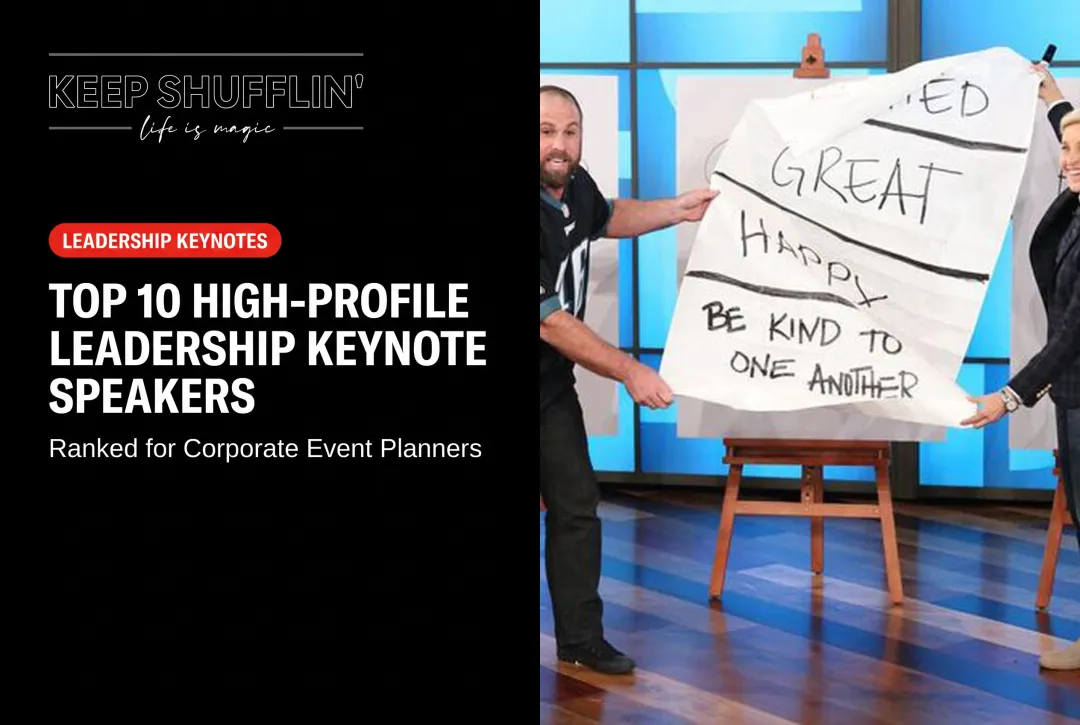
He doesn't just tell that story. He performs sleight-of-hand magic as a live metaphor for it. One routine built around the phrase "get on the same page" ties directly into a client's conference theme, turning a trick into a takeaway.
Track Record Signals Reliability
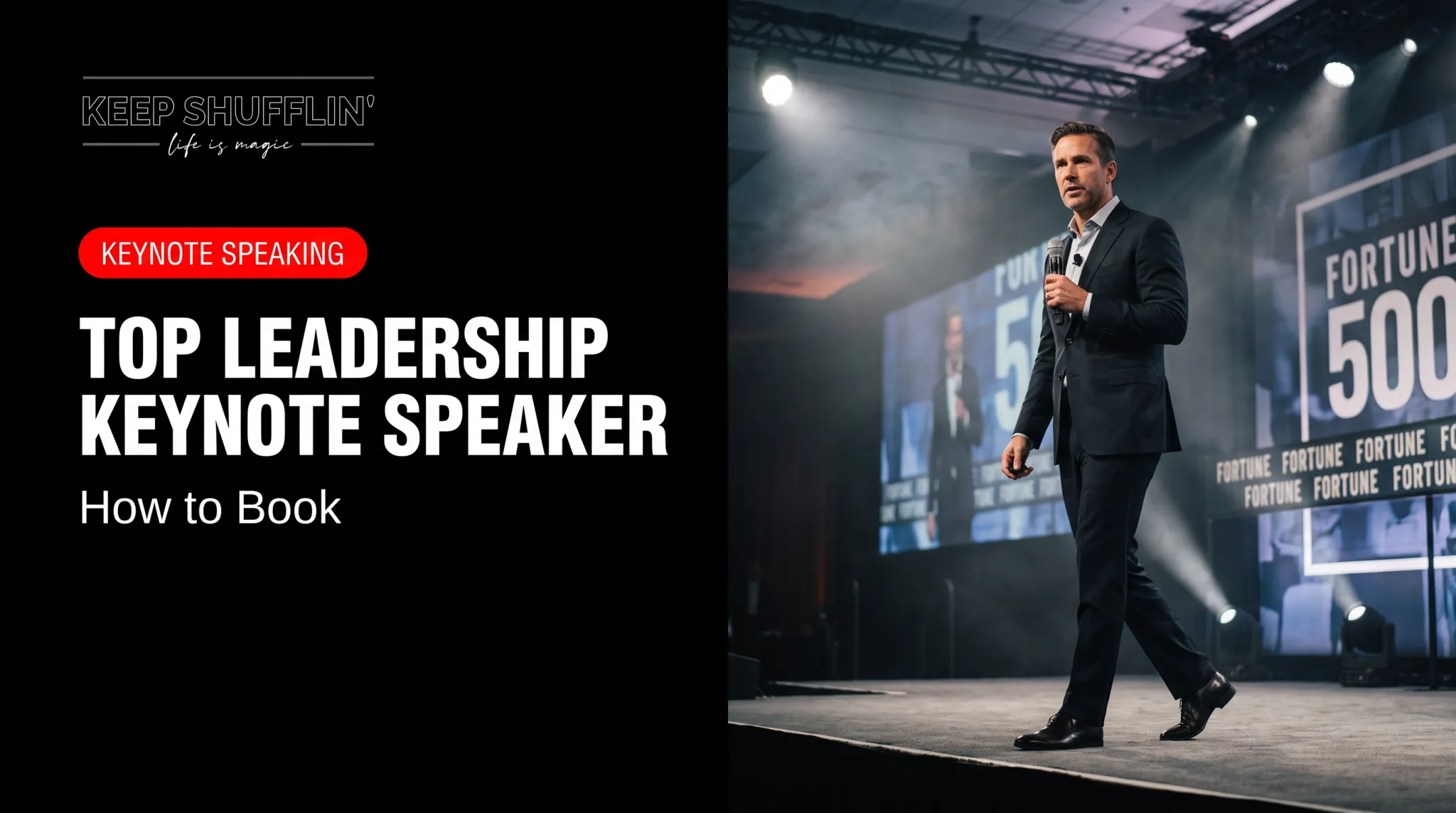
A speaker with 1,000+ live events, Fortune 500 stages, and national TV credits has already proven they can read a room under pressure. Dorenbos has delivered keynotes for organizations including Apple, Marriott, Kroger, RE/MAX, Campbell Soup Company, and Manhattan Associates, spanning retail, hospitality, pharma, and logistics. That range matters: it shows the message adapts, rather than repeats.

His keynote content typically centers on five themes:
- Resilience and overcoming adversity
- Teamwork and collaboration
- Embracing change
- Self-talk and mindset
- Accountability
Budgeting and Booking Timelines
Understanding Fee Tiers
Speaker fees generally scale with experience and name recognition. BigSpeak's fee breakdown outlines four bands:
| Tier | Typical Fee Range |
|---|---|
| Up-and-Comers | Under $15,000 |
| Professional Speakers | $15,000-$25,000 |
| Popular Speakers | $25,000-$50,000 |
| Celebrity/Brand-Name | $50,000+ |
For context, PCMA's 2024 survey found the average overall speaker budget averaged about $22,449, with 47% of planners reporting a $10,000–$50,000 range. Leadership summit headliners and other celebrity-tier keynotes typically sit well above that midpoint—often $50,000 to $80,000+ before travel and production.

Booking Windows
According to Forbes, most events lock in speakers three to six months ahead, while larger conferences book nine months to a year out. Celebrity-caliber talent needs the longer end of that window. Calendars fill early, so last-minute holds are rarely realistic.
Beyond the Speaker Fee
Budget for these additional line items:
- Transportation and hotel when the speaker travels to your event
- Pre-event calls to tailor content to your objectives
- AV setup and rehearsal time (about 45 minutes when equipment is ready)
Outreach, Vetting, and Contracting Steps
Craft a Clear First-Contact Inquiry
Your initial email or form submission should include:
- Event date and location (plus closest airport for travel planning)
- Audience profile — size, seniority, industry
- Format — in-person keynote, virtual, or hybrid
- Budget range — even an estimate speeds up the proposal process
Skipping any of these forces back-and-forth that eats into your booking timeline.

Once you get a response, vet fit before you invest in a full briefing. Review recent keynote footage, ask for references from comparable leadership events, and confirm their core themes match your summit goals and audience seniority.
Schedule a Pre-Event Briefing Call
This is where a generic speech becomes a tailored one. A pre-event call lets the speaker's team learn your organization's specific goals, corporate messaging, and audience challenges. For Jon Dorenbos, this call covers content direction, taglines, technical specs, and how his story connects to your event's theme.
Lock Down Logistics Early
Confirm before the event:
- AV requirements and stage setup
- Virtual platform access (Zoom, WebEx, Google Meet, etc.) for hybrid or virtual formats
- Camera and sound-check timing — often around 45 minutes for in-person setup
Get Everything in a Signed Contract
Don't leave fees, deliverables, or cancellation terms as verbal agreements. Document:
- Exact fee and payment schedule (deposit plus balance, typically due before the event)
- Stage time and any additional appearances (meet-and-greet, Q&A)
- Cancellation policy and rescheduling terms
Working directly with an experienced speaker's team, rather than juggling multiple intermediaries, reduces friction. Booking Jon Dorenbos runs through a single point of contact: submit the inquiry form, hear back within 24 hours, complete a pre-event call, and finalize logistics through his rider and production team.
Frequently Asked Questions
How many minutes should a keynote speech be?
Most professional keynotes run 45-60 minutes, though this shifts based on format. Virtual sessions often run shorter, in the 30-45 minute range, followed by Q&A.
How do I introduce a keynote speaker effectively?
Keep it to 30-60 seconds: brief credentials, why they're relevant to this specific audience, and enough anticipation to earn their attention. Skip the full biography; save the details for the speaker's own opening.
How far in advance should I book a keynote speaker for a leadership summit?
Plan for three to six months for most events, and nine months to a year for larger conferences or celebrity-tier speakers. Calendars for in-demand names fill quickly, so earlier inquiries give you more flexibility.
What's the difference between a motivational speaker and a leadership keynote speaker?
A motivational speaker focuses primarily on inspiring change through story and perspective. A leadership keynote speaker blends that same inspiration with frameworks and takeaways executives can apply directly to their teams.
How much does it typically cost to book a well-known keynote speaker?
Celebrity-tier and brand-name speakers generally start around $50,000–$80,000+ and scale upward based on demand, customization, and travel. For an exact figure, request a custom proposal directly from the speaker's team.
Can a leadership summit keynote speaker be booked for virtual or hybrid events?
Some speakers offer virtual or hybrid delivery through platforms like Zoom or WebEx, though many leadership-summit keynotes remain in-person. Confirm format options with the speaker's team early, and plan a pre-event technical call if you go virtual.