
Many speakers can spike a room's energy for an hour. Far fewer can shift how someone talks to themselves, treats their team, or handles adversity six months later. That gap separates good speakers from masterful ones.
This guide breaks down the traits, story-craft, and delivery skills required to close that gap — with lessons from speakers who've done it at the highest level, including former NFL long snapper and keynote speaker Jon Dorenbos.
Key Takeaways
- Transformational speaking pairs personal story with an actionable framework audiences can use after the event
- Audience trust grows from honest vulnerability more than from polished delivery
- Signature "tragedy to triumph" stories flex across sales, leadership, and association audiences
- Unique delivery tools—magic, humor, or live demonstration—make the message stick
- Bookings scale with visible proof: demo reels, client logos, and strong referrals
What Sets a Transformational Speaker Apart from a Motivational Speaker
Motivational speakers spark short-term energy. Transformational speakers aim for something that outlasts the standing ovation: a real shift in mindset or behavior.
Titles aren't standardized across the industry. For event planners and speakers, this is the distinction that matters:
- Motivational speaker — energizes a room, sparks immediate enthusiasm, often tied to a single emotional peak
- Inspirational speaker — close cousin to motivational; softer framing, often booked for the same slot
- Keynote speaker — describes the event role (the featured address), not the depth of impact
- Transformational speaker — blends storytelling with a repeatable framework audiences can apply weeks or months later
The titles overlap in how they're marketed. What separates them is the audience's actual takeaway: did they feel good for an hour, or did they leave with something they'll still be using at their next difficult moment?

Core Traits of a Masterful Transformational Speaker
Five traits consistently separate speakers who create lasting change from those who simply entertain.
Authenticity and Vulnerability
Vulnerability—uncertainty, risk, and emotional exposure—is the gateway to genuine audience connection. Harvard Business Review backs this up: stories that expose real struggle and self-doubt build trust and connection in ways polished success stories can't.
This doesn't mean turning a keynote into a confession booth. The boundary is relevance. Share what serves the audience's learning, not just what's dramatic.
Emotional Intelligence
Masterful speakers read a room in real time. They can feel when energy dips and adjust tone, pacing, or content on the fly rather than steamrolling through a fixed script.
That adjustment is what keeps a room locked in through the final line instead of checking out halfway through a fixed script.
A Clear, Repeatable Framework
Top speakers distill their message into 3-5 memorable, actionable takeaways. Audiences forget most of a talk within days. What sticks is the framework they can repeat to themselves later.
Credibility Built Through Lived Experience
Theory persuades. Lived adversity or achievement converts. A speaker who's actually survived what they're talking about earns trust faster than one who's only studied it.
Audiences feel the difference between borrowed insight and hard-won perspective—and they give the latter attention that lasts after the applause.
Adaptability Across Formats
Corporate stages vary—ballrooms, sales kickoffs, leadership offsites, and association conferences. Masterful speakers calibrate energy, length, and interaction to the room instead of running one canned talk everywhere.
Jon Dorenbos, for example, customizes each keynote to the client's message, blending storytelling, magic, humor, and interactive engagement so the same core narrative lands for a Fortune 500 sales team as clearly as it does for a national association audience.

Crafting Your Signature Story and Message
Every masterful transformational speaker has one story they can tell a hundred different ways. It's built on what storytelling experts call the "tragedy to triumph" arc.
TED's guidance on storytelling supports this structure: start with a relatable character or dilemma, build tension, then deliver a resolution that offers real insight, not just relief.
Anchor to One Core Theme
Pick a theme that holds up no matter who's in the room: resilience, forgiveness, adaptability, or purpose. Every talk should return to it.
A practical structure to build around:
- Hook — open with a moment of tension or curiosity
- Personal story — the lived experience, told with honesty
- Universal lesson — what this means beyond you
- Actionable takeaway — something the audience can use Monday morning
- Memorable close — a line or moment that sticks

The Dorenbos Example
Jon Dorenbos's core narrative is a textbook case. At age 12, his father murdered his mother. He and his sister spent roughly a year in foster care before moving in with their aunt.
He went on to play 14 years in the NFL as a long snapper, earning two Pro Bowl selections and a Super Bowl ring with the Philadelphia Eagles.
In 2017, a routine physical revealed a serious heart condition. Emergency open-heart surgery saved his life and ended his football career. He'd already been building a second career in magic, which led to a finals run on America's Got Talent and later America's Got Talent: The Champions.
That's one story. But he doesn't tell it the same way twice:
- Sales teams: He shifts focus to self-talk and mental toughness under pressure
- Leadership conferences: He weaves in accountability, teamwork, and embracing change
- National associations: He maps the story onto the group's pressures, such as furloughs and pay cuts
The core story stays fixed. The application moves. That's the customization skill most aspiring speakers skip.
Test your story small before you scale it. Try it at local events or smaller company meetings before booking bigger stages. You'll learn what lands and what doesn't.
Mastering Delivery, Presence, and Your Unique "Tool"
Stage presence isn't innate talent. It's built through practice, video review, and repetition.
Find Your Hook
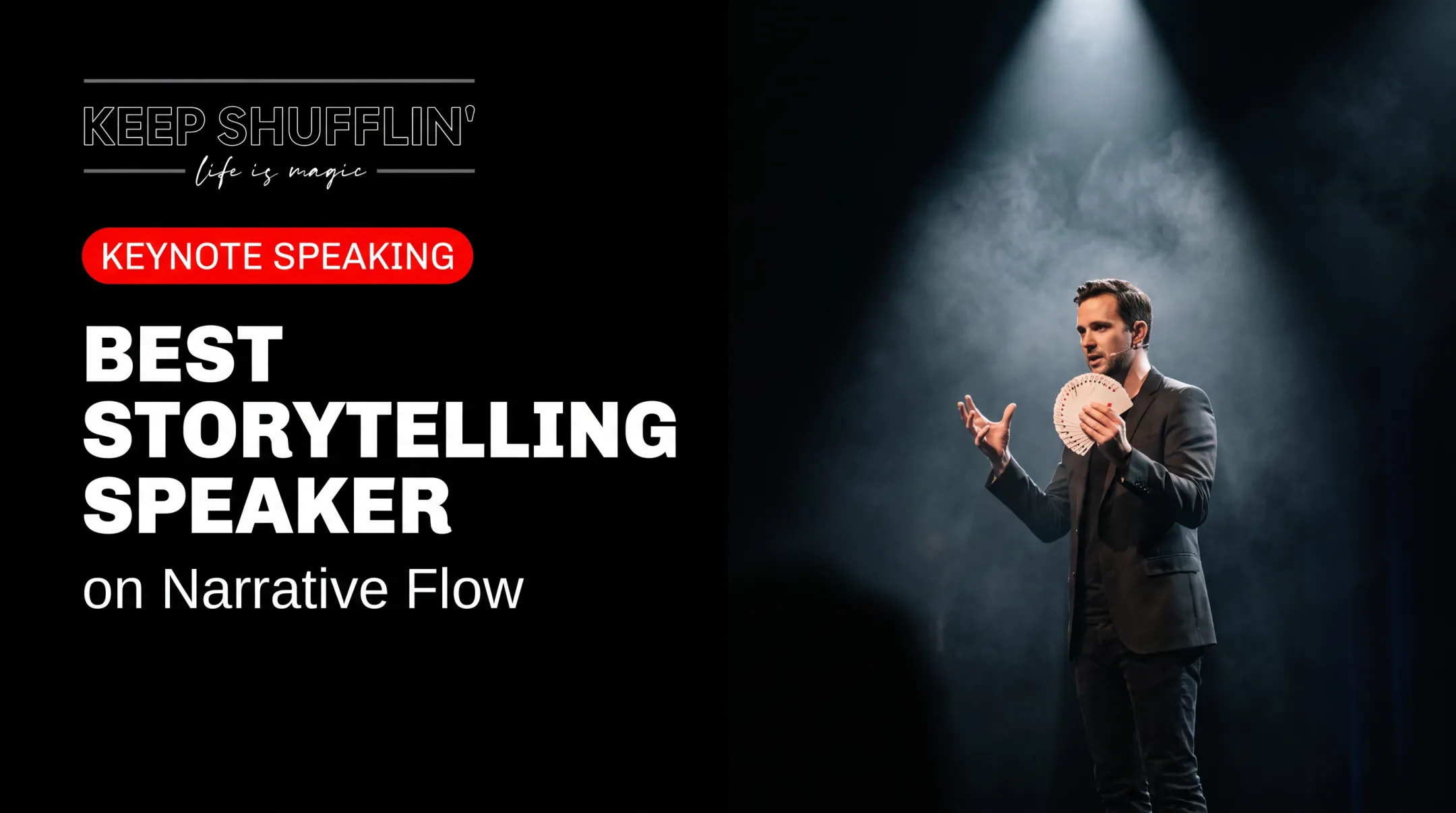
The most memorable transformational speakers have a unique skill that makes their message different from a typical keynote. Jon Dorenbos uses magic, but not as a separate show. He weaves illusions directly into his story.
At one association event, he used a deck of cards as a metaphor for life itself, pairing sleight-of-hand with his story of survival and closing with: "Life happens. Good, bad, and ugly. What separates people is how they handle it."
The illusion works as a delivery mechanism for the point.
Vocal Variety and Pacing
Toastmasters research names five levers for impact: volume, pitch, pace, pause, and emotion. Deliberate use of these keeps a transformational message from sounding preachy:

- Slow down before a key idea
- Pause after a reveal, let it land
- Vary pitch and volume to signal stakes
- Avoid a flat, uniform rhythm throughout
Reading the Room, Live or Virtual
Great speakers adjust in real time:
- Live stage: Watch body language and energy shifts, then adapt pacing and emphasis
- Virtual room: Track chat activity and engagement cues, and pace without crowd energy to feed off
Building Your Speaking Career and Audience
Craft alone doesn't build a career. Visibility does.
Network deliberately.
- Build relationships with event planners and speaker bureaus
- Ask past clients for referrals, not just testimonials
- NSA research finds many speaking referrals come from other speakers who saw you perform first
Build proof, not just promises.
- A demo reel is often the first thing an event planner checks
- Lead with your strongest clip — performance quality matters more than production polish
- Client logos and testimonials build credibility with Fortune 500 buyers
Customize for the buyer.
- A talk that works for a sales kickoff won't land the same way at a leadership offsite
- Adjust the emphasis, not the core story
Learning from Proven Transformational Speakers
Some of the most memorable transformational speakers come from unconventional backgrounds: athletes, performers, survivors. Their credibility comes from lived experience, not a polished persona.
Jon Dorenbos has delivered more than 1,000 event appearances for companies including Marriott, RE/MAX, Kroger, and Campbell Soup. Two moments capture what that track record looks like in the room:
- Marriott's Director of B2B Marketing & Events for the Americas booked him for a virtual audience of over 3,400 people
- RE/MAX's CEO reported an unsolicited standing ovation halfway through his keynote
That kind of repeat success comes from a well-honed story, delivered through a unique talent and adapted for each room without losing what makes it his.
If you're studying established speakers, don't just study what they say. Study how they change the same core message for different audiences while keeping the signature story recognizable. That's the actual skill worth copying.
Frequently Asked Questions
What does it mean to be a transformational leader?
A transformational leader inspires lasting change in others through vision, authenticity, and modeling growth. Transformational speakers teach that same mindset so audiences can apply it in their own lives and teams.
Who are some popular transformational leaders?
Martin Luther King Jr. and Nelson Mandela are frequent examples, known for clear vision, moral courage, and steady purpose under pressure. Both show how authenticity can drive change well beyond a single speech or moment.
What are the five C's of transformational leadership?
There's no single universal "Five Cs" framework, but a useful mnemonic is Credibility, Communication, Compassion, Courage, and Commitment. On stage, that means backing claims with evidence, listening as much as you speak, and following through with real action.
What is a motivational speaker called?
Motivational speakers are also called inspirational speakers or motivators, terms often used interchangeably. A transformational speaker differs by aiming for lasting mindset and behavior change, not just a temporary energy boost.
How do I know if I'm ready to become a professional keynote speaker?
Readiness shows up as a refined signature story you've tested at smaller events, consistent stage practice, and early client testimonials. If you can adapt your core message for different audiences without losing its authenticity, you're closer than you think.
Can anyone become a transformational speaker, or does it require a dramatic personal story?
A powerful personal narrative helps, but it's not required. Transformation comes from authenticity, emotional intelligence, and delivering actionable insight, not from having survived something extreme.