
Event planners feel this pressure every time they sign a contract. Balancing cost, audience fit, and lasting impact isn't easy, especially when speaker fees can range from a few thousand dollars to well over $100,000. This guide breaks down exactly what separates a forgettable presenter from a keynote speaker who's genuinely worth the stage.
Key Takeaways
- A great keynote speaker pairs an authentic personal story with real expertise, not a polished script alone
- Audience engagement (interactivity, humor, performance) matters as much as content depth
- Track record with comparable organizations reduces booking risk more than name recognition
- Customization to your event's theme turns a solid talk into one audiences remember
What Makes a Keynote Speaker "Top Tier"?
A top-tier keynote speaker blends credibility, storytelling mastery, and stage presence to create lasting emotional or behavioral impact, not only a strong reaction in the room. That's a much higher bar than simply being famous or articulate.
Speakers generally fall into a few categories:
- Motivational speakers — focus on mindset and personal growth
- Celebrity speakers — bring name recognition and media presence
- Subject-matter experts — deliver deep industry or technical knowledge
- Hybrid entertainer-speakers — combine performance skills with a substantive message
Core Traits of a Stage-Worthy Speaker
Authentic, lived experience. Audiences connect with real struggle and real triumph far more than with theory. A speaker who says "here's what happened to me" lands differently than one who says "research suggests."
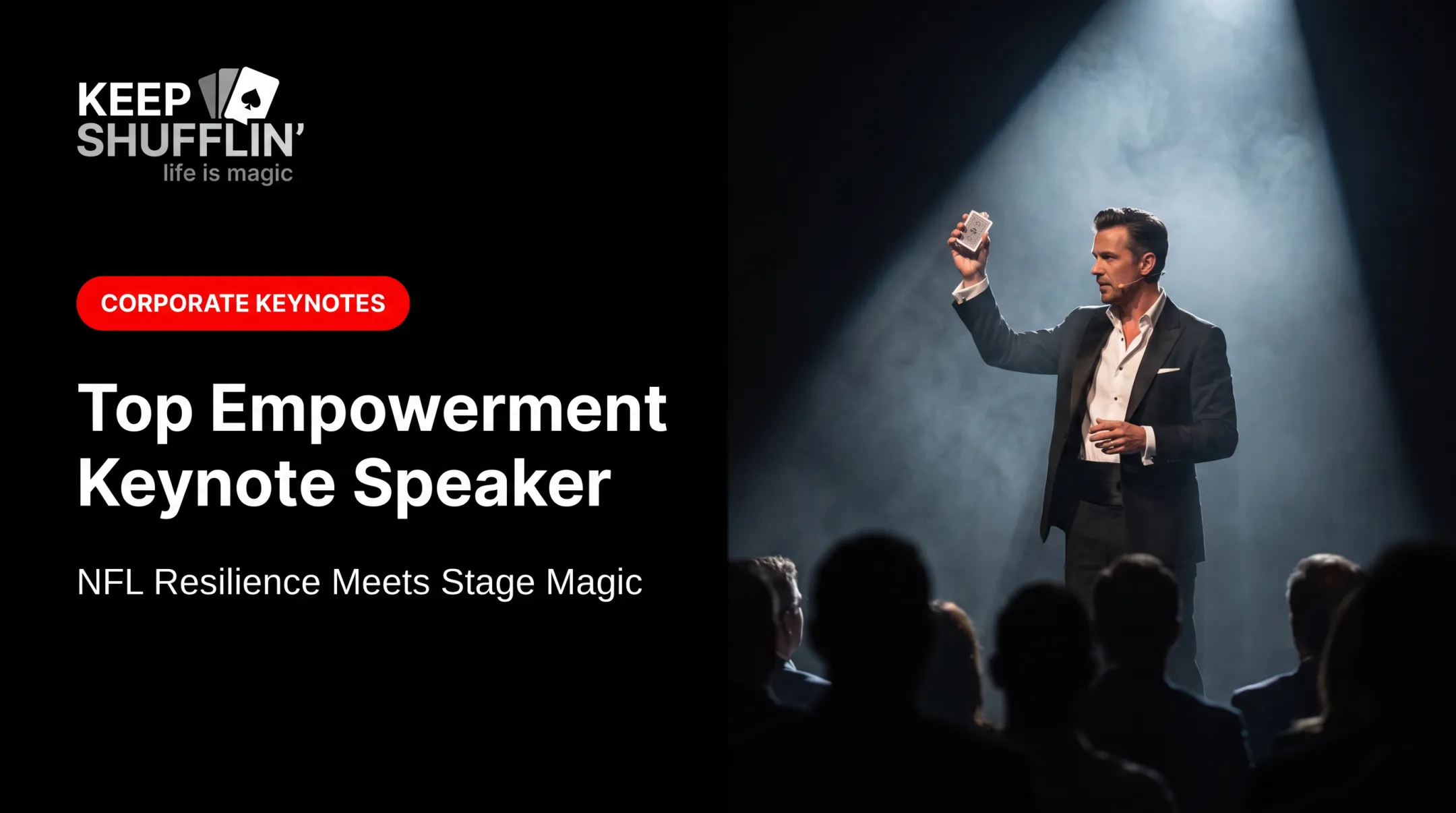
A unique delivery hook. Blending an unexpected skill (comedy, magic, live performance) with the message makes a talk far more memorable than a straight lecture. The performance carries the takeaway; it does not compete with it. Jon Dorenbos, for example, uses stage magic as the vehicle for a personal story of resilience and accountability—so the entertainment locks in the point instead of replacing it.
Proven adaptability across audiences. The best speakers reshape content for company culture, industry pressures, and the event’s goals, rather than running the same talk everywhere.
When lived experience, a distinctive hook, and real customization show up together, the keynote earns its place on the stage—and stays with the audience after the event ends.
Why the Right Keynote Speaker Matters for Your Event
The opening or closing keynote sets the emotional tone for an entire conference or sales kickoff. Get it wrong, and everything after it, breakout sessions, networking, even the closing dinner, feels a little flatter.
Planners consistently prioritize this. In the 2024 Speaking Industry Benchmark Report, audience engagement ranked as the top organizer goal at 66.76%, ahead of audience education (49.12%) and staying on budget (40.59%).
What do attendees actually want after a keynote? According to Freeman's 2024 attendee research, covering nearly 2,100 business event attendees:
- 38% wanted to leave feeling informed
- 35% wanted to leave feeling inspired and motivated
- 64% said immersive experiences were the most positively influential factor overall

A top speaker has to deliver both: clear takeaways and the motivation to act on them.
What to Consider When Choosing the Best Keynote Speaker
These factors help planners connect a speaker's style to measurable outcomes, rather than picking based on fame alone.
Relevance to Your Audience and Industry
A speaker's message needs to align with attendee roles, seniority, and industry pain points. A brilliant talk aimed at frontline sales reps will fall flat in front of a room of executives, and vice versa. Mismatched relevance, not lack of talent, is the most common reason a strong resume still produces a forgettable keynote.
Storytelling and Stage Presence
Can the speaker hold a room without slides or props? That's the real test of speaking mastery. That presence also has to hold for the full runtime. Nearly half of organizers surveyed by PCMA selected 45 minutes to one hour as the optimal in-person keynote length, with another 31% preferring 30-45 minutes.
Entertainment Value vs. Substance Balance
The best speakers entertain enough to stay memorable, but never trade actionable takeaways for pure spectacle. This balance decides whether attendees can repeat the message weeks later, or whether they just remember "that was fun."
Track Record with Comparable Organizations
Past experience with Fortune 500 companies, associations, or similar event formats lowers booking risk. Speakers.com's event booking guide recommends checking performance history and requesting references from similar events. Consistent feedback on clarity and audience connection matters more than a single glowing review.
Customization and Message Alignment
Top speakers tailor anecdotes and takeaways to the specific event theme instead of delivering a canned talk. This is what makes an audience feel like the presentation was made for them, not recycled from last month's conference.
Budget vs. Value Fit
Speaker fees vary enormously by tier:
| Tier | Typical Fee Range |
|---|---|
| Mid-range | $5,000–$15,000 |
| Established professional | $15,000–$30,000 |
| Celebrity | $30,000–$100,000+ |
A mid-tier speaker with strong engagement metrics can outperform an expensive celebrity name on pure ROI. The right fit balances production budget against expected audience impact, not just who has the biggest name.

Jon Dorenbos: A Case Study in What "Worth the Stage" Looks Like
Jon Dorenbos checks nearly every box above. He spent 14 years as an NFL long snapper for the Philadelphia Eagles, finished third on America's Got Talent, and became a recurring guest on The Ellen DeGeneres Show. His story carries real weight. At age 12, Jon lost both parents when his father killed his mother. He and his sister spent roughly a year in foster care before moving in with an aunt. Years later, a routine physical with the New Orleans Saints revealed an aortic aneurysm. Emergency open-heart surgery ended his football career and redirected him toward magic and speaking. That combination is the "entertainment plus substance" model event planners should look for:
- A genuine personal story, not a manufactured narrative
- A rare skill (stage magic) used to reinforce the message, not distract from it
- A 45-60 minute format built around resilience, self-talk, teamwork, and adaptability
Proof on the corporate circuit
- 1,000+ event appearances for organizations including Marriott, Kroger, RE/MAX, Campbell Soup Company, and Manhattan Associates
- Marriott reported a virtual audience of more than 3,400 people and families responding with enthusiasm
- RE/MAX CEO Nick Bailey reported an unsolicited standing ovation halfway through the presentation

Customization built into the performance
Each keynote follows a three-step process:
- Client submits event goals
- A consultation call refines the message
- Jon integrates that message into his storytelling and magic For example, he may tailor a routine to reinforce a conference theme like "get on the same page." The customization shapes the structure of the performance, not just the intro slide.

Conclusion
Find the speaker whose story, style, and substance align with your event's purpose—not the most famous name on the roster. Vetting a speaker against relevance, storytelling ability, and track record consistently produces better ROI than chasing celebrity status alone.
A great keynote speaker does more than fill an hour on stage. Weeks later, people are still repeating the line that hit them and applying the lesson at their desk.
Frequently Asked Questions
Who are the best keynote speakers?
The "best" speaker depends on your event goal. Strong options combine authentic storytelling, proven audience engagement, and expertise that matches what you need the room to walk away with.
Who is the best keynote speaker in the world?
Rankings miss the point—fit depends on industry, budget, and audience. Top-tier speakers still share a few traits: lived adversity, strong delivery, and the ability to hold a room without slides.
Who are the best keynote speakers for 2026?
Trending speakers blend timely topics like AI and resilience with strong entertainment value. Check a speaker's recent bookings and client reviews to gauge current relevance before committing.
Who are the top AI keynote speakers?
AI speakers who combine deep technical credibility with practical business takeaways are currently in highest demand, according to BizBash's 2025 event trends coverage.
How much does it cost to book a top keynote speaker?
Fees range from roughly $5,000 for mid-tier speakers to $100,000+ for celebrity-tier names, depending on fame, format, and demand. Budget and expected impact should guide the decision, not just prestige.
How far in advance should you book a keynote speaker?
Book 6–9 months ahead for in-demand speakers. That window locks preferred dates and leaves time to customize the message to your audience.