
Coaches and motivational speakers exist to reverse that slide. This article breaks down the specific techniques top coaches use to lift team performance, why storytelling works better than slogans, and how speakers fit alongside internal coaching.
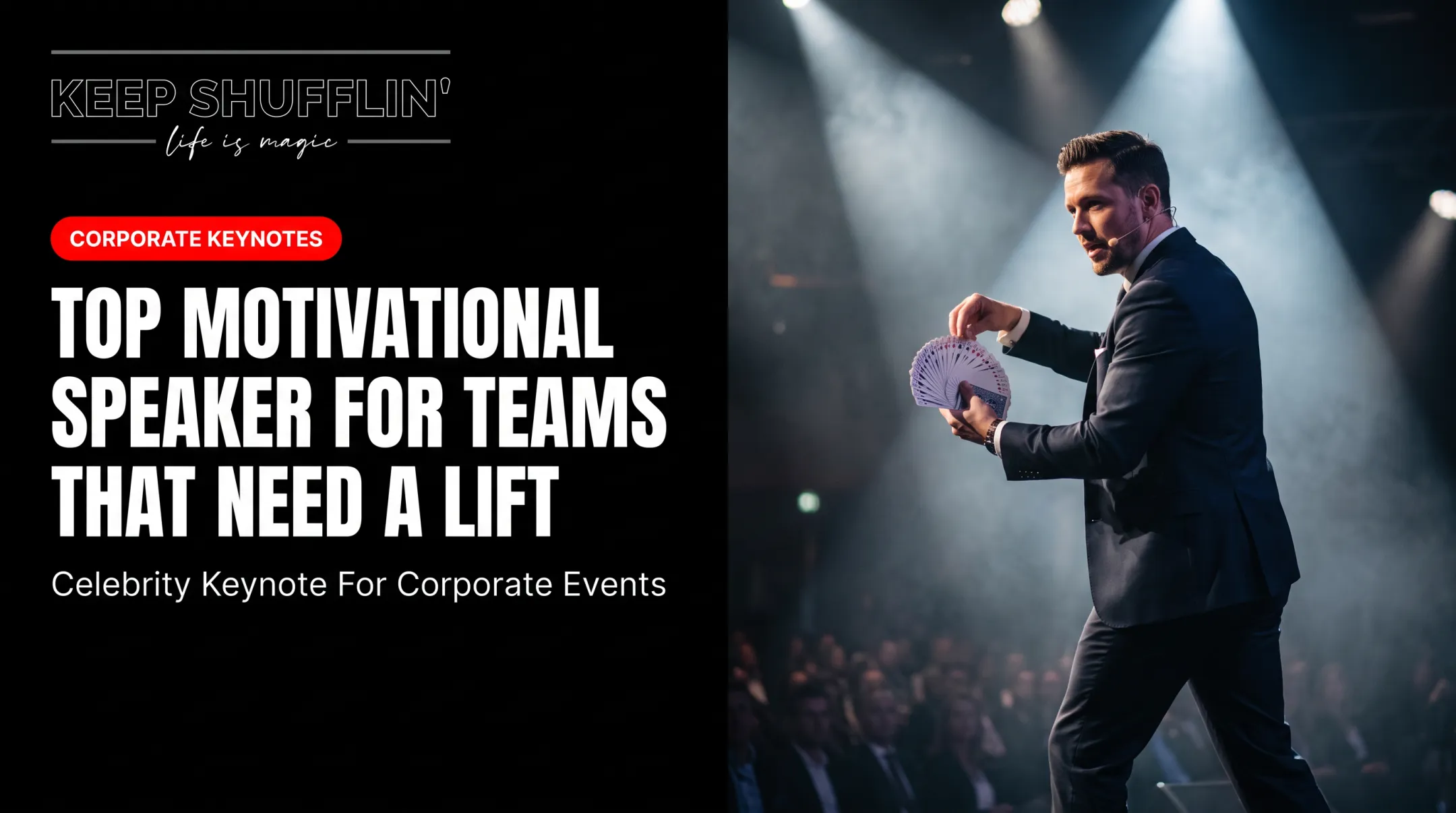
Increasingly, Fortune 500 companies bring in keynote speakers like Jon Dorenbos, a 14-year NFL veteran, to deliver that spark. He blends personal storytelling with practical strategy in a way generic pep talks can't match.
Key Takeaways
- Intrinsic motivation builds lasting drive better than fear- or reward-based tactics
- Teams rise when coaches lock in communication, clear goals, and psychological safety
- Real-world resilience stories shift mindsets faster than generic slogans
- One high-impact keynote can realign a team’s mission and energy in a single session
What Makes a Team "Stuck" and Why Motivation Matters
A stuck team looks predictable: engagement scores drop, goals get missed, and good people start leaving. Replacing an employee can cost 50% to 200% of their annual salary, according to SHRM. That turnover hits the budget as a hard cost, not a soft HR concern.
Intrinsic vs. Extrinsic Motivation
Self-Determination Theory separates two drivers: extrinsic motivation chases rewards outside the task, while intrinsic motivation comes from the satisfaction of the work itself. When teams get support for autonomy, competence, and relatedness, they tend to show:
- Better performance and job satisfaction
- Stronger engagement over time
- Lower burnout and turnover risk
Coaches and speakers who tap intrinsic drivers create motivation that sticks. Fear-based pushes fade fast; purpose doesn't.
Why Leadership Alone Isn't Enough
Management handles oversight: schedules, reviews, targets. Coaching-style leadership does something different. It builds belief and ownership. A manager can assign a goal. A coach makes someone want to hit it. That distinction is why so many companies pair strong management with coaches and motivational speakers.
Core Techniques Coaches Use to Lift Team Performance
Great coaches aren't winging it. They rely on a handful of proven techniques.
1. Set specific, individualized goals. Locke's research found that specific, challenging goals beat vague or "do your best" goals in 90% of studies reviewed (APA PsycNet). Coaches connect personal growth to team objectives, not just abstract targets.
2. Build psychological safety. Amy Edmondson's field study of 51 manufacturing teams found psychological safety directly predicted learning behavior, which in turn drove performance. Teams need to feel safe raising concerns without punishment.
3. Celebrate small wins. A Harvard Business School analysis of nearly 12,000 diary entries across seven companies found that visible progress in meaningful work creates the best "inner work life" for employees. Visible progress is what keeps motivation alive from one week to the next.
4. Lead by example. Coaches model the resilience and work ethic they're asking for. They show up prepared, own their mistakes, and stay steady under pressure. Teams notice when leaders talk one way and act another.
5. Tailor the approach. Not everyone responds to the same motivational style. Some thrive on public recognition; others do their best work after quiet one-on-one encouragement. Effective coaches adjust to the person in front of them.
6. Instill a growth mindset. Setbacks get reframed as data, not failure. When coaches treat a missed target as a diagnostic tool instead of a verdict, teams recover faster and handle adversity long after the coach leaves the room.

The Power of Storytelling and Shared Experience in Motivation
Generic motivational slogans bounce off people. Authentic stories don't. A 2021 meta-analysis of 33,078 participants found narrative content significantly outperformed expository text for both comprehension and memory, with the strongest effect on recall (PMC). People remember stories. They forget bullet points.
Why Adversity Narratives Resonate
When a speaker shares a real story of overcoming tragedy, employees stop seeing their own struggles as unique or insurmountable. They see a path through. Jon Dorenbos is a case study in this approach. At 12, his father murdered his mother. He spent a year in foster care before moving in with his aunt, where football and magic became his lifelines. He went undrafted, made the Buffalo Bills anyway, and played 14 NFL seasons across three teams. Two Pro Bowl selections followed. Then a routine physical revealed an aortic aneurysm that ended his career overnight. That's not a slogan. That's a story people carry back to their desks.
The Unexpected Element Increases Retention
Dorenbos pairs his story with magic, an unusual combination that keeps audiences leaning in rather than checking phones. Marriott's Director of B2B Marketing & Events said a virtual audience of over 3,400 people responded with an "absolutely AMAZING" reaction, calling it a "grand slam." RE/MAX CEO Nick Bailey reported an unsolicited standing ovation halfway through the presentation. That kind of engagement doesn't happen with a data-heavy slide deck.

How Motivational Speakers Complement Internal Coaching Efforts
Internal coaches build motivation day by day, one conversation at a time. Speakers do something different: they deliver a reset moment that realigns an entire team around a shared mission in a single session.
That's why companies bring in speakers for:
- Kickoffs at the start of a fiscal year or major quota push
- Sales conferences and company-wide meetings
- Leadership offsites and executive retreats
Customization is what makes that reset last. Jon Dorenbos's team runs a short intake on goals, audience, and culture, then shapes the keynote around themes like self-talk, adaptability, or accountability.
A generic motivational talk is forgotten by Monday. A message built around a company's real challenges sticks—and gives internal coaches language they can reinforce long after the event.
Measuring the Impact of Motivation on Team Outcomes
Motivation efforts need tracking, not blind faith. Gallup's Q12 research, spanning more than 180,000 teams, found engaged teams show:
| Metric | Engaged Teams vs. Disengaged |
|---|---|
| Productivity | 14-18% higher |
| Profitability | 23% higher |
| Absenteeism | 78% lower |
| Turnover (high-turnover orgs) | 21% lower |
| Safety incidents | 63% fewer |

Source: Gallup Q12 Employee Engagement Survey
Track these markers before and after a keynote or coaching initiative:
- Engagement scores (pre/post survey)
- Retention by comparable cohort
- Absenteeism trends
- Productivity or sales metrics
A single keynote isn't a permanent fix. Pair it with follow-up reinforcement, whether that's manager check-ins, internal coaching, or a repeat event at the next major milestone.
Frequently Asked Questions
What is a good motivational word for a team?
Words like "resilience," "purpose," and "growth" work well, but the best motivational language ties directly to shared team goals rather than generic phrases pulled from a poster.
What are the 5 C's in coaching?
The 5 C's are commitment, communication, concentration, control, and confidence. The framework came out of sports psychology, and each C supports a different part of team motivation and performance under pressure.
What is the 70/30 rule in coaching?
This heuristic suggests coaches spend roughly 70% of their time listening and asking questions, and only 30% instructing. The aim is self-driven motivation, not top-down pep talks. It's a practitioner guideline, not an official industry standard.
How do motivational speakers differ from traditional team coaches?
Speakers deliver a high-impact, one-time reframing moment for a whole team or event. Coaches provide ongoing, personalized guidance over weeks or months, adjusting as individuals grow.
What should a company look for when hiring a keynote speaker to motivate a team?
Prioritize three things:
- A story that genuinely connects to your company's values
- A track record with similar corporate audiences
- A willingness to customize the message instead of delivering a canned talk